We often talk about “disruption” in the technology world as a purely digital phenomenon — upending how we commute, how we eat, or how we doomscroll. But it’s rare that we see that digital disruption manifest as something as analog as a concrete wall or a chalkboard.

That’s exactly what’s happening in Manito, Albay, right now.
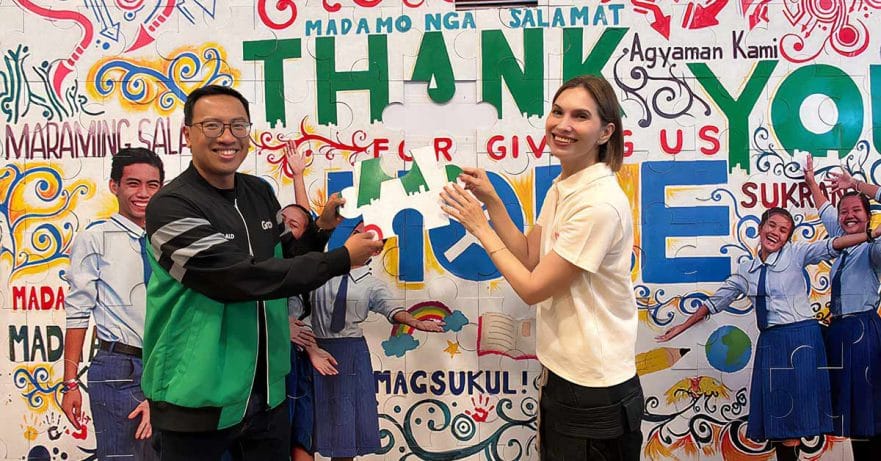
Grab Philippines and the non-profit organization HOPE have officially broken ground on a new classroom at the Inang Maharang Elementary School. It wasn’t funded by a traditional corporate check, but largely by the sheer volume of your ride-hailing and food-delivery habits.
You read that right. If you’ve ever wondered if those GrabRewards points actually go anywhere useful, here is your answer. The P1.4 million funding for this project came from a mix of user-donated points via the GrabBayanihan feature and a specific campaign called “Grab HOPE Hour.”
For one hour last October, Grab essentially turned its platform into a fundraising engine. Every GrabCar ride and GrabFood delivery during that 60-minute window contributed to the pot. It’s a clever use of the “super app” ecosystem, leveraging the immense transaction volume we see daily to crowdsource infrastructure.
Why Manito, Albay? The choice of location isn’t random. Manito is a remote municipality that took a serious beating from Typhoon Uwan (international name: Fung-wong) earlier this year. The storm wiped out two makeshift classrooms at Inang Maharang Elementary School, leaving more than 100 students without a safe place to learn.
The classroom is a resilient, 7-by-9-meter structure complete with electrical wiring, wall fans, and — crucially — an in-room bathroom with full plumbing. In disaster-prone areas, “basic” and “resilient” are the killer features.
This partnership highlights a growing trend where tech platforms step in to plug gaps in public infrastructure. The Philippines faces a severe classroom shortage; the Department of Education recently estimated a backlog of over 165,000. While building one won’t solve that national deficit, the method of funding it is scalable.
Grab country head Ronald Roda calls it “moving malasakit into action,” and the logic holds up. By reducing the friction of donating (literally just tapping a button in an app you’re already using, they can mobilize funds faster than many traditional drives.
According to HOPE founder Nanette Medved-Po, this is just the start. The partnership is locked in through 2026, with plans to expand beyond Bicol.
If you’re sitting on a hoard of GrabRewards points and don’t really need another discount voucher, you can still navigate to the rewards catalog in the app and allocate them to HOPE. It’s a small UI interaction for you, but it translates to literal bricks and mortar for kids who really need it.
That’s the kind of “tech ecosystem” update we like to see.
Learn About This Author