
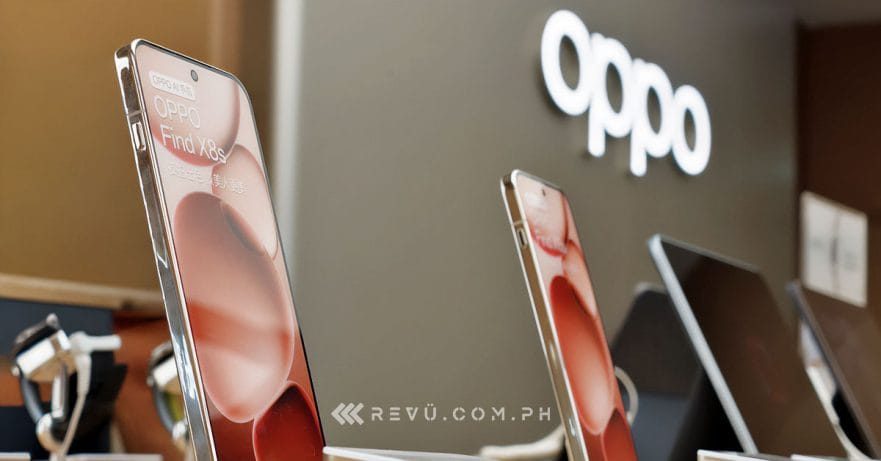
Let’s address the elephant in the room: OPPO phones can be expensive.

In a Philippine market that is quickly turning into a specs-for-your-money knife fight, OPPO‘s pricing can often seem optimistic. You see a new Reno model, check the processor, and then glance at a competitor’s spec sheet. The math may not seem to add up. “Why pay more for that?” is a question we see under many reviews.
To be clear, it is a fair concern. And it’s one OPPO looks determined to answer — not with a spec sheet, but with a philosophy. On a recent trip to China, the company flew a handful of Philippine media members to its massive new Binhai Bay R&D Campus and Dongguan factory to show us exactly why its phones are priced the way they are.
It turns out you aren’t just paying for the chips, the battery, and the casing. You are paying for a small army of meticulous engineers and a highly automated factory obsessed with ensuring your smartphone doesn’t just survive, but stays smooth for years.
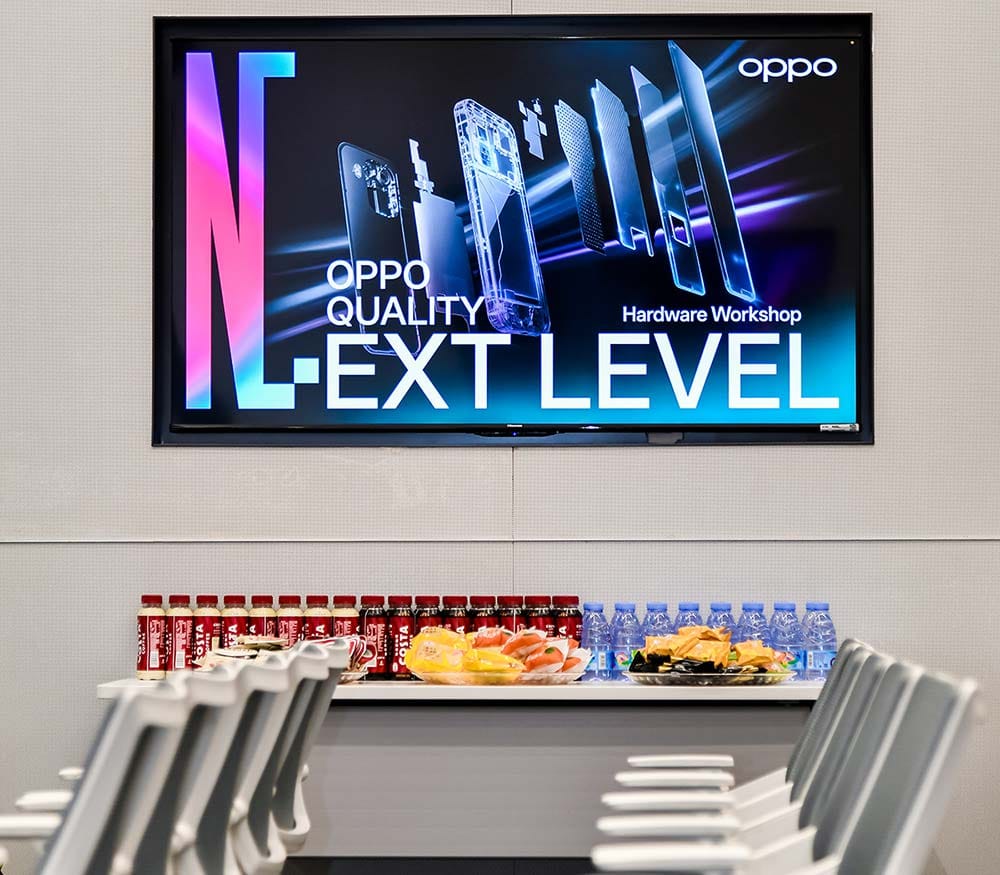
An ‘Apex’ obsession
It starts with Apex Guard. While it sounds like a superhero team (sorry, we’ve been playing a lot of Dispatch lately), it’s actually OPPO’s “holistic approach” to quality control. It covers everything from the initial R&D sketches to the factory floor, and eventually, to after-sales support. The goal, OPPO says, is to redefine quality by looking way past the industry norm — and perhaps more importantly, past the usual device lifespan.
In practice, this means OPPO is spending a ridiculous amount of money to torture-test its phones in ways you hopefully never will.
In one lab, we saw phones baking in ovens and drowning in humidity tanks. It is thanks to this level of paranoia that OPPO identified and reinforced over 20 potential water-entry points. They now claim to be the first in the industry to offer a full series of smartphones with top-tier waterproof ratings.
@revuphilippines So, what’s the deal with #OPPOQuality? ✨ For starters, it means OPPO phones can survive being dunked in just about anything — cold water, coffee, milk, dish soap, tea, even cola. 🍹 And yes, every device you see here passed the ultimate torture test 💪🏻, courtesy of those OPPO invited to tour their new Binhai Bay R&D Campus… including us at #RevuDotComDotPH. @OPPO Philippines @OPPO @monch @Alora Uy Guerrero ♬ original sound – Revu Philippines
#OPPOQuality: Tried and tested
Mind you, this isn’t just for the expensive flagships. That durability trickles down. The dependable A-series gets Military-Grade Shock Resistance, and the A6 Pro 5G gets special treatment, too. Its motherboard is shielded by a high-strength aluminum alloy that OPPO says is 70% stronger than standard aluminum. It offers “near-titanium” toughness, something they proved by bending the material over a thousand times.
But the most impressive hardware flex might be invisible. During our campus tour, we saw how OPPO’s material scientists have cracked the code on battery density. By utilizing a Silicon-Carbon architecture with significantly higher silicon content, they have managed to pack way more juice into the same slim frames.
The numbers don’t lie. Last year’s standard Find X8 carried a 5,630mAh battery, while the new Find X9 packs a giant 7,025mAh cell. The difference is even starker on the Pro models, leaping from 5,910mAh on the previous generation to a pretty staggering 7,500mAh on the Find X9 Pro. Those are massive leaps in capacity without turning OPPO’s latest flagships into bricks.
Fighting the war on lag
But hardware is only half the battle. There’s also the software side of Apex Guard, which we dove deep into in our recent feature on ending Android slowdown. This is where OPPO is pouring massive R&D resources to solve the one headache that plagues almost every mobile device eventually — lag.
For OPPO, true smoothness isn’t just about “not lagging.” It’s a convergence of software wizardry and hardware engineering, relying on two fancy-sounding software features: the Luminous Rendering Engine and the Trinity Engine.
The Luminous Rendering Engine is, according to the brand, the first unified animation architecture for Android. In plain English? It’s designed to make every swipe, scroll, and interaction feel fluid and alive, rather than just fast.
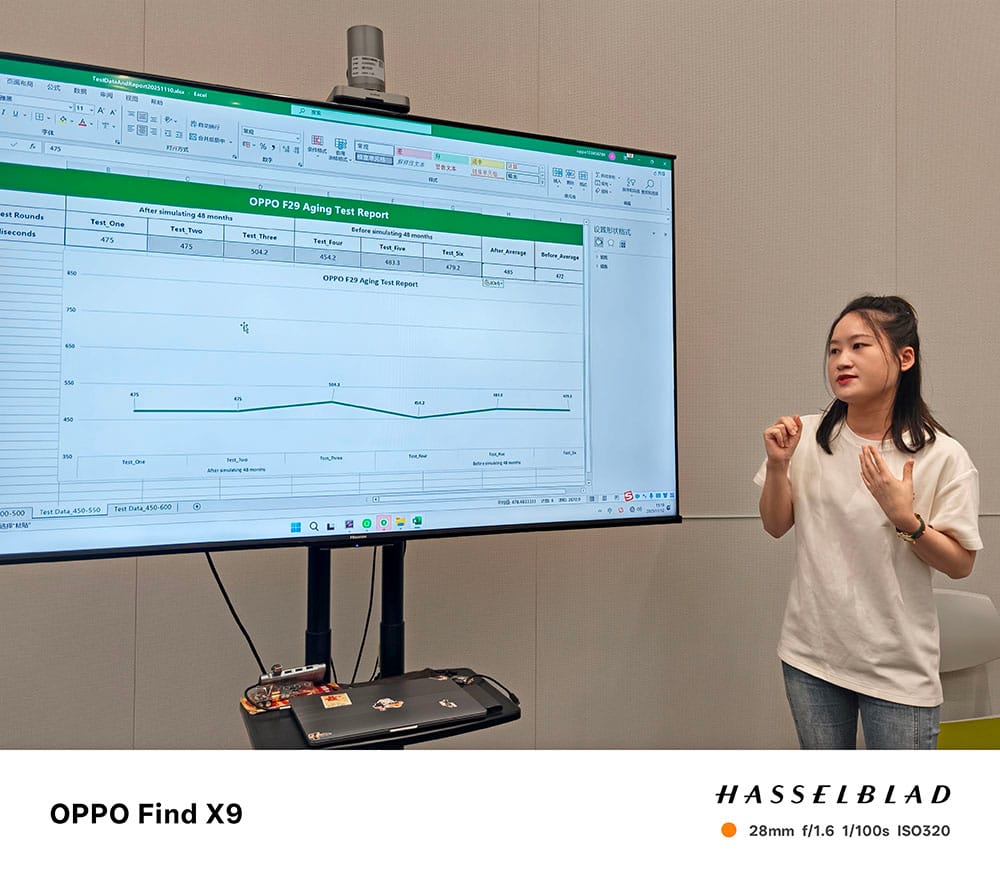
Then there is the muscle, or the Trinity Engine. This is what keeps the smartphone composed under pressure. We’ve all been there: You’re in an intense game, a call pops up, and your unit stutters as the chip struggles to juggle the tasks. OPPO’s Chip-Level Dynamic Frame Sync technology is supposed to fix this in real-time.
Finally, there’s a clever feature called Sensor-Offload. This steps in when you’re recording those long 4K 60fps videos, delegating tasks to specific parts of the chip to reduce heat and power consumption. The goal is to ensure the phone doesn’t throttle right when you need it most.
The good news is that you won’t have to wait long to see this in action, either. Many of these software perks make their debut on the OPPO Find X9 flagship series, which officially introduces the Android 16-based ColorOS 16 to the global market.
Making it last
OPPO’s obsession with smoothness isn’t just about the here and now. The company knows well that your smartphone feeling like a rocket ship out of the box means absolutely nothing if it turns into a sluggish paperweight after 18 months. The real challenge is longevity, or keeping that “new phone” feeling long after your trip back from the retailer.
To ensure this, OPPO has built what it calls the Endurance Simulation Suite deep inside its massive Binhai Bay campus. If you’re an anime fan, think of it like Dragon Ball’s Hyperbolic Time Chamber. It’s a 24/7 lab that replicates 48, 60, and even 72 months of continuous wear and tear. Do the math, and that’s six full years of usage simulated in a compressed timeframe.
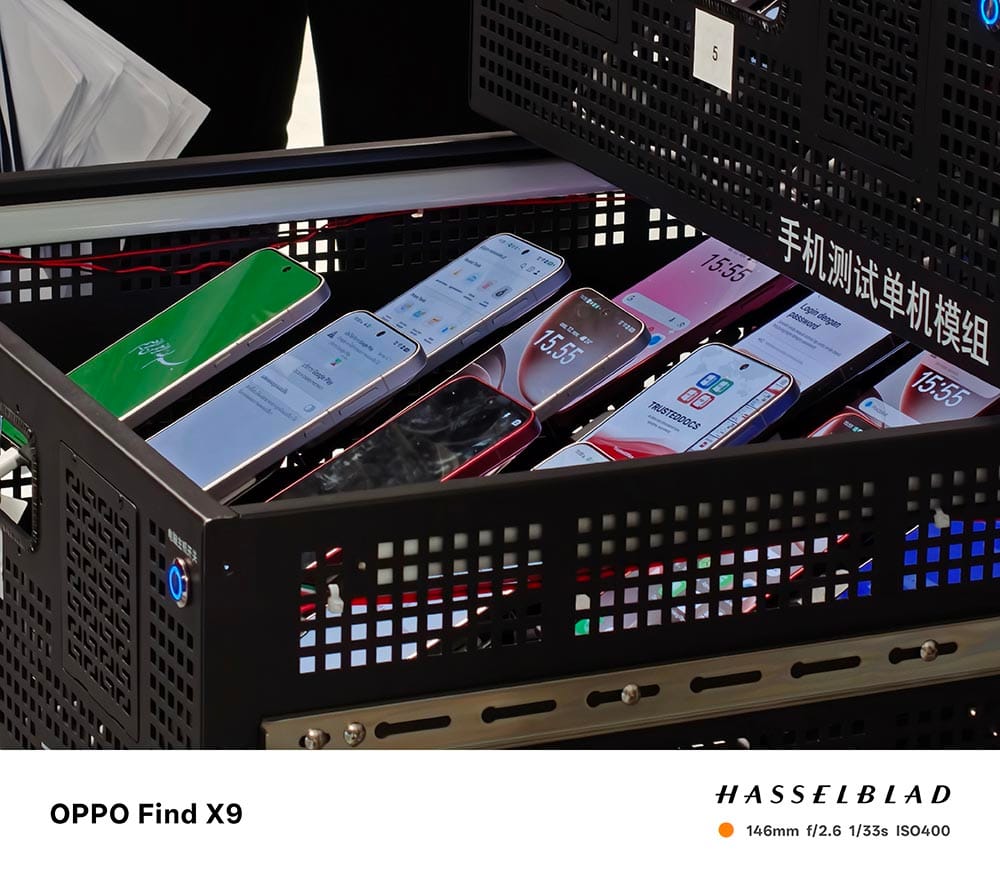
The facility itself is a sight to behold — just rows and rows of cabinets holding over 20,000 devices being tested simultaneously. The operation runs around the clock, with almost every process fully automated because, unlike human testers, robots don’t need sleep. In this software torture chamber, OPPO’s systems scan nearly one million lines of code every single month, hunting down bugs, squashing potential glitches, and patching security flaws before they ever reach your pocket.
It’s not just about the operating system, though. We all know that sometimes, it’s a rogue app that ruins the experience. To counter this, the lab runs compatibility tests on over 10,000 of the most popular global apps.
All this obsession leads to a tangible payoff, with the company claiming its devices maintain an overall aging rate that is 3% lower than the industry standard.
Perhaps the best part is that this commitment isn’t exclusive to the premium tier. That reliability trickles down to the more affordable models, too. Through features like Project Breeze and Instant Refresh technology, OPPO is actively reshaping how we perceive the budget segment. These technologies work to keep entry-level devices from choking on the fragmented data that typically slows down Android over time, ensuring that even the wallet-friendly models stay snappy.
Verdict: You’re paying for the R&D — among many others
So why are OPPO phones priced higher than some of the competition?
Because this level of obsession costs money. A lot of it. You’re paying for the Communication Lab that costs “hundreds of millions of Chinese yuan.” You’re paying for the material science wizardry that allows them to stuff a massive 7,500mAh silicon-carbon battery into a slim chassis. Not to mention, the R&D that ensures it lasts 400 charge cycles longer than the competition.
You’re also spending extra for the invisible work — the engineers behind Apex Guard, tuning the Trinity and Luminous engines to fight the war on lag. It’s the cost of ensuring that smoothness isn’t just a marketing buzzword on a box, but a reality that survives years of heavy use without stuttering.
In a market that is often obsessed with the sticker price, OPPO is betting that users are willing to pay a premium for something that just works — and keeps working.
You’re not just buying the specs on the sheet; you’re buying the peace of mind that comes from knowing your phone has already been to hell and back before you even unboxed it. And in this economy? That might be the realest upgrade of all.
In the Philippines, the OPPO Find X9 is available in Titanium Grey and Space Black colors, priced at P69,999 or $1,195 for the top-end 16GB/512GB configuration.
(Disclosure: OPPO sponsored our trip to Shenzhen, China, for this event.)
Share this Post
Learn About This Author
