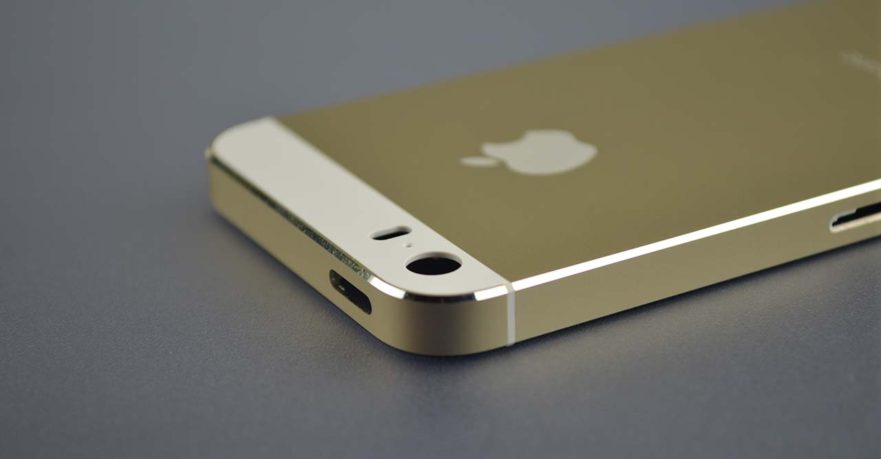
If you still have an iPhone 5s or an iPhone 6 tucked away in a drawer, it’s time to dig it out and plug it in. In a move that feels like a glitch in the planned-obsolescence matrix, Apple has released iOS 12.5.8, a surprise maintenance patch for devices that first hit shelves when Ikot-Ikot by Sarah Geronimo was topping playlists during the rainy season.

Call it a technical lifeline. The update renews critical digital certificates that power iMessage, FaceTime, and device activation. Without it, these legacy models would essentially hit a functional “kill switch” in January 2027, rendering their core communication features useless.
Headlines may dwell on the novelty of a 13‑year‑old handset getting a 2026 update, but the deeper story is in the numbers. The resale market shows that what many call the Apple Tax often turns out to be a smart long‑term investment.
The long game of residual value
The iPhone 5s was the first 64-bit smartphone, a piece of hardware so over-engineered for 2013 that it’s still standing today. That engineering, paired with Apple’s aggressive software support, creates a unique financial phenomenon: unrivaled resale value.
This value is particularly evident in markets like the Philippines, where the demand for secondhand iPhones remains high. While budget Android brands dominate in terms of unit shipments, the American technology giant continues to lead in total import value locally. For many Filipino users, an older iPhone is a calculated investment in a product that stays functional — and sellable — long after its competitors have been retired.
According to 2026 resale data from firms like SellCell and ecoATM, iPhones continue to retain significantly more value than their Android counterparts. Within a year, most flagship Android phones lose around 57% of their value, while iPhones typically drop only about 31%. By the five-year mark, an iPhone 12 Pro Max can still fetch nearly 25% of its original price, while premium competitors from the same era often struggle to break the 10% to 15% barrier.
In the Philippines, this trend is especially visible in the secondary market. An iPhone 5s still resells for around P1,000 (roughly $17) to P3,500 ($60) depending on condition, with pristine units commanding the higher end. Comparable Android models from the same period often fetch less than P1,000 (less than $17) to P2,000 ($34), underscoring Apple’s stronger residual value even for legacy devices.
This is a direct result of moves like this week’s iOS 12.5.8 release. When a buyer knows a decade-old gadget won’t be “bricked” by a certificate expiration, the floor for that product’s value stays higher.
A masterclass in lifecycle management
By pushing iOS 12.5.8 (and its cousin, iOS 15.8.6 for the iPhone 6s and iPhone 7), Apple is solving a “functional paralysis” problem.
- The certificate problem. Most mobile services rely on encrypted handshakes. When those security certificates expire, the hardware can no longer “talk” to Apple’s servers.
- The enduring result. By extending these, Apple keeps hundreds of millions of legacy devices — many of which are used in emerging markets or as hand‑me‑downs for children — active within its ecosystem.
Apple promises at least five years of security updates for every iPhone, though in practice it often extends support well beyond that. The pledge, shaped in part by regulations like the United Kingdom’s Product Security and Telecommunications Infrastructure Act, sets a baseline for what consumers can expect. Yet the company’s track record — including this week’s rare update for a 13‑year‑old device — shows it’s willing to go further than the minimum.
From a sustainability standpoint, it’s a huge win. Apple’s own “Longevity, by Design” report highlights that there are hundreds of millions of iPhones in use that are over five years old. Keeping them out of landfills by ensuring they can still make a FaceTime call is a powerful counter-narrative to the “disposable tech” era.
More than just a patch
Critics might argue that an iPhone 5s in 2026 is painfully slow — and they’re right. You aren’t going to be editing 4K ProRes video on an A7 chip. But that’s missing the point.
Apple is proving that the total cost of ownership for an iPhone is often lower than a budget phone that loses support in 24 months. When you buy an iPhone, you aren’t just buying a slab of glass and aluminum; you’re buying a seat in an ecosystem that, apparently, doesn’t mind checking in on you even 13 years later.
For anyone following the tech beat, the takeaway is simple. Hardware is only half the story and real value lies in the support behind it.
Learn About This Author