

We’ve already taken a close look at the OPPO Reno15 Series 5G in our lineup review, and even zoomed in on the OPPO Reno15 Pro 5G with a deeper dive.

But today, the spec sheets take a back seat as we talk pure play. This round is all about how these smartphones handle the heat of serious mobile gaming.
Let’s start under the hood. The Pro flexes near-flagship muscle with its 4nm MediaTek Dimensity 8450 chipset. The standard Reno15 5G and Reno15 F 5G follow suit with dependable 4nm Qualcomm processors — the Snapdragon 7 Gen 4 and Snapdragon 6 Gen 1 — delivering steady midrange performance and everyday efficiency.
Raw power is only half the equation, though. True to OPPO‘s DNA, it’s the ColorOS optimizations that elevate the experience, ensuring smoother, more responsive gameplay where it matters most.
AI HyperBoost 2.0: The brains behind the brawn
Enter AI HyperBoost 2.0. This is far more than a simple switch you toggle in the settings menu. It’s an intelligent system working quietly in the background to elevate gameplay in two major ways.
First, it constantly monitors your game to prevent lag, keeping frame rates consistently high and eliminating stutters even during the most chaotic, action-packed moments. Second, it actively manages internal temperature. Instead of the device heating up uncomfortably after a few matches, the software regulates performance to keep it cool and comfortable in hand.
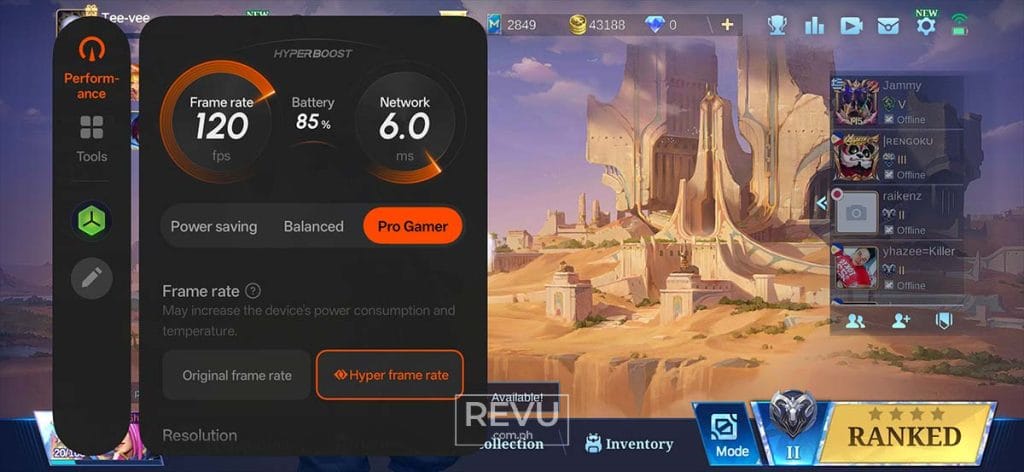
Picture this in everyday use: sneaking in a quick daily quest while waiting for your morning coffee, or grinding the ranked ladder during a crowded MRT commute. Either way, the phone stays cool. No sweaty palms, no force-closing apps to let the unit breathe. AI HyperBoost 2.0 guarantees smoother, longer-lasting sessions, preventing the glass sandwich in your hands from turning into a branding iron during intense matches — all without you lifting a finger.
Pair the brand’s HyperBoost technology with the Dimensity 8450 on the Reno15 Pro 5G, and you’ve got a solid option for MOBA gaming. Mobile Legends: Bang Bang, in particular, runs flawlessly at 120 FPS on our unit, a peak frame rate that OPPO boldly claims the handset can sustain for three straight hours. While we didn’t game for quite that long, frame drops were virtually nonexistent during our rigorous 30-minute test; the native ColorOS gaming overlay made it easy to verify results. The vanilla Reno15 5G also hits that 120 FPS sweet spot in MLBB, while the Reno15 F 5G caps at a still-respectable 90 FPS.
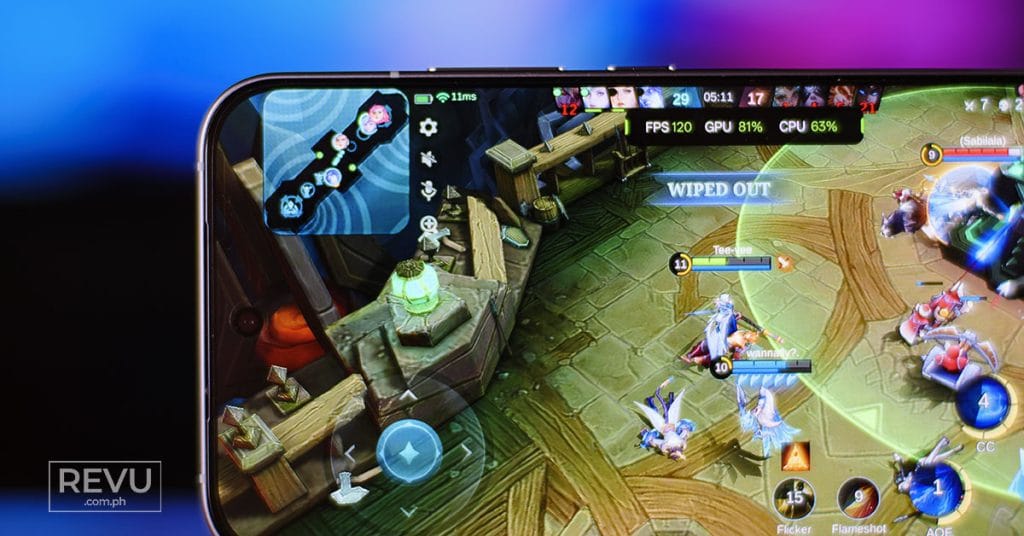
For shooter fans, the Pro model delivers a consistently smooth 120 FPS experience during extended sessions. The Reno15 5G dials it back slightly, offering a steady 90 FPS for long firefights.
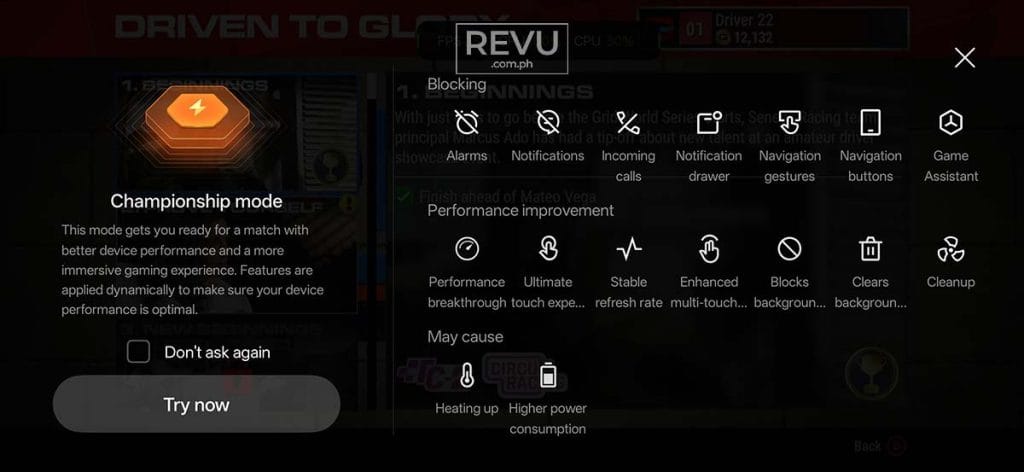
To safeguard those clutch moments, OPPO equips the Reno15 Series 5G with Championship mode. It reallocates system resources to maximize performance and shuts out outside distractions, delivering a deeply immersive, stress-free competitive experience.
AI LinkBoost 3.0: Winning the wireless war
Dropped frames aren’t the only way to lose a match; dropped connections can be even worse. That’s where AI LinkBoost 3.0 steps in. It introduces what OPPO calls “AI Gaming Antenna System Acceleration.” Sure, it’s a mouthful of marketing jargon, but in practice it means an optimized antenna layout and enhanced radio frequency design. Even when you’re gripping the phone tightly in landscape mode or stuck in a weak coverage zone, your connection stays stable, responsive, and fluid.
OPPO’s proprietary hardware design works seamlessly with the AI Network Booster, which actively analyzes latency and can switch you to a priority channel mid-game. No more teleporting into a wall right before a crucial teamfight.
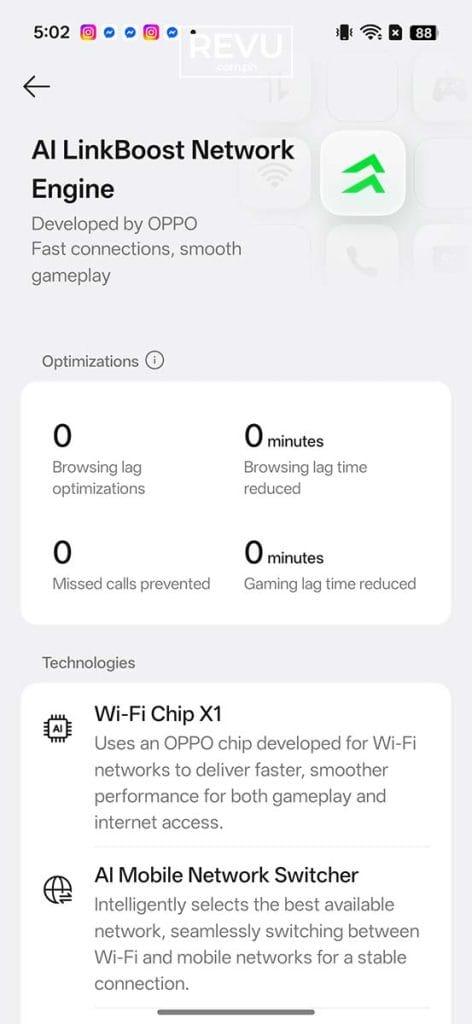
Completing the LinkBoost 3.0 suite is the AI Super Wi-Fi Booster, powered by the customized OPPO X1 chip working alongside the MediaTek platform. It’s engineered to cut through wireless noise in crowded spaces like cafes or busy offices. The result is a stable, low-latency connection that keeps gameplay snappy even when dozens of devices are competing for the same router bandwidth.
Stress-testing the OPPO Reno15 Series 5G: From mobile ports to PC emulation
We wanted to push these smartphones to their limits, so we loaded up the mobile port of Red Dead Redemption on the OPPO Reno15 Series 5G. The demanding Western epic ran smoothly on both the Pro and standard variants, as expected. Impressively, the OPPO Reno15 F 5G handled the game well enough despite its more modest Snapdragon 6 Gen 1 processor. To keep gameplay fluid, the software automatically scaled down render resolution, prioritizing frame rates over sharpness.
Sticking with demanding console ports, we also ran the Android version of Tomb Raider on both the Reno15 Pro 5G and the regular Reno15 5G. Both delivered a rock-solid 30 FPS on default settings, a result confirmed by the game’s built-in benchmarking tool.
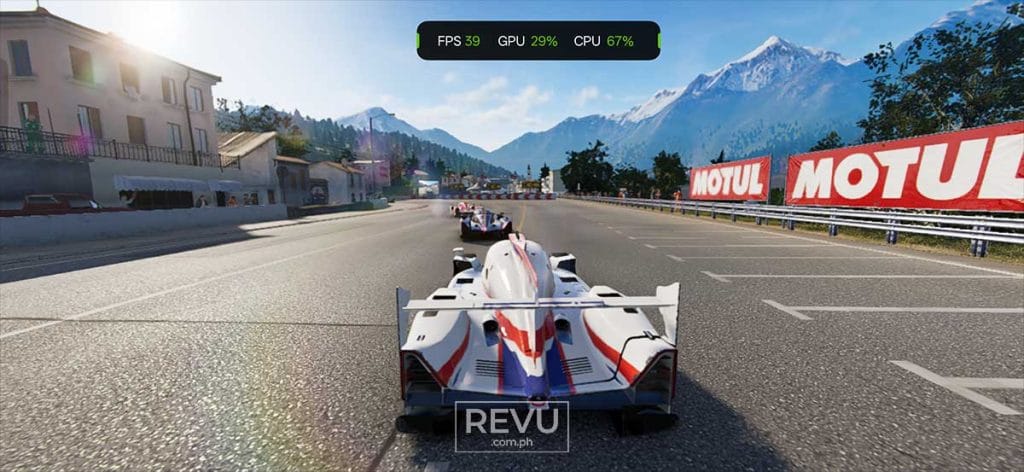
To push the OPPO Reno15 Pro 5G even further, we fired up GRID Legends, an excellent mobile port of the popular racing sim — and easily one of the most demanding titles on Android. The visual fidelity is stunning, blurring the line between a mobile title and a full-fledged console game. This is especially evident during nighttime races on wet tracks, where dynamic headlights and neon reflections shimmer across slick asphalt. Even with all that detail, the handset held a stable 30 FPS on the Graphics preset and climbed to a smooth 40 FPS in Performance mode.
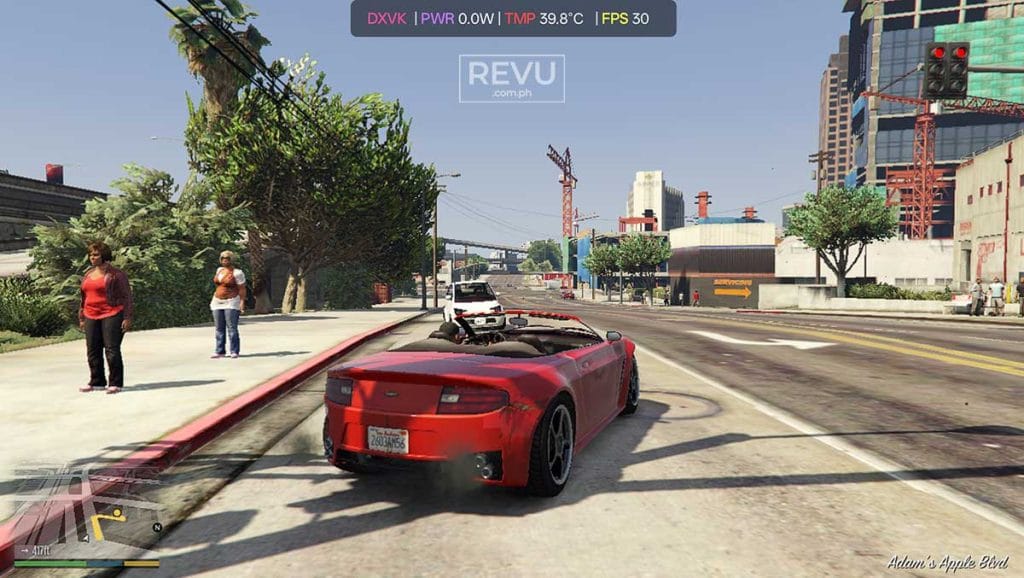
Then we got ambitious. We loaded up Grand Theft Auto V using a PC emulator, and frankly, our jaws hit the desk. It sustained 30 FPS even while sprinting through Los Santos’ busy, traffic-packed streets. If you told us a few years ago that a device this slim and compact could emulate a full PC sandbox title like this, we’d have laughed you out of the room. Now, it’s genuinely mind-blowing.
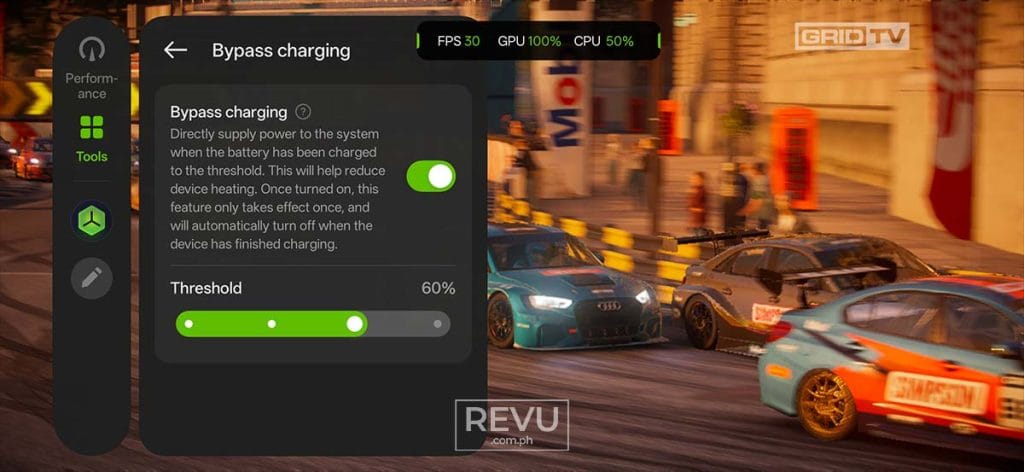
Then there’s bypass charging, which is a godsend for players looking to marathon these ports. Instead of routing power through the battery, this feature channels it directly to the smartphone’s motherboard when plugged in. By skipping the battery, the unit generates significantly less heat, keeping the thermals in check so your frame rates remain smooth during extended play. Not to mention, it also protects your battery’s overall lifespan from the constant wear and tear of charging while gaming.
Outside the gaming gauntlet, everyday performance across all three phones remains impressively smooth. Much of the credit goes to ColorOS 16, built on Android 16. If you recall, we at REVU flew to China last year to get an inside look at OPPO’s software-overlay development. We saw firsthand their relentless, almost-obsessive pursuit of eliminating smartphone lag across every price point. With the Reno15 Series 5G, that pursuit seems to have paid off.
Final thoughts
Ultimately, the OPPO Reno15 Series 5G proves that you don’t necessarily need a bulky, RGB-clad gaming phone to get a top-tier gaming experience. Whether you are leaning on the Pro model for demanding AAA titles, or relying on the standard and F variants for incredibly stable MOBA and shooter sessions, OPPO’s software-hardware synergy delivers on its promises. They have built a lineup that looks like a fashion statement on the outside, but runs like a workhorse on the inside.
If you are ready to upgrade your daily driver and your gaming arsenal, the series is now available in the Philippines with pricing that scales depending on the firepower you need:
- OPPO Reno15 Pro 5G: The top-of-the-line offering commands ₱49,999 (around $83) for its maxed-out 12GB + 512GB configuration.
- OPPO Reno15 5G: The vanilla variant comes in at ₱36,999 ($614) for the 12GB + 256GB trim, with a 12GB + 512GB version at ₱39,999 ($664).
- OPPO Reno15 F 5G: The entry point starts at ₱23,999 ($398) for the online-exclusive 8GB + 128GB base model, and climbs to ₱28,999 ($482) for the 12GB + 256GB kit.

Learn About This Author
