Smartphones are lasting longer than ever on a single charge. According to new data from Counterpoint Research, the average global phone battery capacity hit a record 5,291mAh in January 2026, marking the largest year-over-year jump since December 2021.

The highlight is the surge in ultra‑high‑capacity models. Units with 6,000mAh batteries or larger made up a staggering 29% of global smartphone sales in January — nearly triple the 10% share from just a year earlier.
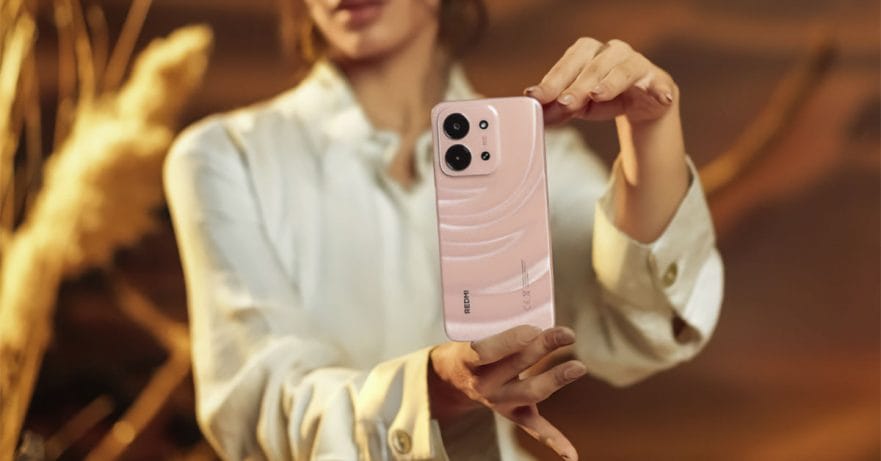
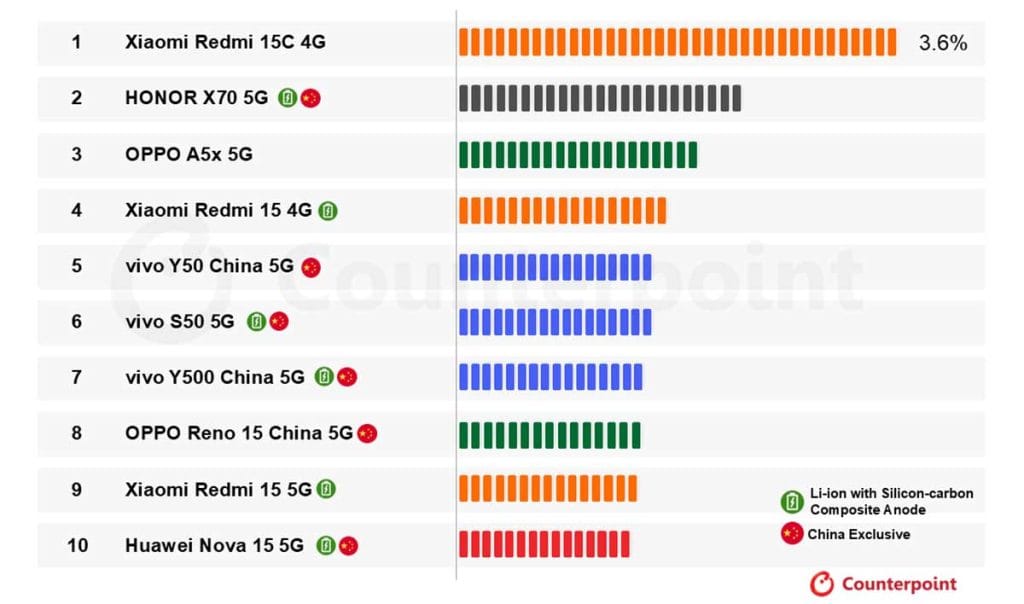
Leading the charge is Xiaomi’s Redmi 15C 4G. The budget-friendly handset secured the No. 1 spot as the best-selling smartphone in the 6,000mAh-and-up category, capturing a 3.6% sales share globally. Xiaomi didn’t stop there, either, crowding the top 10 list with its Redmi 15 4G and Redmi 15 5G models.
The secret behind this sudden battery boom isn’t simply making products thicker. It’s the fast adoption of silicon‑carbon (SiC) battery technology. SiC batteries let manufacturers pack far more power density into a smaller footprint, keeping devices thin and light. In fact, six of the top 10 best‑selling models in this big‑battery category are already powered by SiC.
Chinese OEMs are completely dominating this space. Brands like vivo, Xiaomi, OPPO, and HONOR claimed all 10 spots on the best-seller list. OPPO makes an appearance with a heavy hitter like the Reno15 5G, which you might recognize locally as the OPPO Reno15 Pro 5G here in the Philippines. Meanwhile, HONOR pushed the envelope into the absurd with the HONOR X70 5G — released in the country as the HONOR X9d 5G — boasting a huge 8,300mAh cell supported by its third-generation Qinghai Lake tech and 80-watt fast charging.
There’s a catch, though If you’re hoping to pick up one of these endurance monsters right away, your options might be limited.
Six of the top 10 phones on Counterpoint’s list are currently exclusive to the Chinese market. This localization is driven by a mix of fast domestic tech advancements and complex global regulations that restrict how quickly these massive battery capacities can be certified and shipped internationally. Because of this, the average smartphone battery capacity in China is currently over 1,000mAh higher than the rest of the world.
Looking ahead, Counterpoint analysts expect a bumpy 2026 for the broader smartphone market. Looming memory shortages are projected to drive up manufacturing costs and push overall shipments down by roughly 12%. While battery capacities will continue to grow, the breakneck pace of the silicon-carbon revolution is expected to moderate as the industry tightens its belt, with analysts predicting the next major technical milestones will hit in 2027 before reaching mass-scale production in 2028.
For now, though, the numbers speak for themselves: The 6,000mAh battery has officially gone mainstream.
Learn About This Author