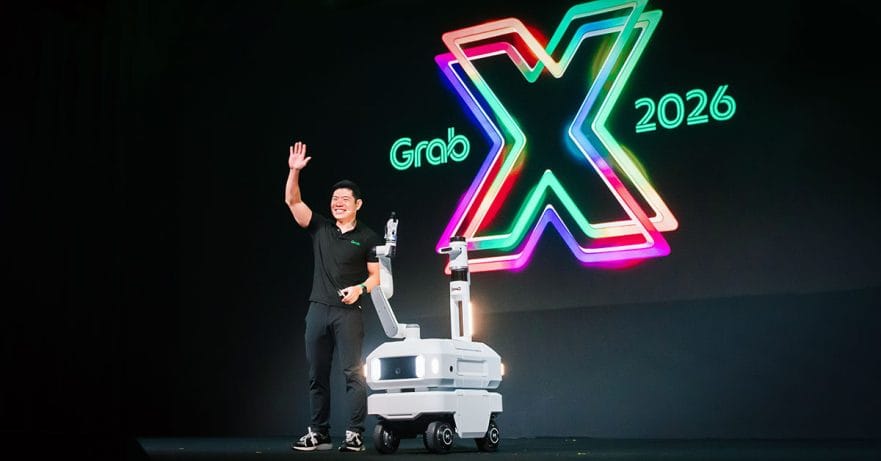
While consumer chatbots generate the most headlines, the most lucrative and consequential announcements at GrabX 2026 were aimed strictly at business operations. Grab is taking its proprietary “Intelligence Layer” out of the cloud and embedding it directly into the physical infrastructure of Southeast Asian businesses.

During his opening keynote, Grab Group chief executive officer and co-founder Anthony Tan emphasized the company’s “AI-First with Heart” philosophy. He argued that the benefits of artificial intelligence should not be restricted to the tech-savvy or the wealthy.

SEE ALSO: Grab’s AI pivot: From utility app to everyday guide and Grab’s bid to be your only travel app from departure to destination
This ethos is heavily reflected in the Driver AI Assistant, which Tan referred to as “Coach.” Built in collaboration with OpenAI, Coach provides real-time guidance to help drivers earn more efficiently and handles routine tasks so they can focus on the road. Over 500,000 drivers are already using the assistant, and Grab absorbs all the AI token costs to keep the tool free for its partners.
Grab is also introducing physical robots to the workflow. Tan showcased Carri, a robot designed to navigate sprawling malls, locate restaurants, and pass food orders directly to drivers. Since drivers typically lose 10% of their earning time simply waiting for food or searching for store locations, this physical automation directly boosts their daily efficiency.
Meet Carri, a robot built to navigate malls, find restaurants, and relay food orders to drivers
For merchant-partners, Grab unveiled three powerful tools for “Business Empowerment.” The Virtual Store Manager repurposes existing CCTV cameras into a smart operations layer. Using AI computer vision, it monitors store hygiene, staffing levels, and foot traffic, sending instant alerts to multi-outlet owners if any issues arise.
To solve the chaotic communication gap between the digital storefront and the physical kitchen, Grab launched the Cloud Printer. The device auto-prints orders instantly, and kitchen staff simply scan a QR code on the ticket to trigger a driver pickup when the meal is ready. Crucially, the printer automatically pauses the merchant’s Grab store if it detects no activity, preventing orders from piling up at closed locations.
Finally, Tap to Pay transforms any GrabMerchant-enabled smartphone into a contactless payment terminal in minutes. By bypassing complex hardware setups, Grab is positioning its technology as the foundational operating system for brick-and-mortar commerce in the region.
If this hardware push succeeds, Grab won’t just be the app consumers open to order lunch or hail a ride. It will be the invisible, essential infrastructure keeping the lights on for the merchants on the other side of the transaction.
Learn About This Author