
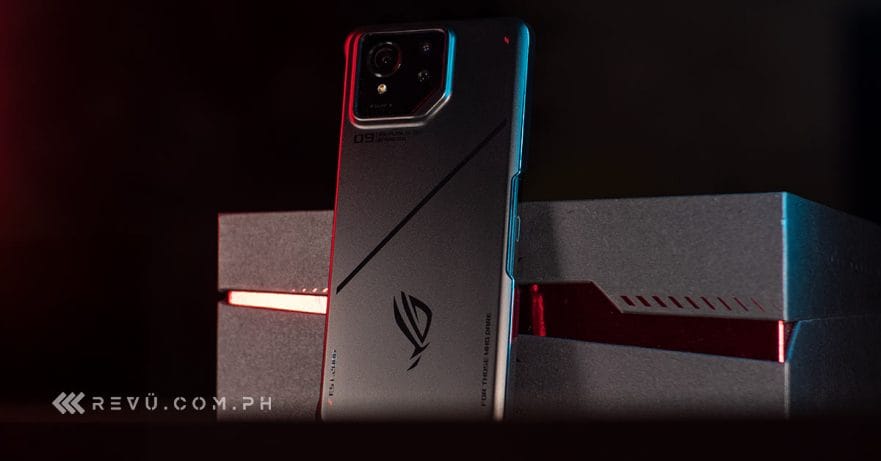
CES felt a little quieter this year, with the notable absence of any ASUS ROG Phone announcement in Las Vegas, a venue where the Taiwanese electronics maker has typically had a strong showing.

It also helps explain why the Zenfone 12 Ultra never reached the Philippines or other key markets, and supports the rumors from earlier this month that ASUS wouldn’t release a new handset in 2026. The signs were there, but now it’s official.
ASUS has confirmed it will not launch any new smartphone models this year. Chairman Jonney Shih announced the strategic shift at the company’s year-end gala in Taiwan. According to a machine-translated report from Taiwanese outlet Inside, Shih said, “ASUS will no longer add new mobile phone models in the future.”
But existing owners shouldn’t worry. The article noted that ASUS will continue supporting current users with software updates and warranty services, ensuring devices remain functional. In the Philippines, a company representative confirmed that “updates will still roll out” and “warranty will still be covered — one year from purchase.”
ASUS will continue supporting current users with software updates and warranty services, ensuring devices remain functional. In the Philippines, a company representative confirmed that ‘updates will still roll out’ and ‘warranty will still be covered — one year from purchase’
Seizing a rare opportunity
The announcement closes a mobile journey that began in 2014. By 2024, ASUS held a modest 2.8% share of the global market, generating $2.9 billion in revenue in the first half of the year.
Yet the financial winds have shifted. In its third-quarter 2025 earnings call, the manufacturer reported that artificial intelligence server income had doubled, now making up nearly 20% of total returns. Gaming remains the largest business pillar, supported by the ROG Ally and a graphics card market share above 30%, but ASUS is placing its bets elsewhere. It currently holds a 25% share of the global AI PC sector, a position that helped push total revenue to NT$738.91 billion in 2025.
The figure reflects a 26.1% year-on-year increase, driven largely by the technology giant’s push into artificial intelligence. The segment performed strongly that research and development resources have been redirected toward “physical AI,” with robotics and smart glasses leading the pivot.
While it may be tempting to see this exit as a casualty of the brutal smartphone wars, the reality is different. It is a calculated move to seize an opportunity amid the rapid rise of AI.
ASUS saw the writing on the wall, though not in the way you might think. Rising chipset prices, global memory shortages, and the growing popularity of gaming handhelds all played a role. More importantly, executives recognized a chance to act while the iron was hot. By reallocating resources now, ASUS is positioning its strongest assets in a market that is only beginning to surge.
A loss for enthusiasts
Still, it stings for gadget fans.
The ASUS ROG Phone series set a high standard for mobile gaming, and we’ve praised nearly every model since its launch. In many ways, the ROG Phone walked so devices like HONOR’s WIN series and RedMagic’s lineup could run.
The Zenfone was equally influential. It earned a reputation as one of the best bang-for-your-buck flagships before “flagship killer” became a cliché. The ASUS Zenfone 2 was a phenomenon in the Philippines, while the Zenfone 6 impressed with its rotating camera and notch-free display.
For now, we bid farewell to these icons as ASUS chases the future — one powered not by smartphones, but by AI.
Learn About This Author
