
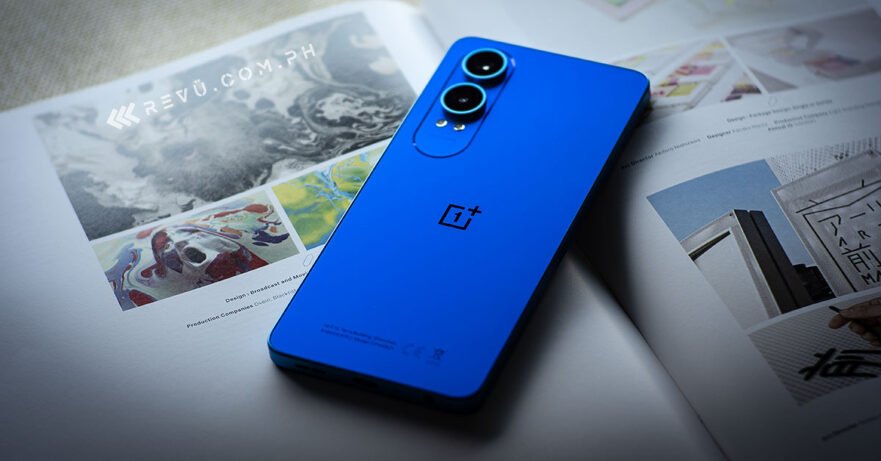
“Never Settle” has been the OnePlus mantra for more than a decade. Unfortunately for the brand, its parent company, OPPO, knows it well — and has seemingly decided that settling for a streamlined, profitable business is better than keeping a waning sub-brand alive.

(Update: OnePlus India has responded to the Android Headlines article, with its top executive saying the company is operating as usual in India and will continue to do so. We wonder if the same holds true for other markets.)
According to a detailed new report from Android Headlines, OnePlus is effectively “being dismantled.” The publication says the company is operating on “life support,” existing mainly to “honor its remaining commitments” to retail partners and consumers before before winding down operations.
The conclusion, which OnePlus executives likely won’t acknowledge (at least for now), stems from a three-continent investigation that included interviews with current and former employees across research and development, business, and marketing divisions at the Shenzhen, China, headquarters, along with regional offices in the United States, India, and Europe. It was also backed by market data from four independent analyst firms.
The report likewise confirms that key devices have been casualties of the fallout, with both the highly anticipated OnePlus Open 2 foldable and the compact flagship OnePlus 15s reportedly scrapped.
Functionally, OnePlus has been hollowed out. Regional offices have reportedly been stripped of strategy, with directives now flowing directly from China. This dismantling comes despite OPPO’s $14 billion pledge in 2022 to revitalize the brand — a roadmap that included selling smartphones at zero profit and sharing OPPO’s service network, a synergy we observed firsthand in the Philippines and in China during a visit to the technology giant’s flagship campus in Dongguan. Ultimately, that expensive gamble failed to pay off.
The math doesn’t lie
Looking at the raw numbers, the decision to pull the plug appears logical. Market analyst Omdia reports that OnePlus shipments fell more than 20% in 2024, sliding from about 17 million units to between 13 million and 14 million.
By contrast, the parent company thrived. OPPO grew 2.8%, shipping approximately 86 million units. Without OnePlus’ 17 million units, the sub-brand ultimately weighed on OPPO’s overall performance instead of boosting it.
The decline is even more stark in its stronghold markets:
- India: Market share fell from 6.1% to 3.9% in 2024, a 32% drop, according to International Data Corp.
- China: Share slipped from 2% to 1.6% — a 20% decline — missing OnePlus President Li Jie’s 3% target by a wide margin.
With India and China making up 74% of the company’s overall sales, there is virtually no other market left to rescue it. The West certainly won’t; OnePlus’ global market share in 2024 stands at just 1.1%. This is glaring, especially given the resources OPPO invested in reviving the brand.
The ‘flagship killer’ trap
OnePlus was created to capture market share for OPPO by prioritizing high specs and performance over profit margins — the definition of a “flagship killer.” This was a finite strategy to expand the parent’s footprint. Now that growth has stalled, the strategy is obsolete.
We are seeing a mirror image of this tactic with realme, another BBK Electronics subsidiary. While realme targeted gaming and budget segments, it met a similar fate just weeks ago. OPPO confirmed it was reabsorbing the spin-off brand after two rounds of layoffs in late 2024 and early 2025 that cut deeply into core R&D departments, including hardware, structure, and software.
Seeing the writing on the wall
For observers in the Philippines, the writing has been on the wall for months. The first cracks appeared when marketing for OnePlus phones was quietly handed to an independent distributor, moving away from OPPO’s local arm last year.
Warning signs grew when the OnePlus 15R was eventually offered locally, but not announced on the global launch day alongside other key markets. The delay suggests the brand no longer prioritizes the Philippines for stock allocations, likely because of limited inventory or a directive to focus only on regions where it can still move units.
Regardless, there is little point in speculating about specific models anymore. The reality is that OnePlus, as we know it, is heading the way of Nokia, BlackBerry, HTC, and LG. If you were waiting for a new flagship this year or next, don’t hold your breath. A midrange device may still be in the pipeline to clear component inventory, but we wouldn’t count on it.
Truthfully, now is the best time to pull the plug. Smartphone components, especially memory, are climbing to record prices. It is better to cut life support now than to keep losing money on a brand that fell short of its growth targets.
As for warranties, current owners likely don’t need to worry, as services will almost certainly be honored by OPPO — the right thing to do. However, buying OnePlus devices now or in the future is not recommended because of long-term service and software support concerns.
In the end, the “Never Settle” mantra held to the bitter finish. It’s just that OPPO was the only one left in the room to hear it.
Learn About This Author
