Navigating an unfamiliar airport in Southeast Asia is the ultimate stress test. Trying to manage emergency hotel bookings, decipher local transit, and figure out foreign exchange rates on the fly is a chaotic, multi-app nightmare.

Grab has clearly recognized the huge friction inherent in regional travel. With more than 200 million passengers moving through Southeast Asian airports annually, the company is pivoting from a simple ride-hailing service to an end-to-end travel platform. The new Effortless Travel features announced at GrabX 2026 aim to lock users into the Grab ecosystem from departure to destination.
SEE ALSO: Grab’s AI pivot: From utility app to everyday guide and From screens to robots: Grab’s new enterprise playbook
The cornerstone of this initiative is the Personalised Travel Experience. Instead of forcing users to jump between airline apps, Grab consolidates check-in counter information, departure gate updates, and flight change alerts into a single feed. Upon landing, the app provides indoor navigation to guide travelers step-by-step to the correct baggage belt and pickup point. This cohesive travel dashboard will arrive in six major Southeast Asian markets — the Philippines, Indonesia, Malaysia, Singapore, Thailand, and Vietnam — by the third quarter of the year.
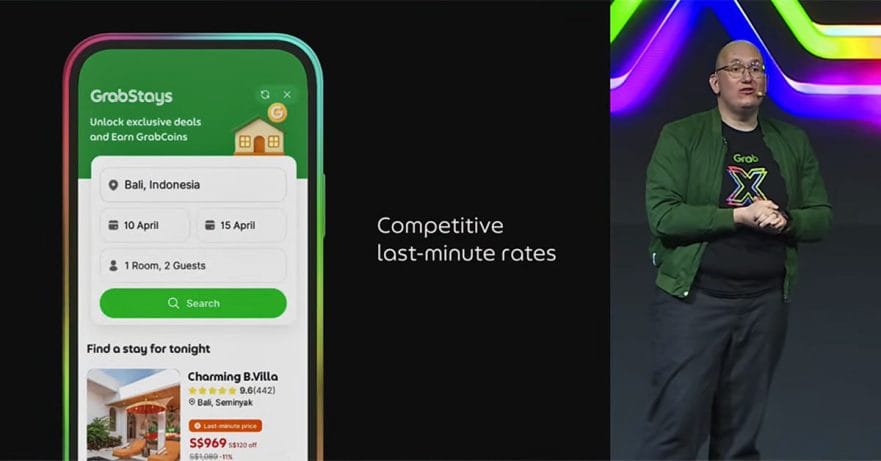
To handle lodging, the company introduced GrabStays. Built in partnership with the AI-first hotel ecosystem Nuitee, the service offers highly competitive same-day rates specifically targeted at last-minute bookings. With payment details already linked to the superapp, securing a room is incredibly fast. GrabStays will launch first in Singapore by May 2026, followed by Malaysia in the third quarter.
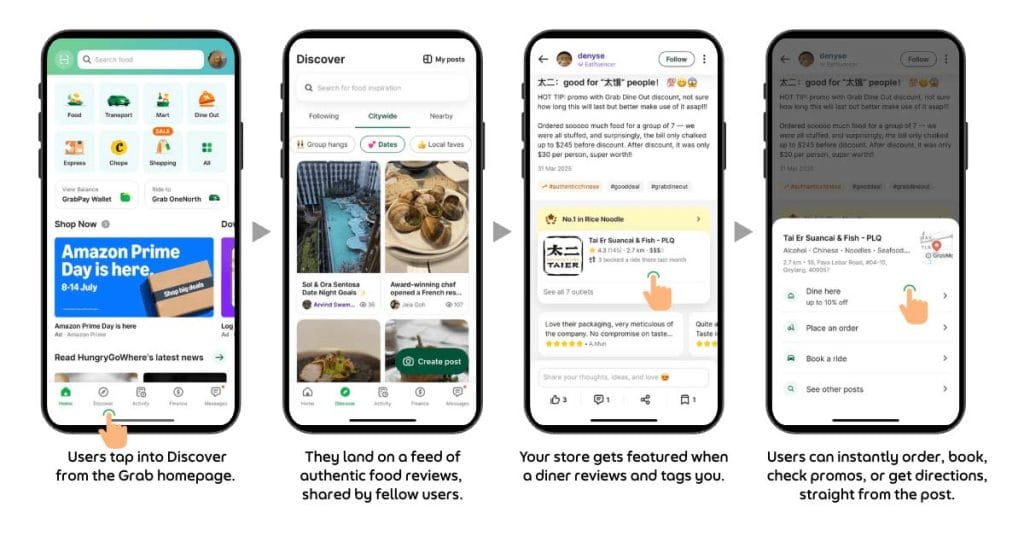
Exploring a new city is also being streamlined. Discover by Grab surfaces authentic, community-generated food content tailored to your preferences by an AI algorithm. Users can seamlessly transition from reading a restaurant review to booking a table or ordering delivery within the same app flow.
Perhaps the most disruptive announcement is GrabPay for Travel. Many merchants across the region accept local QR codes but reject foreign credit cards. This new feature allows tourists to scan participating national QR codes and pay directly using their home-issued debit or credit cards saved in the Grab app. Scheduled to roll out in the Philippines and Malaysia by the third quarter, and in Singapore and Thailand by the end of 2026, it completely eliminates the need for leftover foreign balances.
Ultimately, Grab’s travel pivot is a brilliant exercise in ecosystem lock-in. By weaving together flight tracking, last-minute lodging, hyper-local dining, and cross-border payments, the company is systematically dismantling any reason a tourist might have to download a competing app.
Learn About This Author