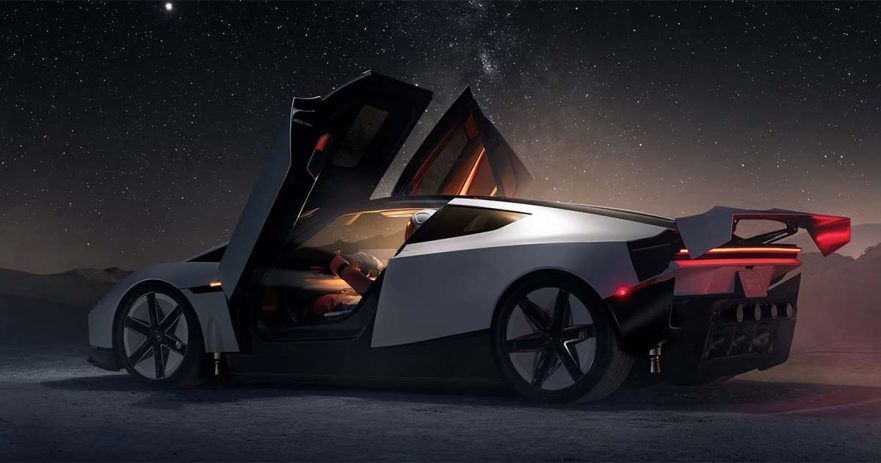
The long wait is finally over, or at least the wait to start waiting is over. After years of delays, the second-generation Tesla Roadster is officially making its way to the Philippines. But before you start imagining yourself cruising down the Skyway in an electric hypercar, you’ll need a substantial budget just to secure a reservation.

As confirmed by Tesla Philippines, local reservations for the electric sports car are now open. Getting in line for the base Performance trim requires an initial payment of ₱350,000 (roughly $5,551), which is fully refundable, followed by ₱3,150,000 ($49,960) within 10 days to secure your spot. Those interested in the higher-tier Thrust variant will need to pay considerably more: While the initial deposit remains ₱350,000 ($5,551), a further ₱17,150,000 ($271,999) is due within 10 days. Due to limited availability, Tesla is capping Thrust reservations at one order per customer.
Miss the 10-day payment window for either model, and your reservation may be canceled. That means having up to ₱17.5 million ($277,550) available just to hold a spot for a car that isn’t scheduled to enter production until 2028.
Roadster event livestream https://t.co/G0jU4mWfid
— Tesla (@Tesla) October 15, 2026
Tesla Roadster launch, in case you missed the livestream
So, what exactly are early adopters signing up for? Tesla appears to have moved away from the softer, Model 3-esque styling of its earlier concepts in favor of a sharper design with more Cybertruck-inspired elements. The base Performance model features active aerodynamics and a multimode suction system, while retaining seating for two. The Thrust variant builds on this with acceleration thrusters. Tesla claims this cold-gas propulsion system, developed with technology inspired by SpaceX, can propel the car from zero to 100 kph in just one second.
Then there’s the most ambitious version of the lineup: the Rocket augment. Available by invitation only, it reduces seating to a single passenger and comes with a so-called “full flight system” that makes the vehicle “air ready.” It’s an ambitious concept that raises plenty of questions about how such a system would work in practice. Whether local regulators would permit anything resembling aerial maneuvers over Metro Manila traffic is another matter entirely.
Real life, baby https://t.co/3QEqn18wig
— Tesla (@Tesla) October 16, 2026
A car that can launch itself into the air
Spending millions on an EV that hasn’t entered production is a significant leap of faith. The 2028 production target remains subject to change, as with any ambitious vehicle development program. Still, if Tesla can deliver on its promised specifications, the new Roadster could represent a major step forward in automotive performance. For now, prospective Philippine buyers will have to weigh those promises against the substantial cost of reserving one.
Learn About This Author