

We’ll just come right out and say it: The OPPO Find X9 Ultra is the best smartphone we’ve ever used for taking photos.

OPPO has historically reserved its most ambitious technology for the Find X Series, but the Find X9 Ultra feels like an entirely different beast. The company has essentially thrown the kitchen sink at this device, sparing no expense. It pairs an unprecedented quad-camera system with Qualcomm’s latest silicon and a large battery that can last past the first day.
SEE ALSO: OPPO Find X9s review: The fun, approachable sibling to the X9?
Raw power on paper is impressive, but translating that capability into everyday performance is where a flagship truly proves itself. And while its imaging chops are undeniably stunning, wielding this much uncompromising power does come with a few considerations, especially when it comes to local price.
In the Philippines, the OPPO Find X9 Ultra will set you back ₱99,999, or around $1,625, for the lone 12GB/512GB configuration we tested. Here’s our full review.

Looking the ‘Ultra’ part
Blocky and premium. That is how we would describe the ergonomics and the in-hand feel of the OPPO Find X9 Ultra. Conveniently, that’s also how we would describe its aesthetics. Those two traits don’t always go hand in hand, but it’s clear OPPO paid meticulous attention to how a top-tier flagship should look and operate. There are no shortcuts here. Even the included silicone cases are uniquely designed to match their specific colorways.
During the brand’s local preview event, the Tundra Umber version immediately caught our eye. It’s original, it’s distinct, and it looks damn good — a design language OPPO should adopt for its “best of the best” moving forward.
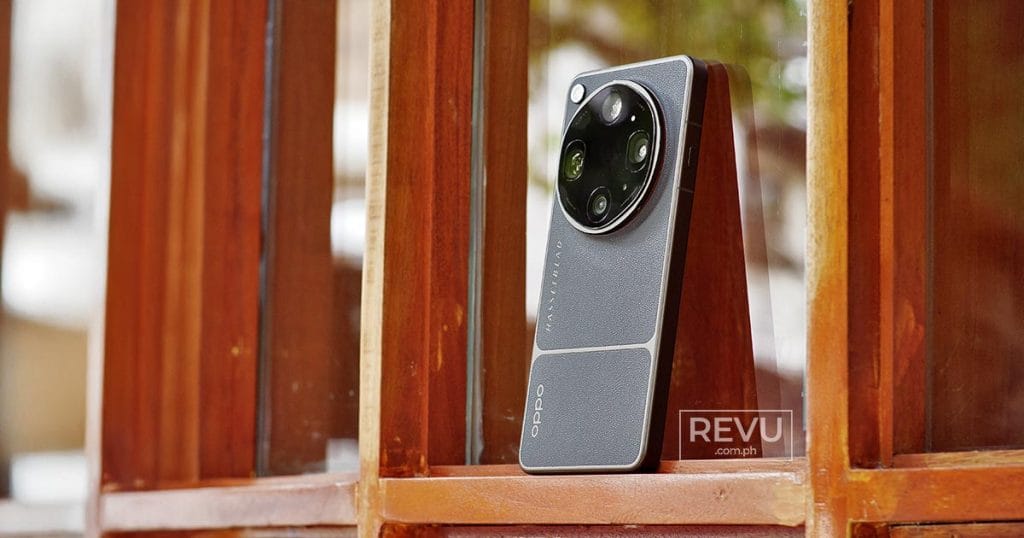
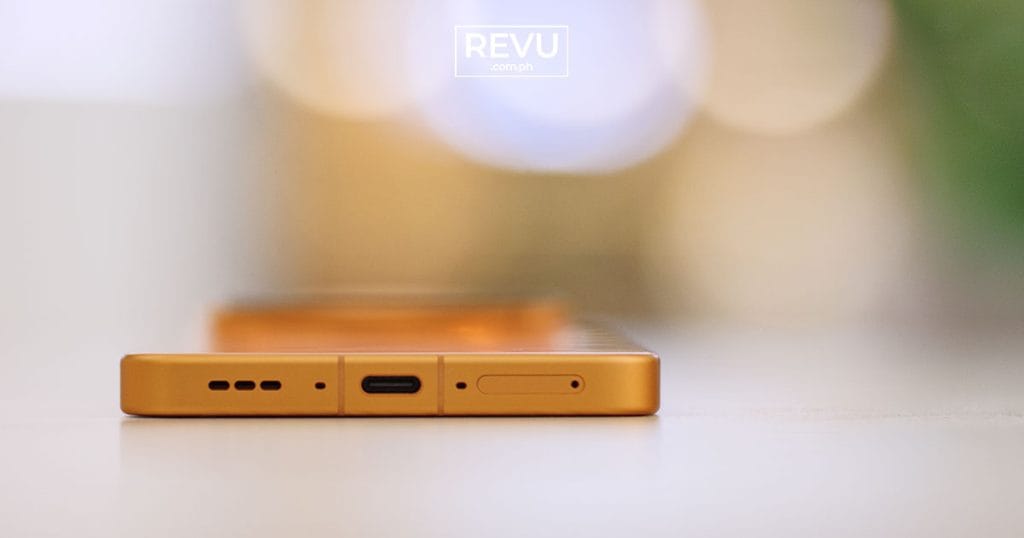
For this review, however, we tested the Canyon Orange model. The embossed texture at the back is inspired by Antelope Canyon in the American Southwest. Even if you aren’t familiar with the name, you’ve probably seen it. We didn’t even realize the landmark’s actual name until now, despite using it in our desktop wallpaper rotation for years. The texture provides a secure grip for anyone brave enough to go caseless, and honestly, it’s a shame to hide it behind a piece of plastic.
Durability is another focus. The phone features OPPO’s Armour Shield architecture, complete with Corning Gorilla Glass Victus 2 on the front. It also carries IP66, IP68, and IP69 certifications against water and dust, making it practically element-proof.
Along the right edge, just below the power and volume keys, sits an orange accent Quick Button. It doesn’t physically click; instead, it’s pressure-sensitive and delivers haptic feedback from the vibration motor. A single press launches the native camera app, while a double press snaps a picture. You can light-press to lock focus — just like a dedicated point-and-shoot — or swipe along the button to adjust your zoom. It’s very intuitive.
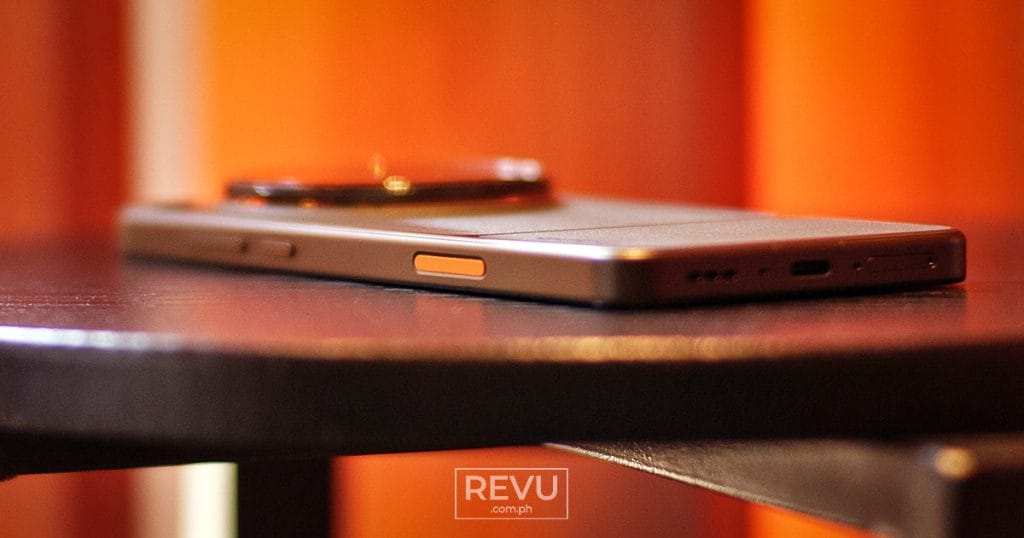
OPPO also included a customizable Snap Key on the left side of the frame for app shortcuts, and like most of the brand’s flagships, an IR blaster rests squarely on the top edge.
A set of stereo hybrid speakers handles the audio. You get an earpiece at the top and a full-fledged speaker at the bottom. The tuning isn’t the absolute best we’ve ever heard. The bass feels slightly lacking compared to other ultra-premium rivals. On the bright side, the highs and vocals are clean, and the setup sounds noticeably better than its Find X9 siblings.
Moving to the display, you get a huge 6.82-inch LTPO OLED panel with a QHD+ or 1440p resolution. For outdoor visibility, it hits a full-screen brightness of 1,800 nits in High Brightness mode, an impressive feat considering that applies to the entire panel, not just a small HDR window.
The screen supports granular refresh rate control, dropping down to 1Hz when idle and scaling up to 120Hz for general use. The panel is technically capable of 144Hz, a spec rarely seen outside of dedicated gaming phones, but that ceiling is strictly reserved for select games. You cannot manually force standard apps to run at 144Hz, which is a minor bummer.

The best camera phone for us right now, period
The camera system is where the Find X9 Ultra transitions from an great smartphone to a remarkable one. OPPO introduced upgrades to almost every aspect of the array.
The main shooter uses Sony’s new 200-megapixel Lytia 901 sensor, paired with an optically stabilized 23mm-equivalent f/1.5 lens. It captures a ridiculous amount of detail with wide dynamic range, punchy contrast, and practically zero noise. Unsurprisingly, a 2x sensor crop on this lens yields excellent results.
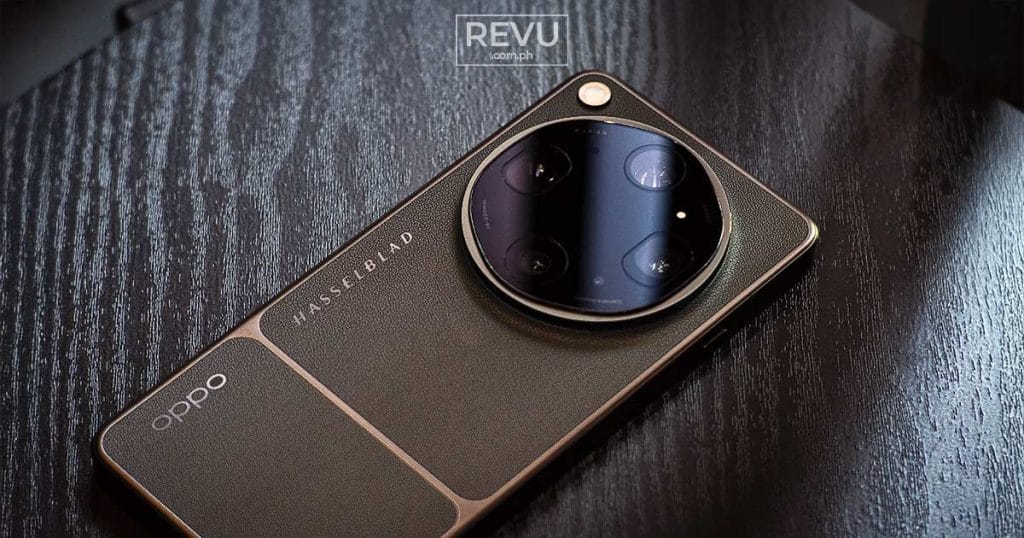
Then there are the two separate telephoto cameras. The short telephoto uses a 200-megapixel sensor behind a 70mm-equivalent lens offering 3x optical zoom. It handles macro duties alongside the main lens. At 3x, the colors and dynamic range are top-tier. It’s particularly useful for portrait photography and video, offering ideal facial proportions and organic background blur. You can even push it to a 6x native crop with fantastic fidelity.
Taking over at 10x zoom and beyond is the long telephoto, which relies on a 50-megapixel sensor. To make this fit without creating a massive camera bump, OPPO engineered the industry’s first Quintuple Prism Reflection Periscope Structure. Most of the zoomed-in samples we took were shot on this 10x lens, and in good lighting, they look as sharp as a standard 3x crop. We even pushed it to 20x just to see if the system would break a sweat, and it still delivered highly usable images.
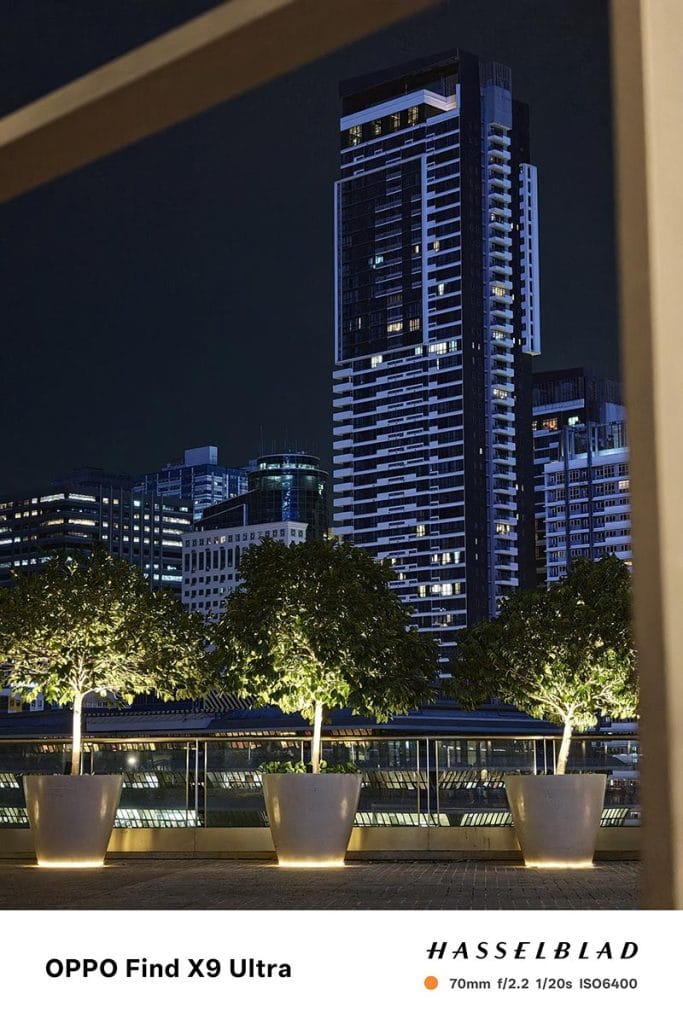
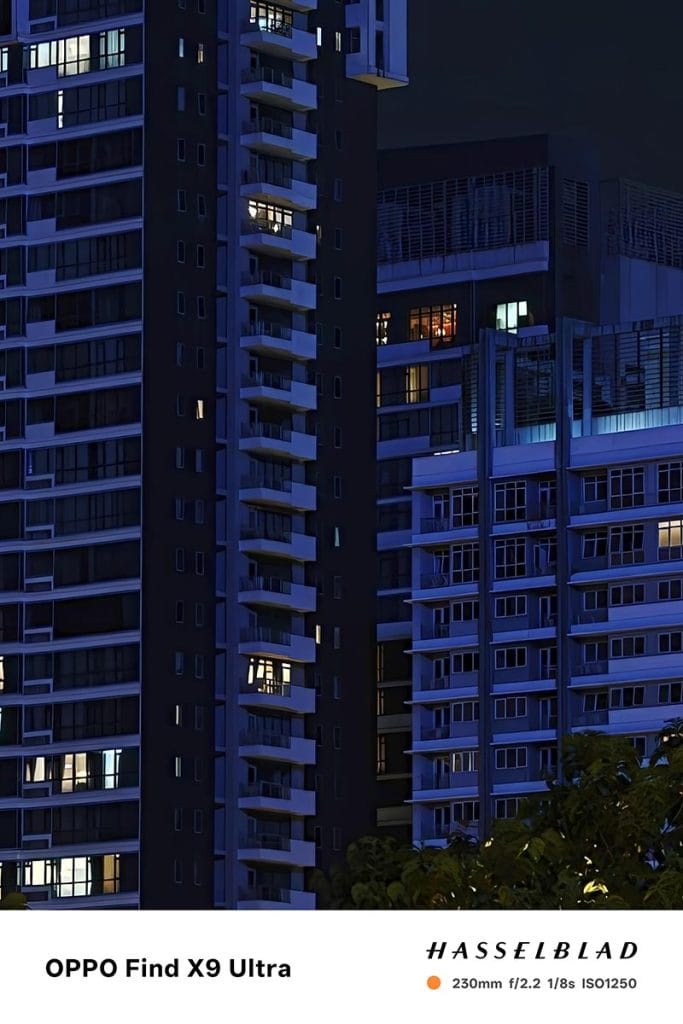
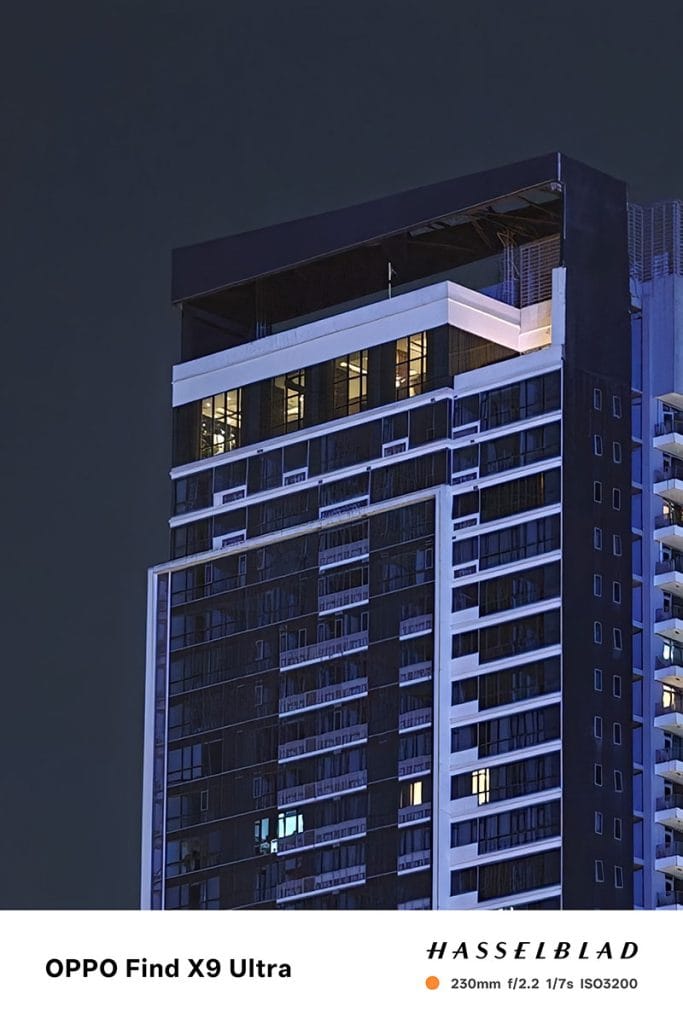
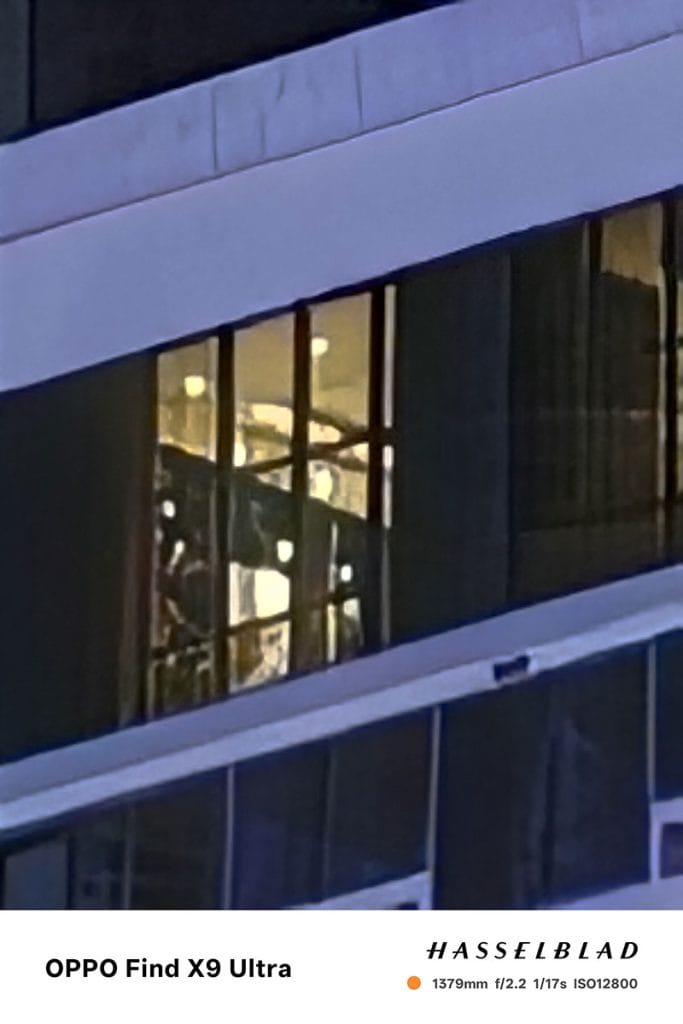
Pushing the zoom to 20x (and sometimes even beyond) still produced great results, even in low light. The last image in this set was captured with a 60x crop (!). We can further sharpen it using AI with the Enhance Clarity feature
Rounding out the hardware is the 50-megapixel ultra-wide, packing a 14mm-equivalent, f/2.0 lens. Typically, ultra-wide lenses on even the most expensive flagships are where companies start cutting corners, resulting in muddy edges and dramatic barrel distortion. Not here. The camera samples from this sensor are sharp from edge to edge. It captures an incredibly sweeping field of view without making straight lines look warped, and more importantly, the color tuning matches the primary Lytia sensor well.
Then there’s the upgraded 50-megapixel selfie camera with autofocus. Our sample shots reveal crisp details right down to individual strands of hair and clothing textures. Notably, the company has toned down the aggressive, ghost-white skin smoothing that plagues so many front cameras, resulting in natural skin tones, accurate color rendering, and clean separation when throwing it into Portrait mode.



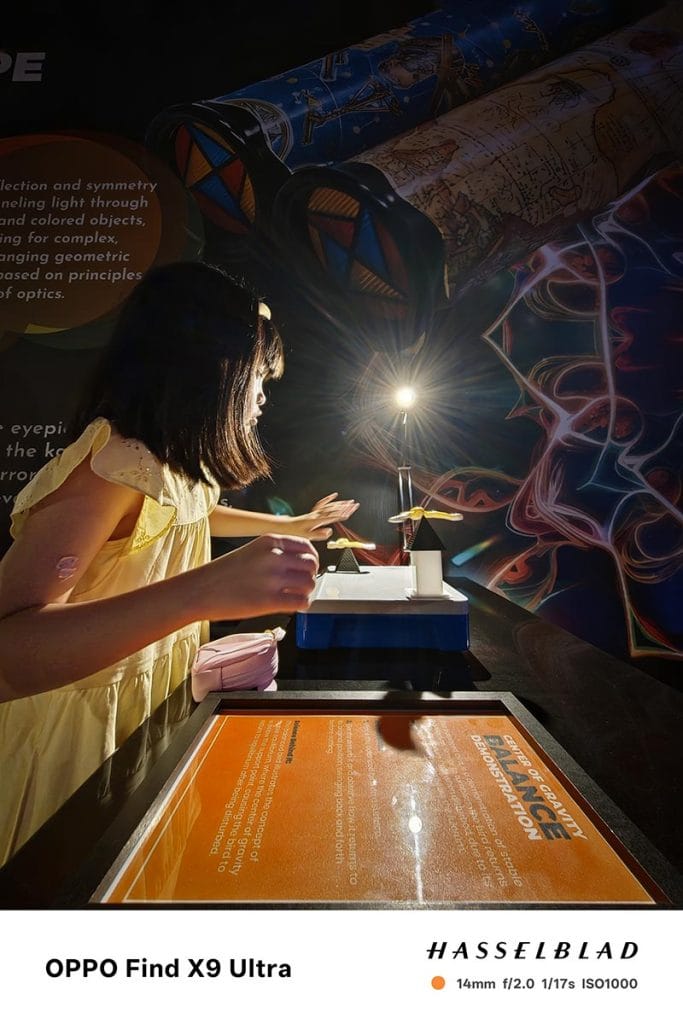
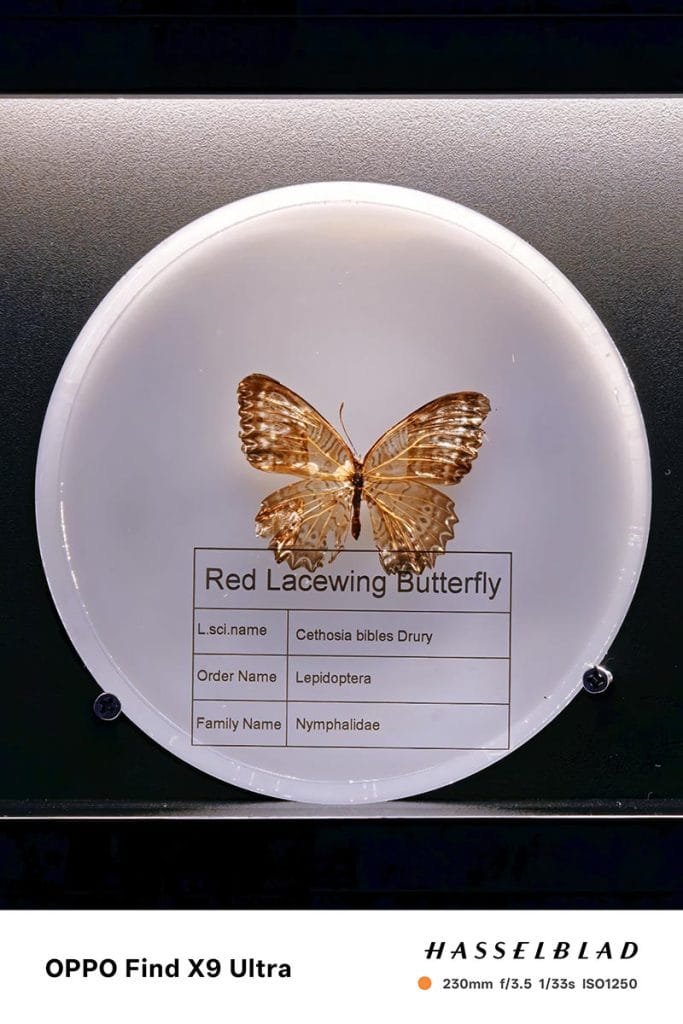
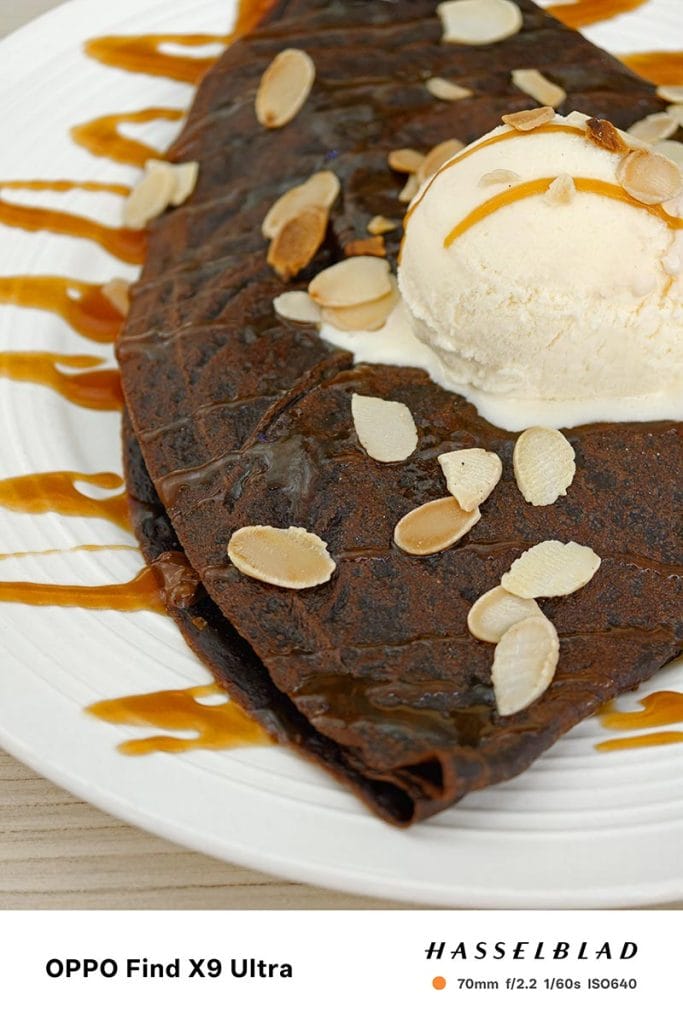
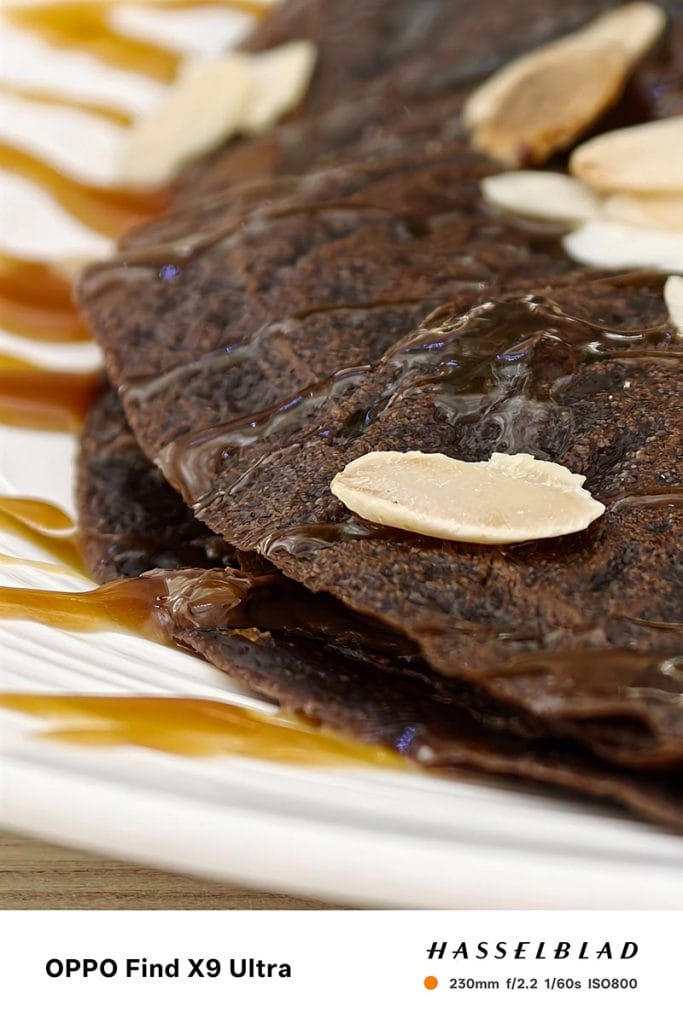
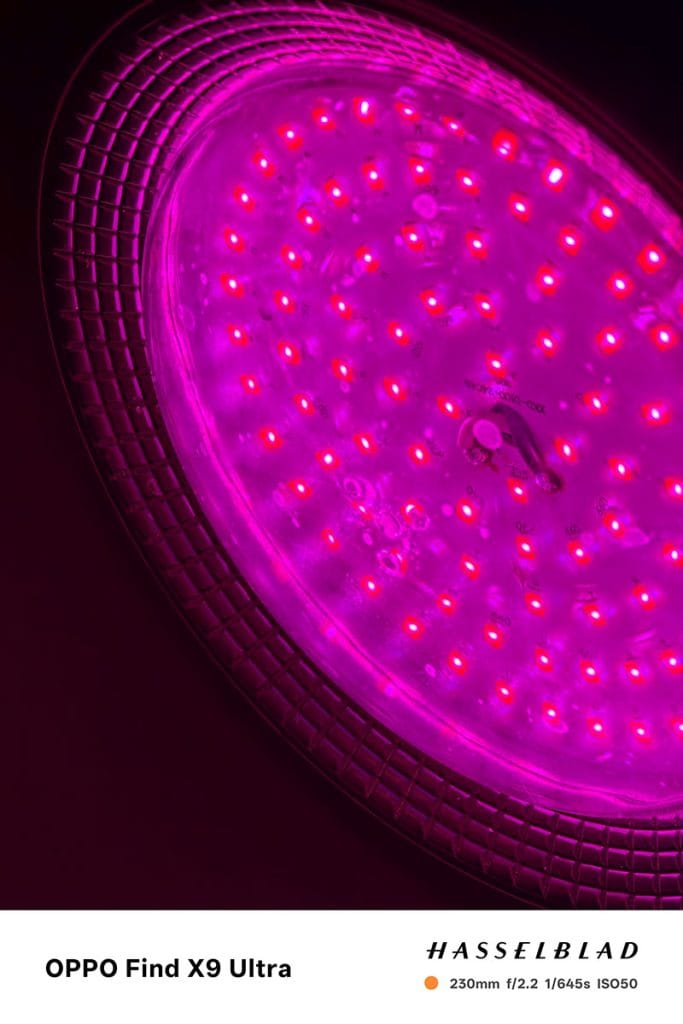
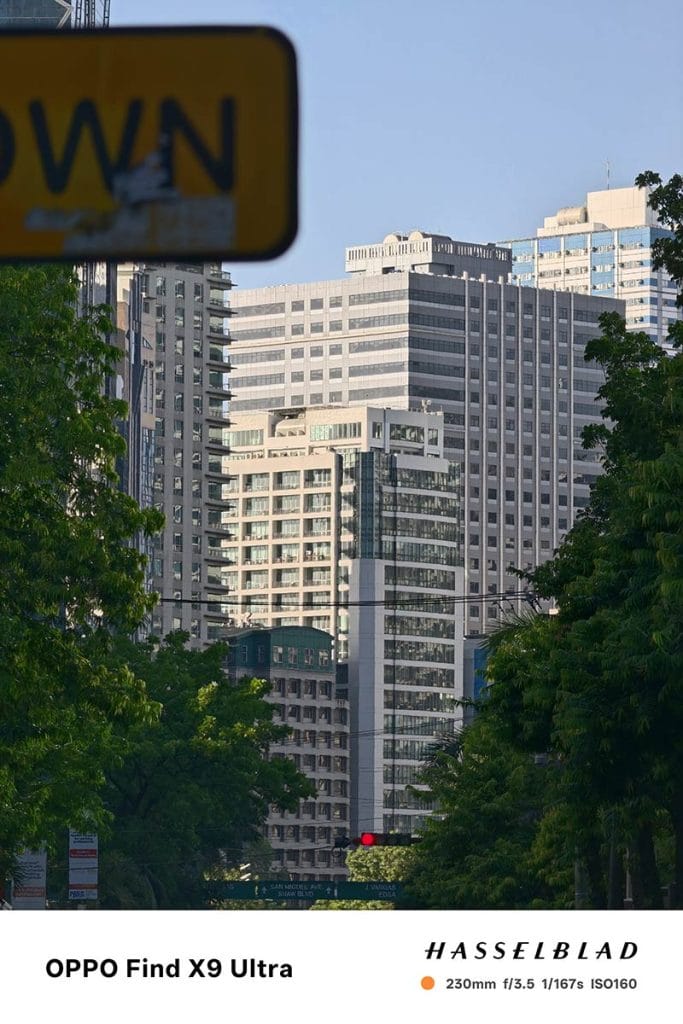
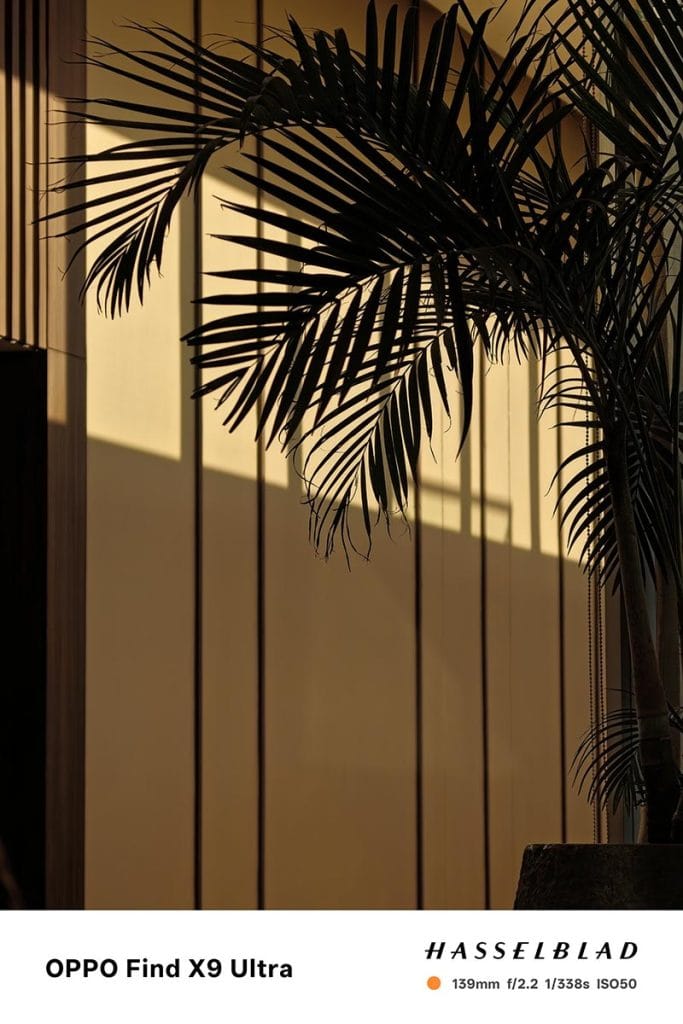
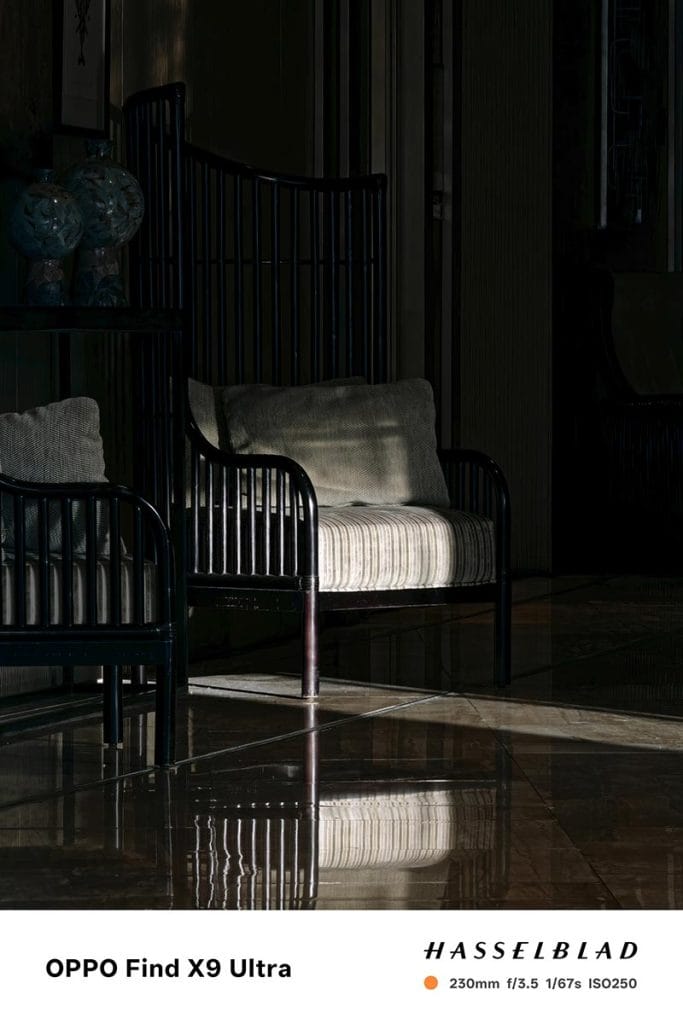


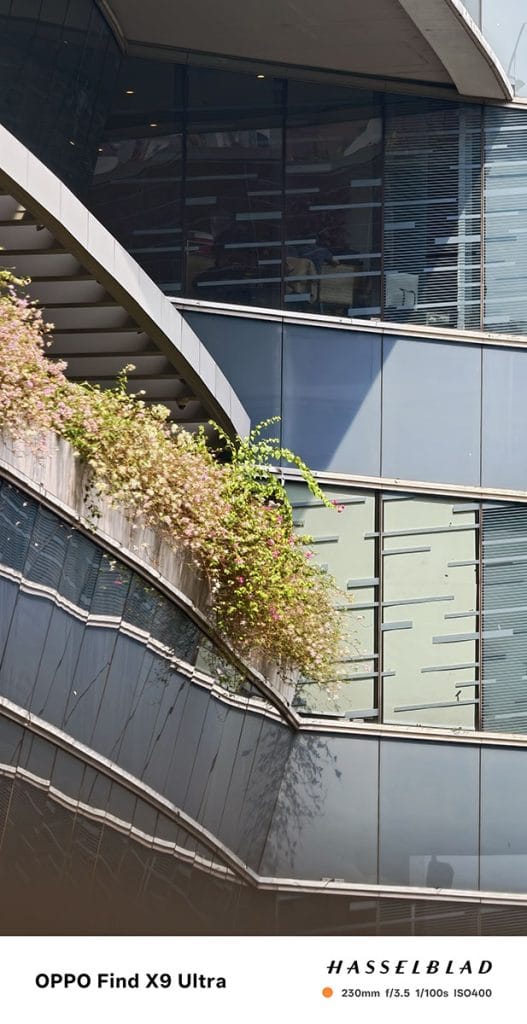

Sample shots. We even used the smartphone to capture product photos and record videos without a gimbal
OPPO’s ongoing collaboration with Hasselblad continues to pay dividends. The partnership heavily influences the color science, the Pro mode interface, and distinct software additions like the cinematic XPAN mode.
After shooting hundreds of photos, we’re convinced this device can capture stunning images regardless of your skill level. In Auto mode, the handset generally nails the shot, though you will occasionally spot hints of overprocessing.
If you’re a seasoned photographer, Master mode is where the OPPO Find X9 Ultra vindicates its “Ultra” moniker. It gives you granular control, while also yielding refined JPEG files alongside massive DNG RAW files. Editing these RAW files in Adobe Lightroom or Google’s Snapseed can be incredibly rewarding for those who enjoy the craft of post-processing and put in the work.








If you’re into photography, Master mode on the OPPO Find X9 Ultra gives you full control and lets you edit huge RAW files in Lightroom or Snapseed for seriously rewarding results
Hardware, as we always say, is only half the battle. OPPO’s first-party AI tools can elevate the final results significantly. Features like AI Eraser easily remove photobombers and clutter from your backgrounds using generative fill, while AI Perfect Shot can salvage imperfect shots, letting you instantly fix awkward facial expressions or closed eyes with a single tap, without needing additional apps. Meanwhile, AI Recompose intelligently suggests alternative framing options. It’s generally handy for group pictures or when handing your phone to a stranger, ensuring your final shot is well-composed.
Hands down, AI Portrait Glow is our favorite computational feature in the gallery app. We have sung its praises ever since it debuted on the OPPO Reno15 Series 5G, but it shines even brighter here, simply because the Find X9 Ultra’s superior camera hardware provides a much higher-quality base file.
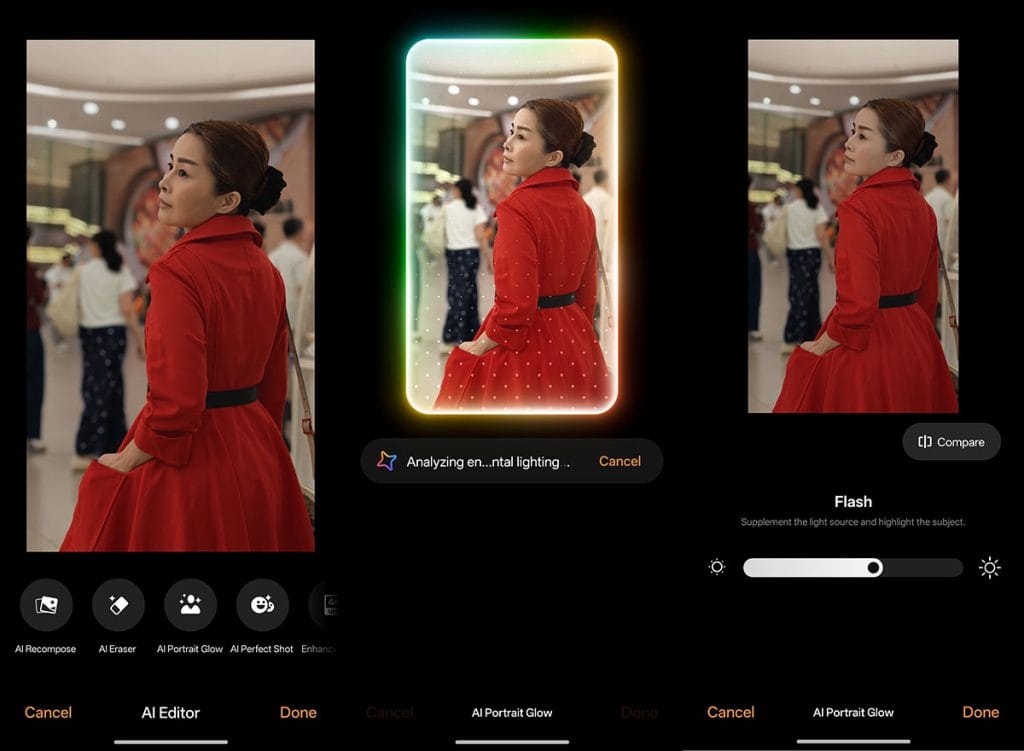
For those unfamiliar, AI Portrait Glow dynamically recalibrates lighting to mimic a professional studio setup. In low-light environments and during night shoots, it brightens the subject’s face while preserving natural skin tones and crushing noise. In uneven lighting, it softens harsh shadows and casts a flattering rim light to beautifully separate your subject from the background.
Even better, AI Portrait Glow isn’t restricted to the rear array. It also works on selfies, successfully mimicking the trendy, high-contrast “rear-camera flash” aesthetic seen on social media, but with an intentional polish rather than an accidental look. We’re impressed by how well it balances complex lighting scenarios without making subjects look artificially edited.
Pushing the ‘Ultra’ limits
Inside, the OPPO Find X9 Ultra rocks the Snapdragon 8 Elite Gen 5 5G, making it the sole device in the X9 lineup to pack Qualcomm silicon. This is paired with 12GB of LPDDR5X RAM and 512GB of fast UFS 4.1 storage.
To say it performs fast is an understatement. App switching is frictionless. Having a windowed Chrome tab streaming video while editing 50MB RAW Max files in Lightroom didn’t trigger a single stutter. And in a sheer flex of raw power, our unit breached the 4-million mark in the latest Antutu Benchmark — a score we simply haven’t seen in non-controlled, real-world testing. It will run resource-intensive games at max settings and peak frame rates. You can even emulate heavy PC titles like Red Dead Redemption 2 at 60 FPS.
Despite all that, it’s worth keeping the thermals in mind when pushing this device to its limits. Demanding tasks like playing Wuthering Waves at max settings, emulating PC games, shooting LOG format video, or quickly capturing RAW files will naturally generate noticeable heat.
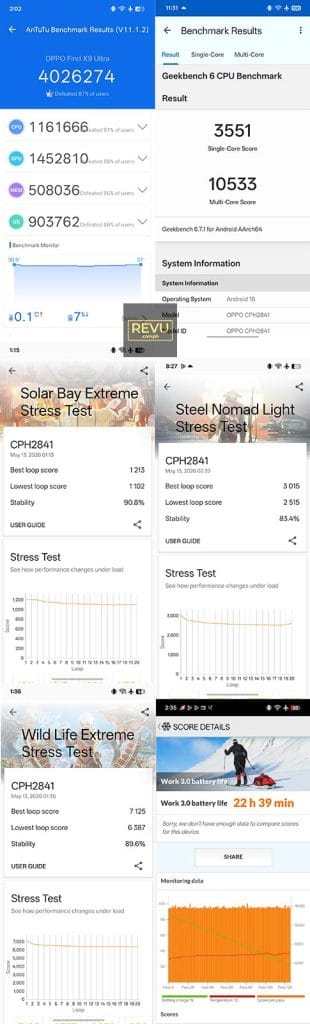
Any flagship will warm up under these intensive workloads, but our local climate certainly adds to the challenge. Testing the smartphone during the scorching Philippine summer, where ambient temperatures easily exceed 35 degrees Celsius, predictably pushes the hardware to its thermal ceiling. The OPPO Find X9 Ultra still performs beautifully, but if you live in a tropical environment and plan on extended, heavy gaming sessions, we recommend pairing it with a dedicated snap-on cooler to keep things running comfortably.
Battery life, however, is a triumph. The unit draws from a 7,050mAh silicon-carbon battery, regulated by OPPO’s custom PowerCore Battery Management Chip. The silicon is engineered to improve stability during low-power stages and manage discharge rates efficiently. And it works. In our testing, the OPPO Find X9 Ultra survived a staggering 22 hours and 39 minutes in our PCMark battery-drain test. That score puts to shame other flagships boasting slower processors or similarly sized cells.
When it is finally time to recharge, it supports 100-watt SuperVOOC wired charging and 50-watt AirVOOC wireless charging. Using the bundled power brick and cable, we took the battery from flat to full in about 50 minutes.
Final thoughts
The OPPO Find X9 Ultra is a masterclass in premium smartphone engineering, purposefully built to live up to its “Ultra” moniker — from the tactile finish on both color variants to the sheer stamina of its 7,050mAh cell. Above all else, its quad-camera array and Hasselblad color science secure its crown as the ultimate mobile photography tool on the market right now.
Of course, no device is entirely without its flaws. Thermal management remains a hurdle under demanding workloads, particularly when capturing high-bitrate video or gaming in a warm climate. Then there’s the price tag to consider. Still, if you are willing to overlook the thermal ceiling and the premium cost of entry, you’ll be rewarded with a beautifully crafted, uncompromising powerhouse that leaves the competition scrambling to catch up.
Could the OPPO Find X9 Ultra be ‘your next camera’?
OPPO Find X9 Ultra specs
- 6.82-inch AMOLED screen, QHD+ resolution, 144Hz refresh rate, 3,600 nits peak brightness, Corning Gorilla Glass Victus 2
- 3nm Qualcomm Snapdragon 8 Elite Gen 5 processor
- Adreno 840 GPU
- 12GB RAM
- 512GB UFS 4.1 storage
- Penta Hasselblad rear cameras: 200-megapixel main camera, 50-megapixel ultrawide, 200-megapixel telephoto, 50-megapixel ultra telephoto, 3.2-megapixel monochrome
- 50-megapixel front camera
- 7,050mAh battery with 100-watt wired charging, 50-watt wireless charging
- ColorOS 16 based on Android 16
- IP66, IP68, and IP69 dust and water resistance
- Colors: Canyon Orange, Tundra Umber
Learn About This Author
