If you’ve scrolled through TikTok or Facebook recently, you’ve undoubtedly been hit by a targeted ad for a microdrama. You know the ones: addictive, bite-sized episodes about secret billionaires, werewolf alphas, or elaborate revenge plots.

Because of their scrappy production value and aggressive social media marketing, it’s been easy to dismiss these vertical soap operas as a guilty pleasure for a specific, lower-income crowd. But the numbers are in, and they paint a different picture. It turns out, the people throwing the most cash at these mini teleseryes are Apple iPhone users.

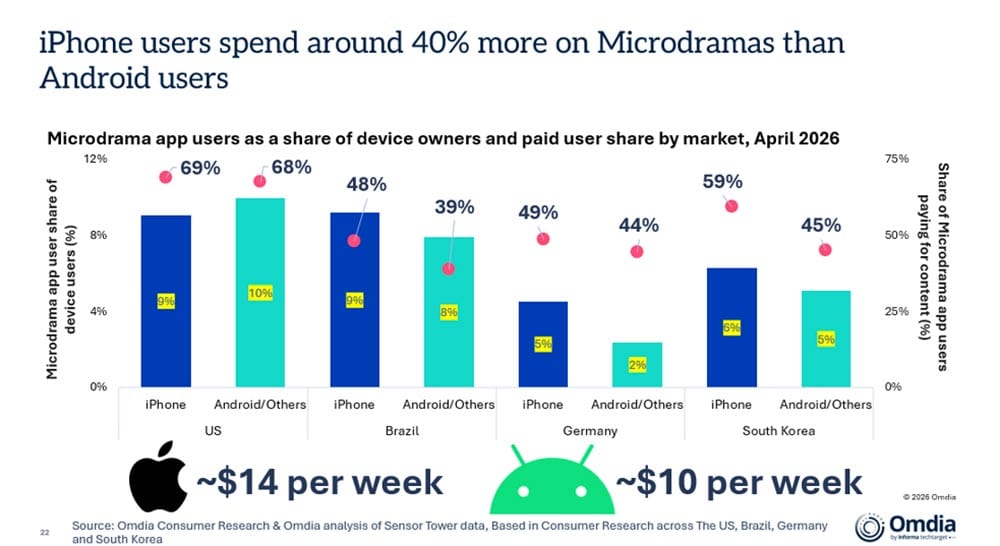
According to a newly released August 2026 report from technology research firm Omdia, iOS users are spending about 40% more on microdrama platforms than their Android counterparts. Based on Sensor Tower data analyzed by the firm, the average iPhone user drops about $14 (roughly ₱856) a week on these apps, while Android users max out at around $10 ($611).
The global spending divide
In the United States, the playing field is surprisingly level. Microdramas have successfully clawed their way into the mainstream, with about 9% of iPhone users and 10% of Android users opening a microdrama app in the last three months. When it comes to actually opening their wallets for subscriptions or in-app coins to unlock that next cliffhanger, the split is basically a coin toss: 69% of iOS users pay, versus 68% for Android.
But step outside the U.S., and the gap widens into a canyon. Omdia surveyed consumers across several major global markets earlier this year and found that outside America, the Apple ecosystem is driving the revenue train:
- South Korea: 59% of iPhone users pay for microdrama content, compared to just 45% of Android users.
- Brazil: 48% of iPhone users are paying up, versus 39% on Android.
- Germany: A closer race, but iOS still leads 49% to 44%.
Shattering the cheap content myth
For a long time, the traditional entertainment industry kind of looked down on the microdrama format. The overarching assumption was that audiences wouldn’t pay premium prices for one-minute, vertical videos shot on a shoestring budget.
Omdia Head of Media and Entertainment Maria Rua Aguete says the latest figures offer a starkly different picture.
“The genre has often been dismissed as appealing primarily to lower-income or niche consumers. Our findings tell a different story,” Rua Aguete noted in the report. “In many markets, iPhone users are actually more likely to pay for microdrama content than Android users, highlighting that these audiences are more diverse and commercially valuable than many in the industry have assumed.”
Why does this change the game? Well, microdramas aren’t just a passing internet weirdness; they are rapidly becoming one of the fastest-growing sectors in digital entertainment. The platforms hosting these shows have figured out how to gamify the viewing experience, teasing you just enough before hitting you with a paywall.
Understanding who is buying those in-app coins is the holy grail for developers and advertisers. With data proving that premium smartphone owners are the ones consistently swiping their credit cards, we are almost certainly going to see a surge in higher-budget microdramas specifically targeting the iOS market.
So, the next time you see a dramatic, 60-second clip of a CEO discovering his intern is actually a billionaire heiress, just know: Someone with an iPhone 15 Pro is probably spending $14 (₱856) this week to see what happens next.
Learn About This Author