
Every mobile gamer knows the moment a highly competitive match goes sideways.

You’re deep in ranked play, team fights are chaotic, and suddenly the back of your phone feels like a toaster. The frame rate stutters, your touchscreen inputs lag, and defeat flashes on screen. Thermal throttling has long been the final boss for smartphone makers, who for years relied on thicker graphite pads as a quick fix.
With the new Infinix GT 50 Pro, Infinix takes a bold engineering leap. As the official tournament phone of the Mobile Legends Professional League Philippines (MPL PH), it’s built from the ground up to withstand the demands of professional esports.
@revuphilippines Unboxing the coolest gaming‑focused phone in the Philippines ❄️🔥 — the #InfinixGT50Pro with active liquid cooling, open‑cut Pressure‑Sense GT Triggers, 144Hz gameplay, and an esports‑ready design. Ready to unbox power and performance, too? Check out our full review at www.revu.com.ph if you missed our June 10 post. #GT50Pro #Infinix #InfinixPH #RevuDotComDotPH @infinixphilippines @infinix.global @monch @Alora Uy Guerrero ♬ original sound – REVU Philippines
Update, June 16: Our unboxing video of the Infinix GT 50 Pro
The brand set out to build something that tackles one of the biggest hardware bottlenecks in modern mobile gaming. And while it’s not cheap, it still manages to undercut the restrictive price tags usually associated with premium, dedicated gaming handsets. In the Philippines, the base 256GB storage variant, paired with 12GB of physical RAM and 12GB of extended RAM, carries a suggested retail price of ₱25,999 (around $422 converted). If you need more space for storage‑hungry games and local media files, the top-tier 512GB configuration costs ₱29,999 ($487).
The first official sale kicks off on June 10, 8 p.m., via the Infinix Philippines TikTok Shop. Early buyers can score exclusive promotional pricing, dropping the 256GB version to ₱23,999 ($389) and the 512GB model to ₱27,999 ($454).
Built for the (digital) arena
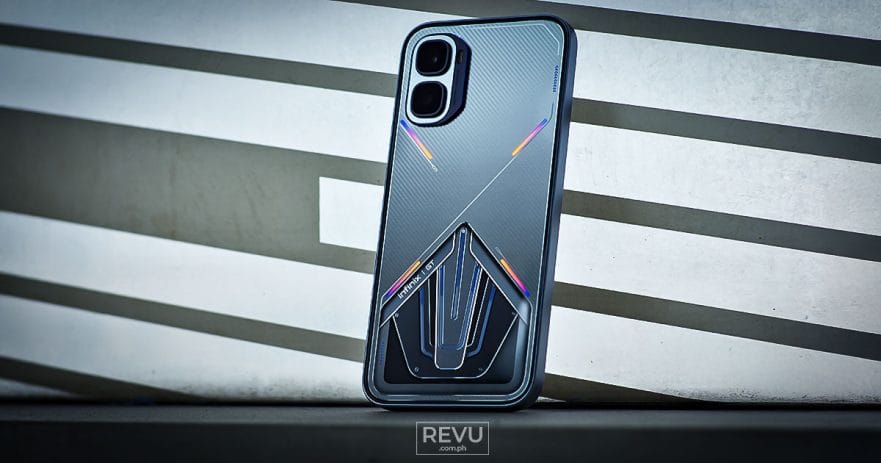
The Infinix GT 50 Pro comes in Black Abyss, Red Blaze, and Glacier Silver, the variant we used for this review. This particular unit commands attention the second you pull it out of your pocket or bag. The exterior design is a masterclass in gaming aesthetics. We’d even argue it’s the best-looking commercially available Infinix phone we’ve tested so far.
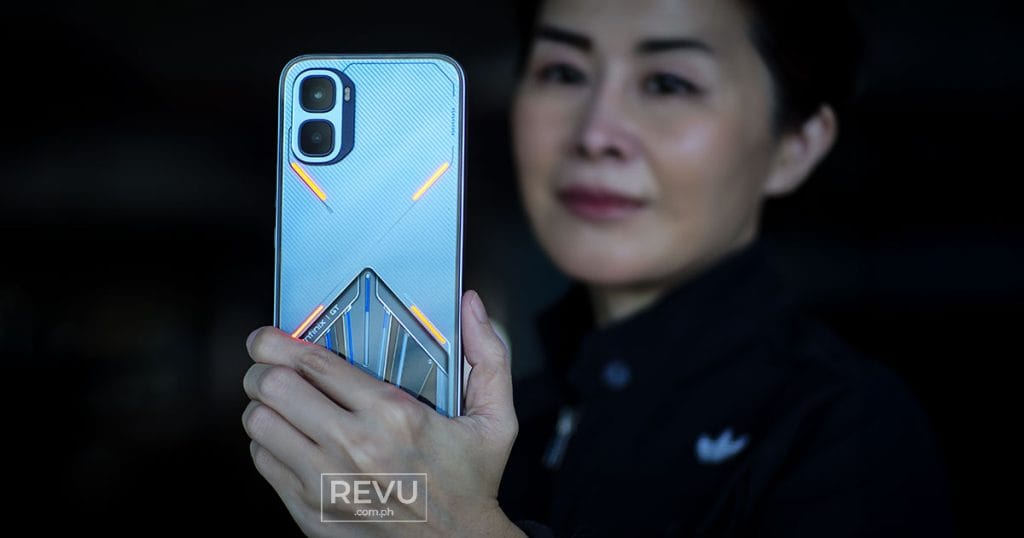
Taking cues directly from “supercar wind-tunnel testing,” the glossy chassis features sharp, streamlined contours and Kevlar-inspired accents that give it an aggressive look. And to give the back panel some visual depth, Infinix used a layered printing process that creates a 3D effect.
If we have one gripe about the overall build, it’s the plastic body. The company stuck with the same material as last year’s iteration. That was perfectly fine for the previous generation, but considering the premium tier the GT 50 Pro is aiming for this year, it feels like a missed opportunity, especially since we’ve seen Infinix produce metal-clad smartphones for significantly less.
The hardware’s visual centerpiece is easily the lighting. The Infinix GT 50 Pro debuts an all-new rear RGB system that goes far beyond standard notification LEDs. It sports four distinct crosshair-styled RGB lighting strips that cut across the back panel. You’re not just stuck with one default look, either; this sophisticated system supports 14 lighting scenarios alongside eight customizable colors and eight distinct animation styles — including Breath, Flywheel, Converge, Infinite, Rainfall, Firework, Leap, and Scale — depending on your mood.
Beyond customization, the lights serve real gameplay functions. If you’re playing Mobile Legends: Bang Bang, for example, the lights will dynamically trigger when you secure First Blood, land a Solo Kill, or rack up Multi-Kills. If shooters are more your speed, titles like PUBG and Free Fire will dynamically sync the RGB strips to pulse whenever you actively fire your weapon, drive a vehicle, or look down a sniper scope. It’s really cool.
Of course, none of that flashy design matters if the screen itself can’t keep up. The GT 50 Pro is equipped with a large 6.78-inch 1.5K AMOLED flat display framed by sleek, uniform bezels. According to Infinix, the panel boasts an impressive 93.18% screen-to-body ratio, making it easy to get lost in whatever game you’re playing. Colors pop off the glass thanks to a wide 100% DCI-P3 color gamut, delivering rich, lifelike tones that make fantasy worlds and gritty battlefields look great.
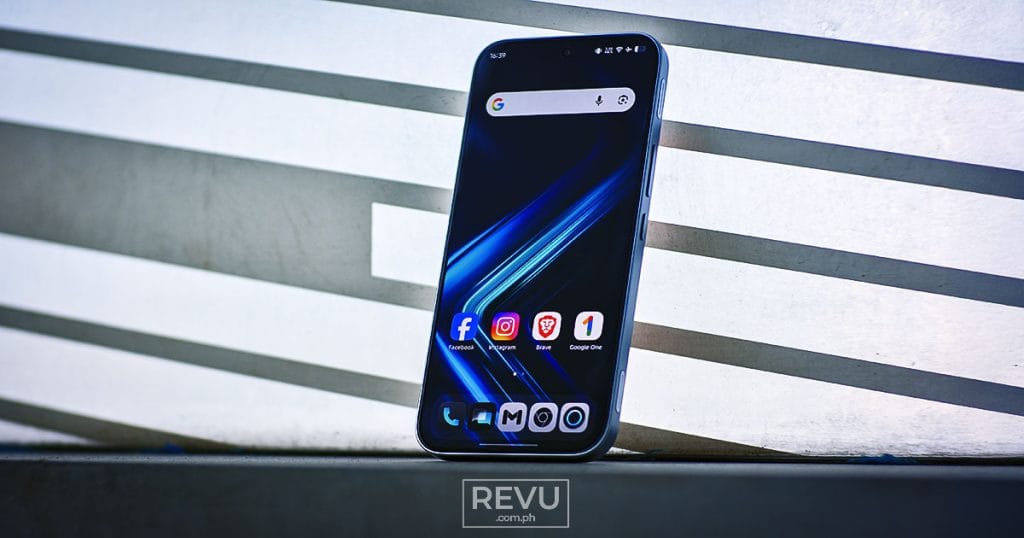
If you’ve ever tried to play a ranked match while waiting for a bus or motorcycle taxi in the glaring midday sun, you know the struggle of a dim screen. The brand solves that issue by pushing the display to a peak brightness of 4,500 nits, with a sustained High Brightness mode of 1,600 nits to ensure better outdoor visibility. We can personally attest to this, having played several matches outdoors during our testing
To keep everything feeling fluid, the screen features an adaptive refresh rate that dynamically scales between a battery-saving 30Hz and a blazing-fast 144Hz, depending on the content. High performance can strain your eyes especially during nighttime grinds, though. To combat fatigue, Infinix included an advanced Motion Sickness Relief Display protocol, plus high-frequency 2,304Hz PWM dimming, which has rightfully earned a TÜV Rheinland hardware-level low blue light certification for eye comfort. And because mobile gamers can be notoriously hard on their hardware, the entire panel is protected by durable Corning Gorilla Glass 7i.
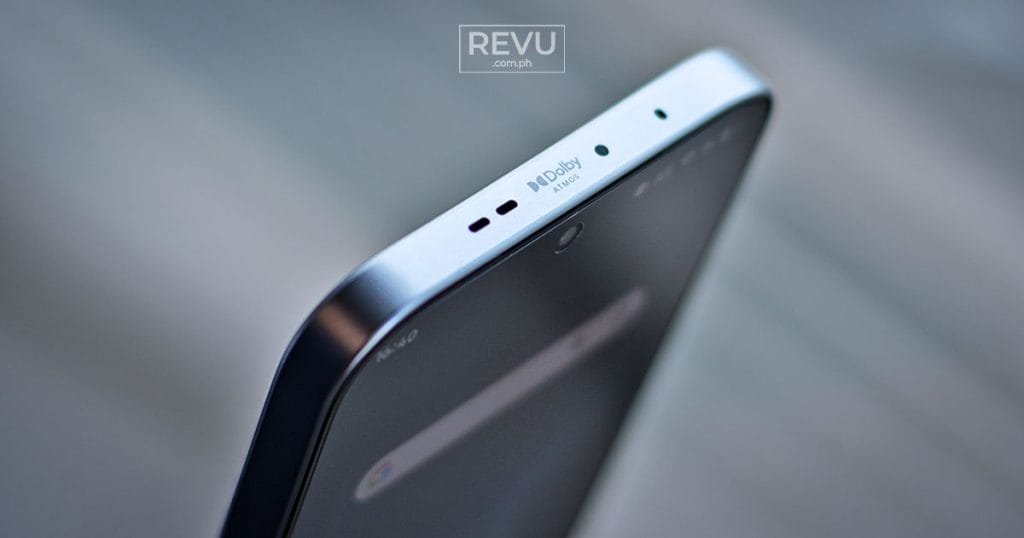
Finally, we must discuss the GT 50 Pro’s physical controls and the audio. Relying purely on a flat screen for complex touch inputs can put you at a disadvantage. To fix this, Infinix integrated the industry’s first open-cut Pressure-Sense GT Trigger into the phone’s physical frame. Because of this unique open-cut design, the pressure-sensing signal is stronger and more responsive than anything else on the market.
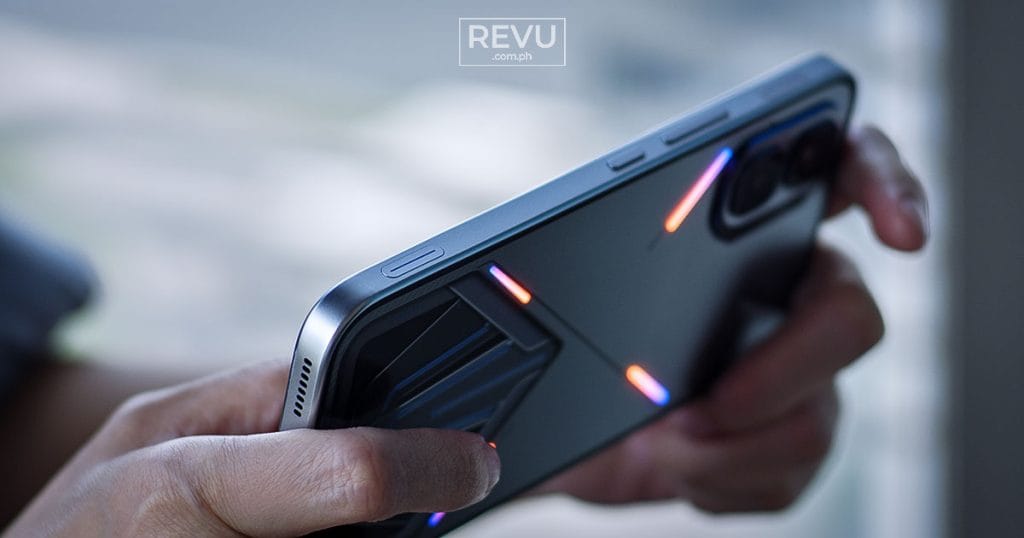
They’re fast, too, offering an input latency under 20 milliseconds and a durability rating of over 3 million presses. Additionally, instead of just your standard clicks, they recognize four distinct gestures: a light press, a heavy press, a left slide, and a right slide. Dive into the preloaded XArena app, and you can easily tweak eight different mapping points and 10 sensitivity levels to match your playstyle. In shooters like Call of Duty: Mobile, they give you an edge for instant rapid-fire and quick-scope aiming. If you prefer MOBAs, you can map them to pull off split-second Blink and Ultimate combos without ever having to fumble your thumbs across the touchscreen.
The audio experience might just be as impressive. This is the first Infinix smartphone to include built-in Dolby Atmos support for 3D spatial sound. This means if you’re hiding in a building during the final circle of a battle royale, you should be able to hear the direction of enemy footsteps outside. Just keep in mind that, like almost every handset in 2026, there’s no 3.5mm headphone jack here, so you’ll need to rely on wireless buds or a Type-C adapter for private listening.
Liquid-cooled gaming beast
Inside, the Infinix GT 50 Pro runs on the 4nm MediaTek Dimensity 8400 Ultimate 5g platform, which features an all-big-core setup clocked at 3.25GHz. Make no mistake, this isn’t a midrange SoC pretending to be flagship silicon. The brand proudly advertises an Antutu benchmark score of more than 2.2 million, which represents a 26.45% performance leap over the older Infinix GT 30 Pro. Now, we didn’t actually hit that exact lab number during our testing — likely because the Philippine heat doesn’t play nice with synthetic benchmarks — but our unit came incredibly close to breaching the 2-million mark, narrowly missing it by about 12,000 points.
On the graphics front, the Mali-G720 MC7 GPU is doing the heavy lifting. The cool part is that it supports hardware-level Ray Tracing, meaning lighting, shadows, and reflections look lifelike in supported games. Normally, cranking up the graphics tanks your frame rate, but Infinix has a clever workaround using MediaTek’s Frame Rate Converter and Adaptive Game Technology. Basically, the device generates extra frames on the fly, allowing you to bypass a game’s built-in frame rate limits.
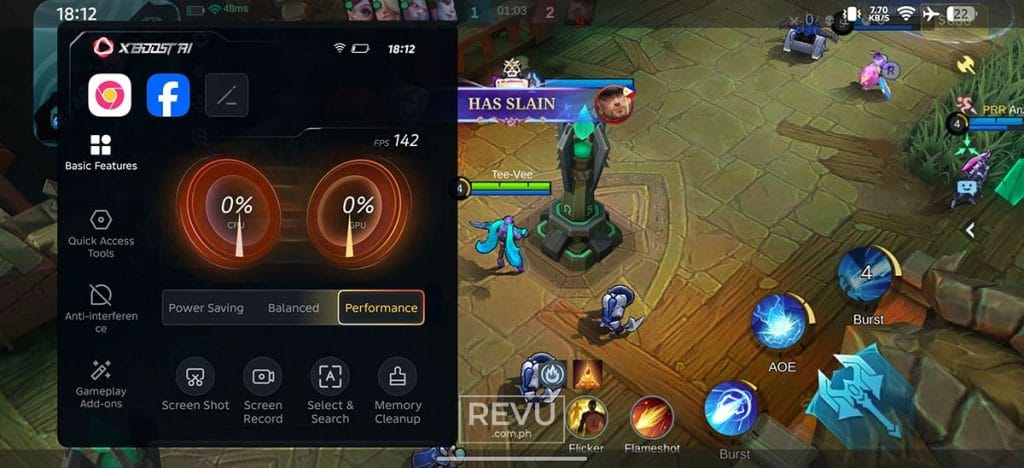
Because of this specific tuning, the Infinix GT 50 Pro is certified for native 144 FPS gameplay across several competitive titles, including Call of Duty: Mobile, Mobile Legends: Bang Bang, Blood Strike, Standoff 2, Arena Breakout, and Free Fire. We can back up this claim based on our own time with the smartphone. We comfortably hit that 144 FPS mark playing both Mobile Legends and Call of Duty: Mobile, though it’s worth pointing out that you’ll need to dial the graphics settings down to Low in CODM to consistently hold that max frame rate.
But none of those high frame rates matter if the device gets so hot it has to throttle the processor to protect itself. This brings us to the Infinix GT 50 Pro’s crown jewel: the HydroFlow Liquid Cooling Architecture. This isn’t just your standard passive cooling setup. The company actually packed a tiny ceramic micro-pump inside that actively pushes liquid coolant through laser-engraved channels at a brisk 6.5ml per minute. That fluid flows directly over the hottest internal components to absorb the heat, achieving an industry-first 100% coverage of the motherboard’s primary thermal zones.
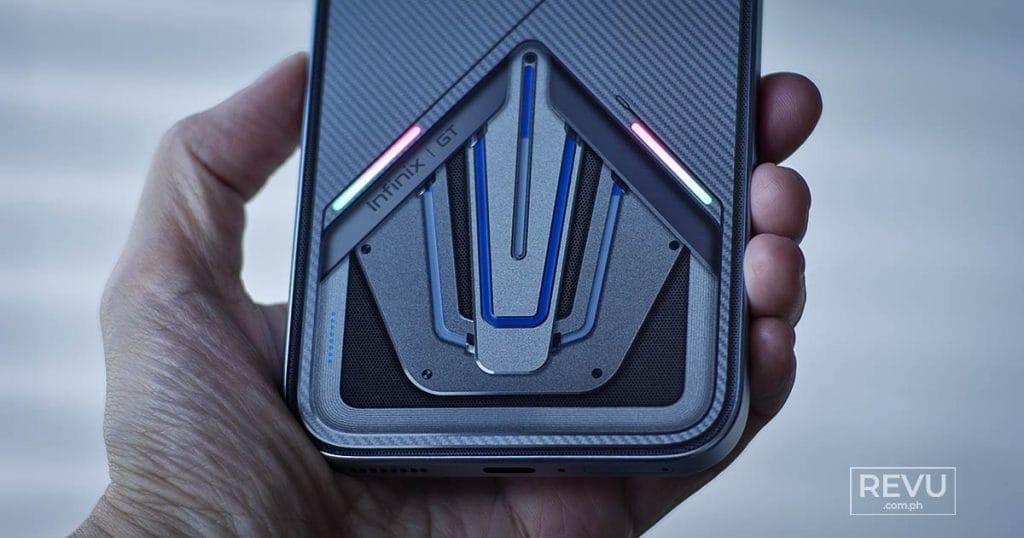
From there, the hot liquid is channeled into a huge 3D vapor chamber — roughly 30% larger than last year’s model, we’re told — where it spreads the heat across a layer of aerospace graphite. When you add it all up, the Infinix GT 50 Pro boasts an industry-leading 32,700mm² of total cooling area, a 63.5% jump from its predecessor. In plain English? It should keep the phone comfortably cool, even during the most intense ranked matches.
The best part is that you don’t just have to take Infinix’s word for it. A window display built into the lower portion of the back panel allows you to watch the coolant flowing through the channels in real time. Dive into the settings to control how that pump behaves. You can leave it on Smart mode to let the system auto-adjust, switch to Normal mode for standard everyday scrolling, or activate Rapid mode to maximize the flow rate for when you need to grind ranks outdoors for hours in the sweltering Philippine heat.
But if you want to push the performance even further, attaching the new GT Magcharge Cooler 2.0 makes a night-and-day difference. This sleek, 81g, 23mm-thick accessory snaps magnetically right to the back of the GT 50 Pro and features its own triple RGB LED array. Internally, it packs a 5,700 RPM fan alongside 12 watts of active thermoelectric cooling refrigeration.
In our testing, attaching the cooler to the phone case noticeably improved thermal management. Once the high-speed fan and active thermoelectric cooling kicked in, the temperature of the chassis dropped within minutes.
The coolest part — literally — is the Wireless Bypass Charging feature. When playing demanding games with the cooler attached, power goes straight to the motherboard instead of the battery. The result? No overheating, no dropped frames, and zero wear on your battery’s lifespan. You get to keep the GT 50 Pro powered up and cooled at the same time without any of the usual drawbacks.
Fueling this feature-rich gaming phone requires a lot of power. Infinix packed a high-capacity 6,500mAh single-cell battery into the chassis. Lab tests claim around seven hours of MLBB gaming, 15 hours of TikTok browsing, or 20 hours of continuous YouTube playback.
When it comes to actual endurance, our unit clocked in at 11 hours and 51 minutes in PCMark’s battery-rundown test. That synthetic score matches our experience. Even with the display running at up to 144Hz, the RGB lighting flashing across different scenarios, and the liquid-cooling pump working overtime during games, this Infinix model lasted a full day of mixed usage on a single charge.

We played Mobile Legends: Bang Bang continuously for three hours over Wi-Fi, with the graphics maxed out and the frame rate locked to the 144 FPS preset. Surprisingly, the battery only dropped by 32%, suggesting that the company’s own battery-drain predictions might be underestimating the device, proving it can perform better during long, real-world sessions.
The Infinix GT 50 Pro also includes some clever tech to keep its battery healthy. It can still hit a 95% charge even if you are stuck in a room hovering at a toasty 50 degrees Celsius. It even boasts a neat AI self-healing trick that occasionally runs a low-current charge to repair microscopic wear and tear inside the cell. Infinix says this essentially extends the battery’s overall lifespan by eighteen months, guaranteeing at least 1,600 healthy charging cycles before you notice any serious degradation.
When you finally do hit the red zone, the Infinix GT 50 Pro has you covered with 45-watt fast wired charging. Plugging the smartphone in from completely dead took roughly 90 minutes to reach a full charge. Considering the battery capacity, that’s pretty reasonable. If anything, it gives you the perfect excuse to stretch your legs, grab a quick snack, and take a screen break before diving right back into the grind.
Finally, all that gaming power doesn’t mean a thing if your connection keeps dropping. To fix this, the GT 50 Pro relies on Infinix’s custom N1 Network chip paired with 12 antennas wrapped around the entire device. It’s smart enough to detect how you are holding the phone, actively optimizing the signal so your hands don’t block the connection when you grip the edges during landscape gaming. The brand claims it boosts cellular strength by up to 60% in common dead zones, such as underground parking garages or crowded subways.
Another cool connectivity feature is UltraLink. If you ever find yourself completely off the grid with zero cell towers in sight, the handset basically doubles as a walkie-talkie, letting you beam offline voice and text messages directly to other supported devices up to two kilometers away.
Capturing the action
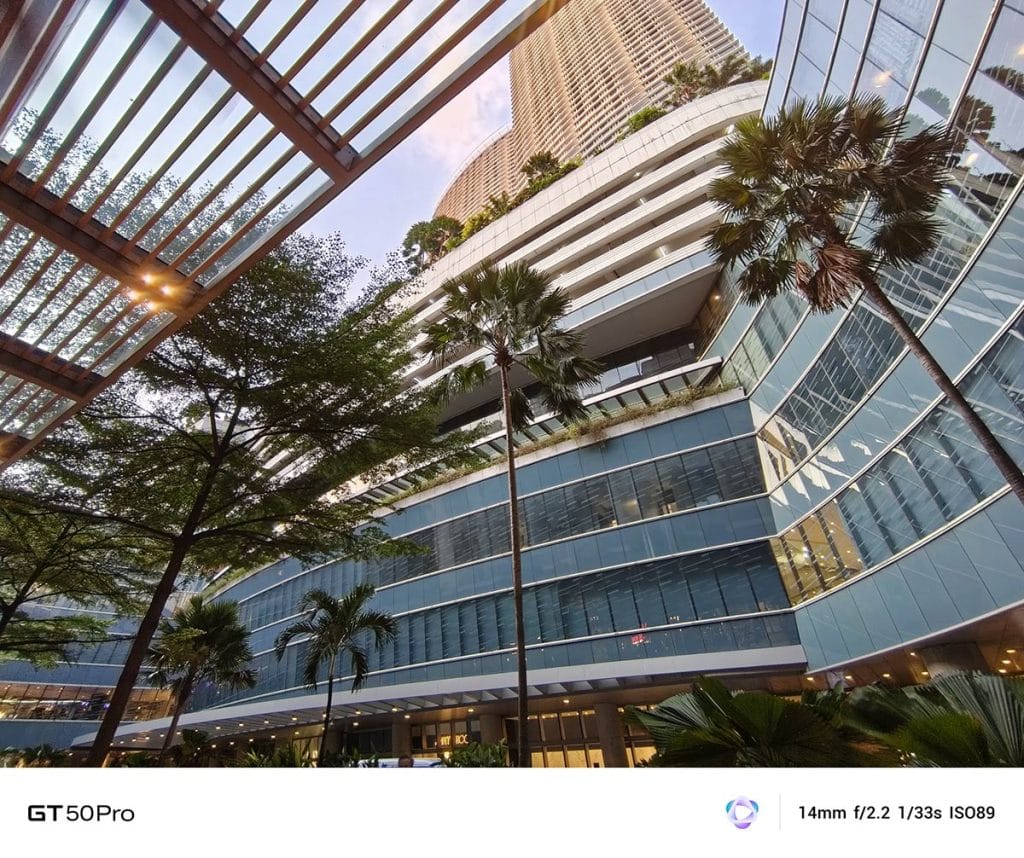
While the core focus of the GT 50 Pro is unmistakably hardcore gaming, Infinix recognizes that modern gamers could also be content creators, streamers, and lifestyle users who need a camera that performs just as well outside the arena. Turning the phone over reveals a versatile setup led by a 50-megapixel main sensor. Notably, this primary lens is equipped with optical image stabilization, working in tandem with advanced electronic image stabilization algorithms. This dual-stabilization system minimizes camera shake and blur, resulting in highly usable shots whether you are vlogging while walking down a busy street or taking a photo in a dimly lit gaming cafe.
The main sensor also uses Infinix’s proprietary AI RAW imaging software for better clarity and contrast, without making the final image look artificially over-processed. Backing up the primary shooter is an 8-megapixel ultra-wide, which is good for capturing expansive landscapes or fitting your entire esports squad into a single group shot without cutting anyone off at the edges.
For streamers, the front houses a 13-megapixel front-facing camera. When it comes to video, the rear system records in rich 4K resolution at a smooth 60 frames per second. The front-facer supports 4K recording, too, albeit at a lower 30 frames per second.





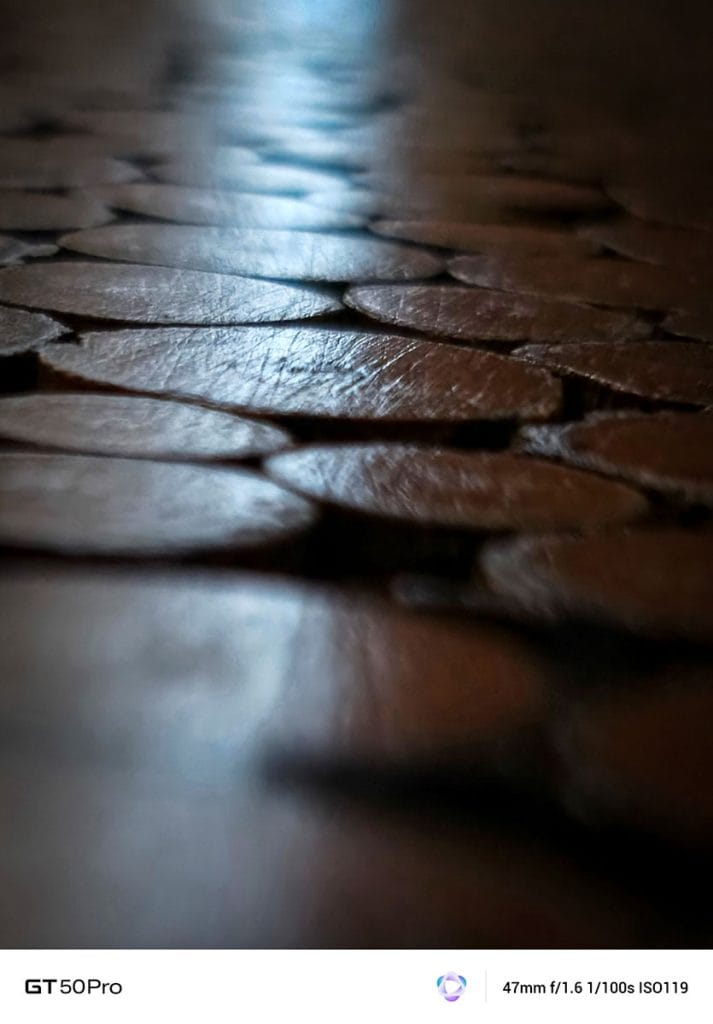
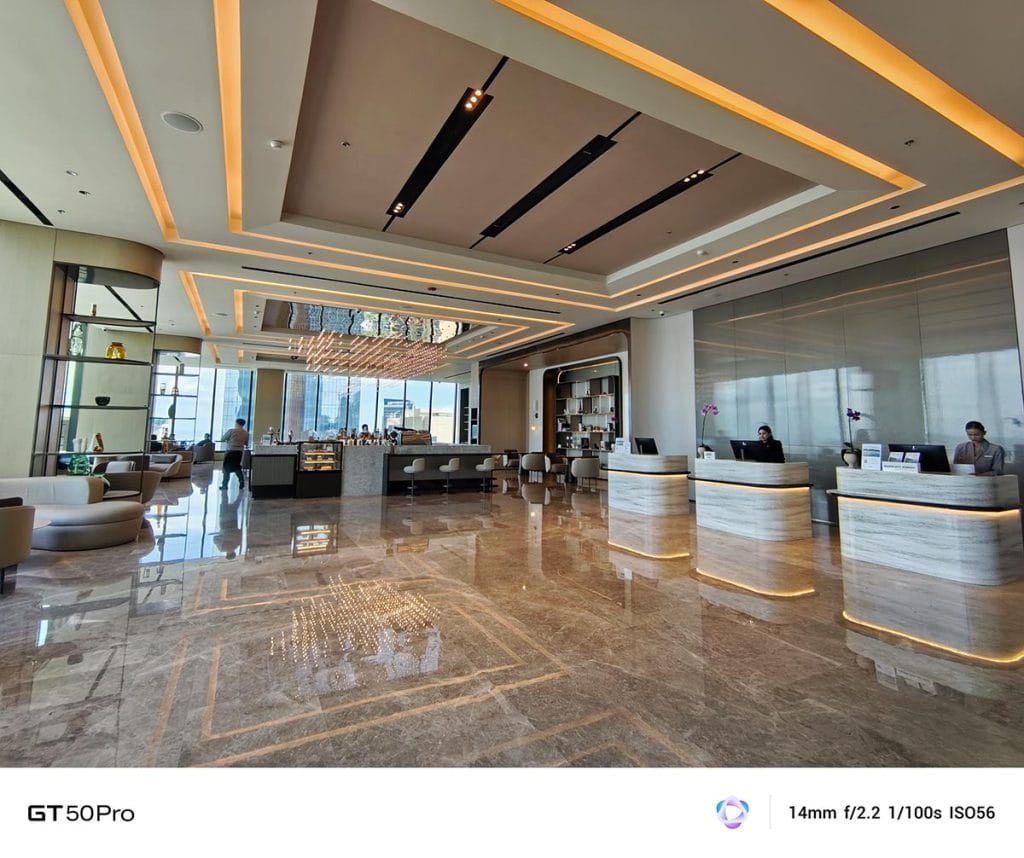


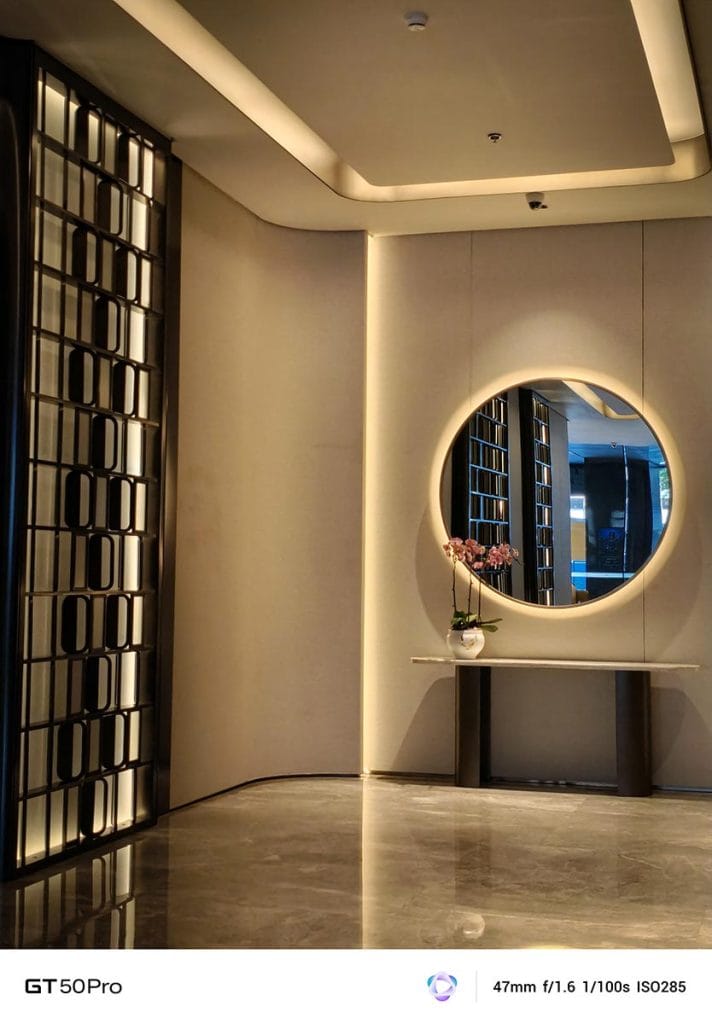
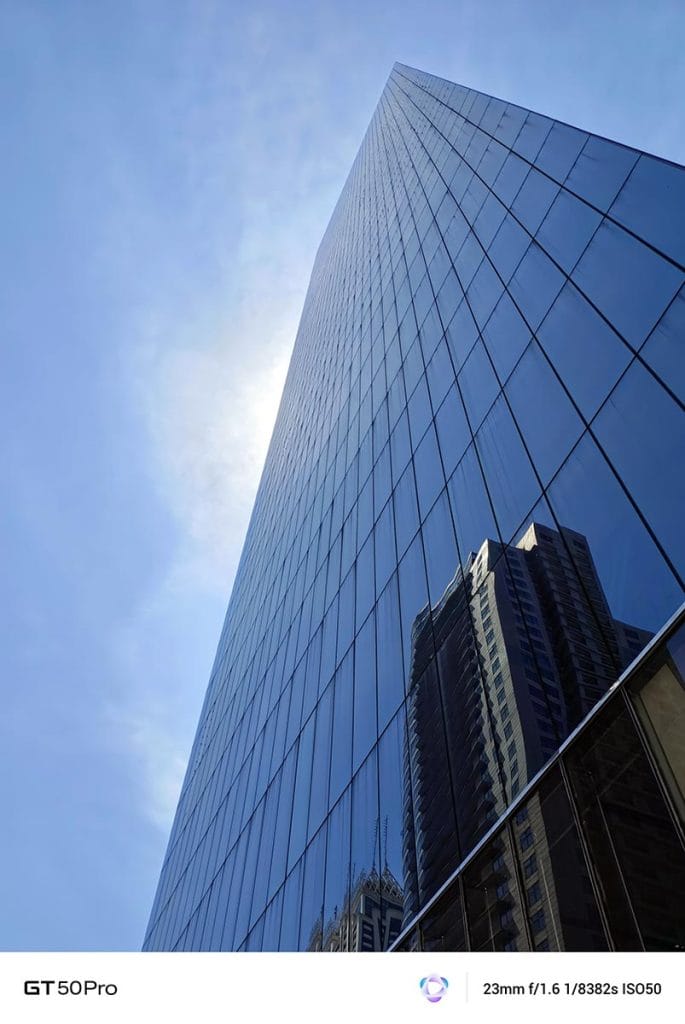
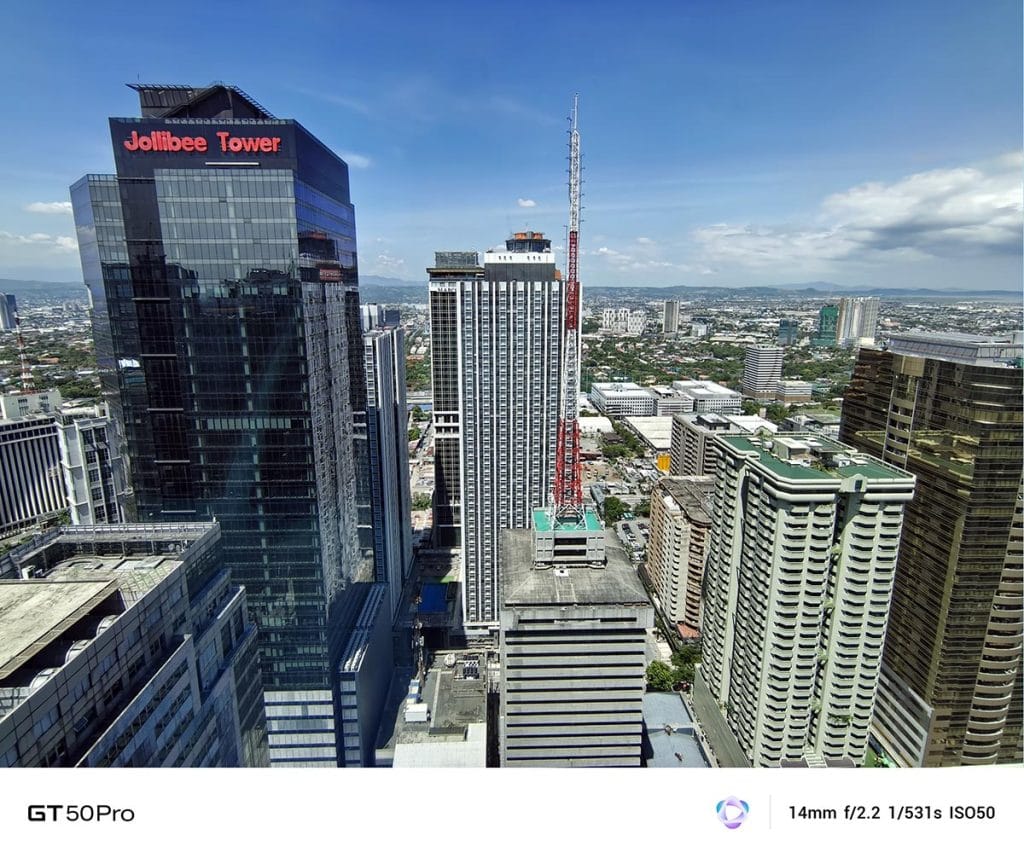


Sample shots
As always, capturing the shot is only half the fun, because editing is where it’s at — at least for some of us. Diving into the native photo album unlocks Infinix’s AI Studio, giving you a suite of one-tap editing tools. For instance, should a random pedestrian walks into the back of your perfect outfit pic, you just circle them with the AI Eraser and the smartphone wipes them away, seamlessly filling in the background.
It handles trickier lighting situations just as easily. If you take a picture through a coffee shop window, the AI Reflection Remover erases those annoying glass glares, while the AI Flare Remover automatically tones down harsh sunlight or concert stage lights. If you shot a beautiful image but the framing is a little too tight, the AI Extender smartly expands the edges, generating the missing scenery to give you a wider composition.
There’s even an AI Shadow Remover that cleans up that dark, annoying silhouette of your own phone that always shows up when you try to take a top-down shot of your food. It all goes to show that while the Infinix GT 50 Pro has the heart of a gaming rig, it also has the chops to be your go-to multimedia device.
Final thoughts
At the end of the day, we think the Infinix GT 50 Pro is a triumph of mobile engineering. It doesn’t just slap a high-refresh-rate screen onto a standard smartphone and leave it at that; it addresses and solves the core issues that plague competitive mobile gamers, specifically thermal throttling and, to a lesser degree, battery degradation. By combining active liquid cooling, blistering performance, and deeply integrated software features, this GT firmly secures its position as the undisputed king of its segment.
If you don’t mind the steeper price of entry and want a rig that takes your competitive grind just as seriously as you do, the Infinix GT 50 Pro might just be exactly what you’re looking for.
Infinix GT 50 Pro specs
- 6.78-inch LTPS AMOLED display, 1.5K resolution, 144Hz refresh rate, 4,500 nits peak brightness, Corning Gorilla Glass 7i
- 4nm MediaTek Dimensity 8400 Ultimate processor
- Mali-G720 MC7 GPU
- 12GB LPDDR5X RAM
- 256GB/512GB UFS 4.1 storage
- Dual rear cameras: 50-megapixel main with OIS, 8-megapixel ultrawide
- 13-megapixel front camera
- XOS 16 based on Android 16
- 6,500mAh battery with 45-watt wired charging, 30-watt wireless charging
- HydroFlow Liquid Cooling, Pressure-Sense GT Triggers
- IP64 rating
- Color options: Black Abyss, Red Blaze, Silver Glacier
Learn About This Author
