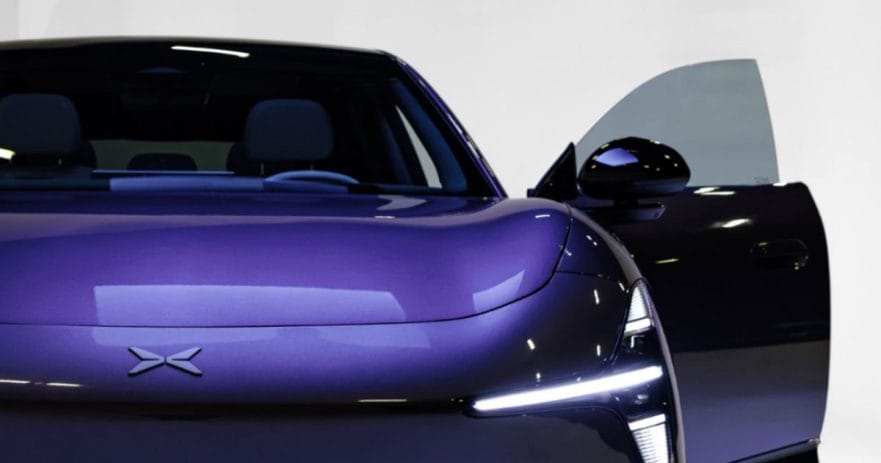
XPENG‘s long-awaited Philippine debut finally has a date. The Chinese mobility company is officially bringing its smart electric vehicles to the country on Sept. 25. Headlining the launch are two models: the XPENG X9, an ultra-intelligent flagship seven-seater MPV, and the XPENG L03, a next-generation AI SUV coupé.

(Update, Sept. 25: XPENG has arrived in the Philippines — and it brought more than just two cars to the party!)
If you’re already sold on either of these EVs, you don’t even have to wait until launch day. Preorders for both the X9 and the L03 are currently underway. You can lock in a reservation for the L03 AI SUV coupé for ₱10,000 (roughly $160), which gets you a limited Ownership Suite valued at ₱50,000 ($800) if you book by Sept. 30. If the X9 flagship MPV is more your speed, securing a unit takes a reservation fee of ₱25,000 ($400) and comes with an exclusive Curated Ownership Suite worth ₱100,000 ($1,600) for early adopters who commit before the end of the month.
Building more than just cars
While XPENG is making aggressive moves in the EV market, the company wants to be known for more than just putting tires on the road. Enter its ambitious “Physical AI” strategy — a vision that aims to extend artificial intelligence into the real world, most notably through humanoid robotics.
Ahead of its Philippine rollout, XPENG officially commissioned its humanoid robot production lines, an automated facility that brings automotive-grade manufacturing quality to the robotics space. The first next-generation XPENG IRON robot has already autonomously walked off the factory floor, signaling the company’s shift from R&D prototyping directly into scaled mass production.
From R&D prototyping to production
The XPENG IRON is no basic automaton. It features a fully enclosed flexible lattice structure with 76 degrees of freedom across its body and 21 in each hand, giving it a high level of dexterity and mobility. Under the hood, it’s powered by three AI Turing chips capable of delivering up to 2,250 TOPS of computing power. This allows the machine to perform complex tasks autonomously without remote operation. With over 80% of its core manufacturing processes automated, XPENG aims to begin mass-producing these robots by the end of 2026, with a global market rollout scheduled for 2027.
XPENG expects its robotics division to emerge as a significant second growth engine. The market seems to agree, as the company’s robotics business recently raised over $900 million in private capital at a valuation exceeding $6.3 billion. Whether it’s an intelligent luxury EV or a bipedal robot companion, XPENG is making one thing clear: The future of AI is physical.
Learn About This Author