Coming straight off a work trip to Beijing, the last thing we wanted was another week living out of a carry-on. Instead, our past few weeks with the vivo V80 unfolded right back in regular Metro Manila life — unpacking gear, catching up on overdue deadlines, squeezing in afternoon coffee runs, taking candid shots of our dogs, and unwinding with late-night gaming sessions on the couch.

But that might be the better test. Anyone can make a camera phone look good in front of dramatic travel landmarks. What matters is whether a phone earns its keep during the messy, ordinary stretches between trips. Positioned by vivo as an everyday creative portrait companion, the V80 leans hard into ZEISS telephoto photography, high-fashion glasswork, playful OriginOS 7 customization, and marathon battery life. After living with it daily, it is easy to like, even if its asking price forces a couple of tough conversations about specs and storage.
Design and display: Quietly classy, though we’re still eyeing the purple
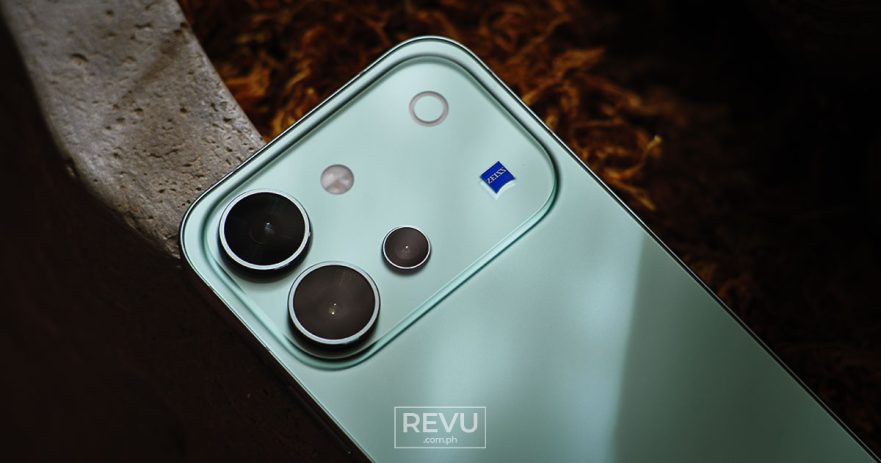
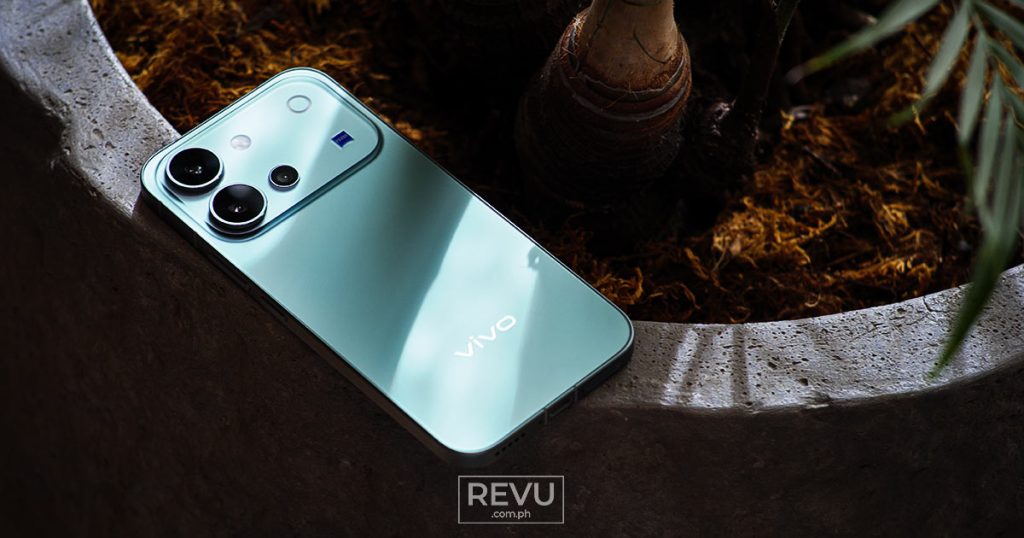
Our review unit arrived in Wander Green, a muted, low-saturation finish that shifts gently under harsh noon sun and warm cafe lights. It is understated, though we will admit we are a little extra; given the choice, we would reach for Starwish Purple in a heartbeat. That colorway uses industry-first Laser Holographic Lithography to etch a true 3D, galaxy-inspired shimmer directly into the glass. Either way, vivo clearly put real craft into the chassis. The rear panel is milled from a single piece of cold-carved glass through 33 cutting and polishing steps, flowing seamlessly into a floating camera module and an aerospace-grade aluminum alloy frame with 12.5mm rounded corners.
Celebrity Anne Curtis-Smith shows off her Starwish Purple vivo V80
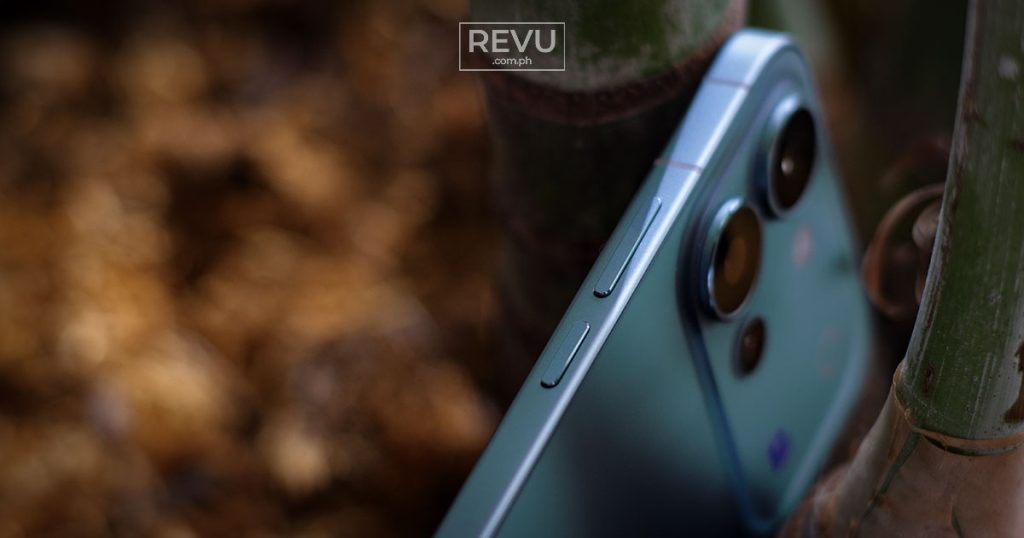
At 7.69mm thin and 205 grams for Wander Green, or 7.89mm and 206 grams for Starwish Purple, the vivo V80 feels balanced in the hand. That slimness is wilder once you remember what is packed inside. And the smartphone doesn’t make you baby it either. You get flagship-grade IP68 and IP69 dust and water resistance alongside Swiss SGS Overall Unit Drop Resistance certification. That means the phone is rated to survive static freshwater submersion up to 1.5 meters for 30 minutes, as well as high-temperature water jets. Between sudden downpours and accidental desk bumps, that extra armor brings welcome peace of mind.
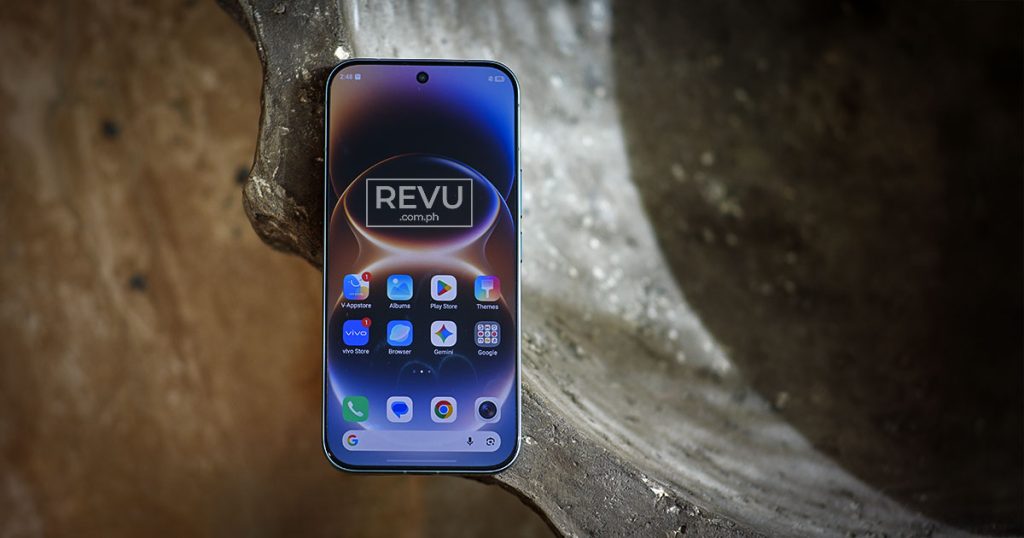
Up front sits a 6.59-inch 1.5K OLED display with HDR10+ support, a 144Hz maximum refresh rate, 1,800 nits in high-brightness mode, and a 5,000-nit local peak. Colors pop without looking radioactive, and reading messages outdoors during midday errands is effortless. Better yet, the panel dims all the way down to 1 nit for late-night scrolling in a dark bedroom, backed by SGS Low Blue Light certification and a Paper-like Display mode for long reading stretches. One minor caveat: While 144Hz looks slick on paper, only select apps and games actually push past 120Hz right now, so most daily scrolling settles into familiar high-refresh territory.
Bonus points go to the 3D Ultrasonic Fingerprint Scanning 2.0 sensor under the glass. Rated for a 0.23-second screen-off unlock, it reliably lets you in even when your hands are damp after washing up or slick with skincare.
ZEISS cameras and AI tricks: Built for main-character energy
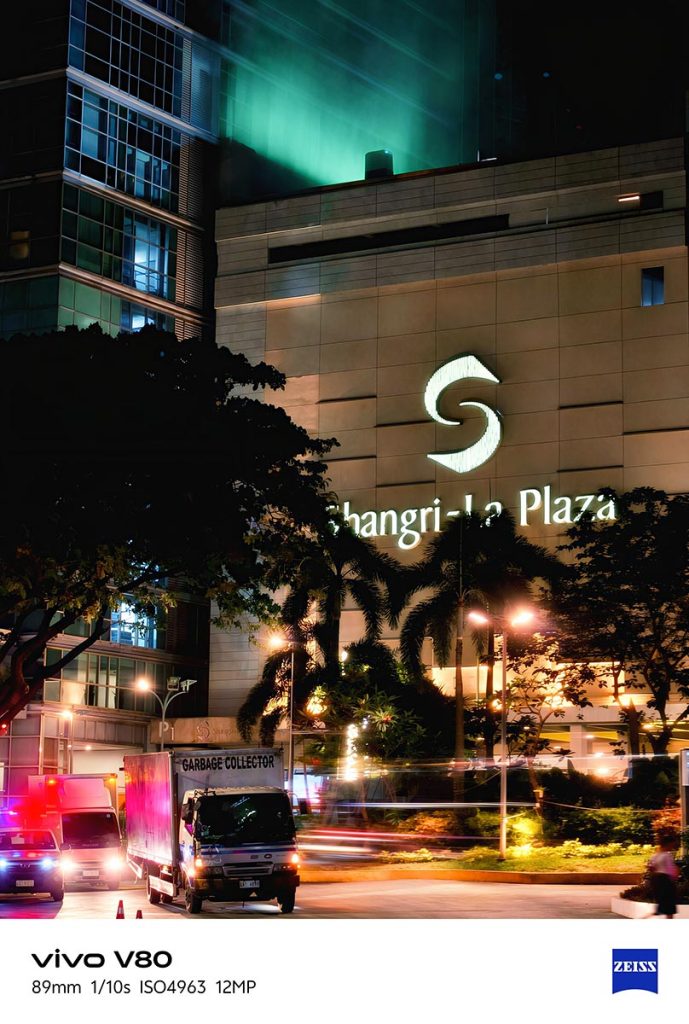
The vivo V80 makes its strongest case the moment you open the camera app. Leading the rear setup is a 50-megapixel Sony LYTIA 700V main camera built on a 1/1.56-inch sensor with CIPA 4.5-rated optical image stabilization. Alongside it are an 8-megapixel ZEISS ultra-wide shooter and a 50-megapixel Sony IMX882 M-type periscope telephoto lens packing a 1/1.95-inch sensor, OIS, 3x optical zoom, and up to 100x digital zoom. Up front sits a capable 50-megapixel f/2.0 ZEISS Group Selfie camera with autofocus, 0.8x to 2x free zoom, and a 92-degree field of view that settles at 90 degrees once distortion correction kicks in.

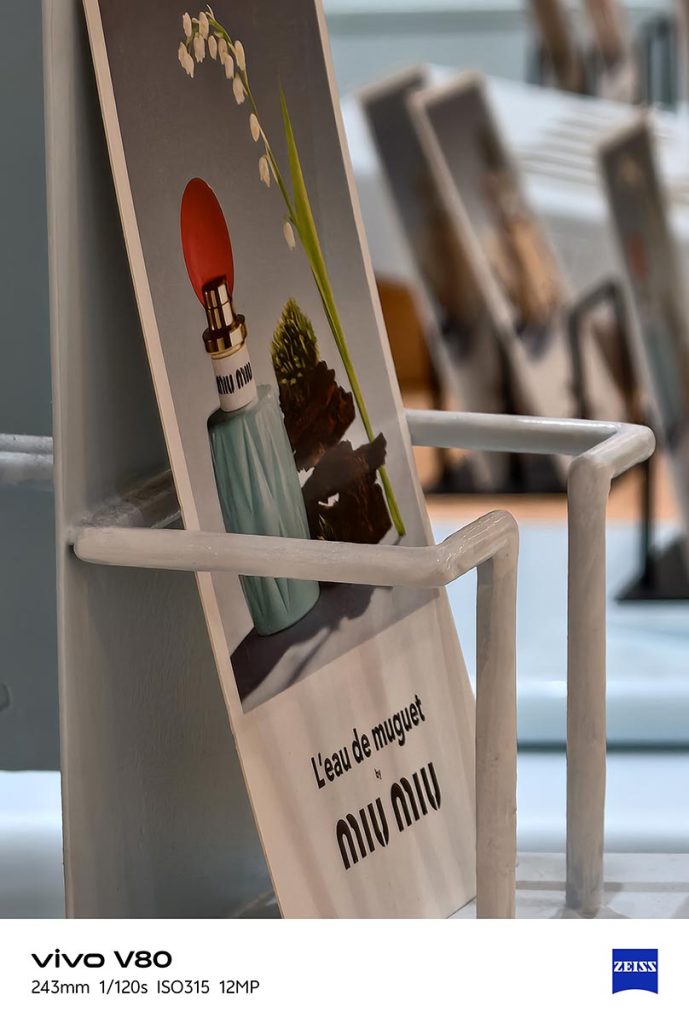
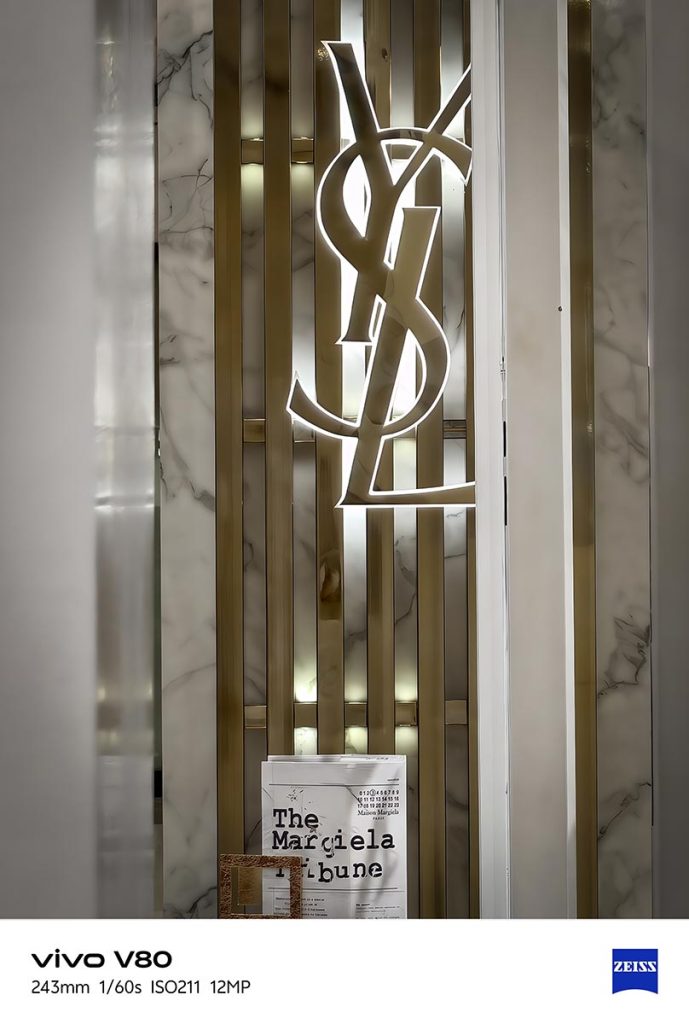
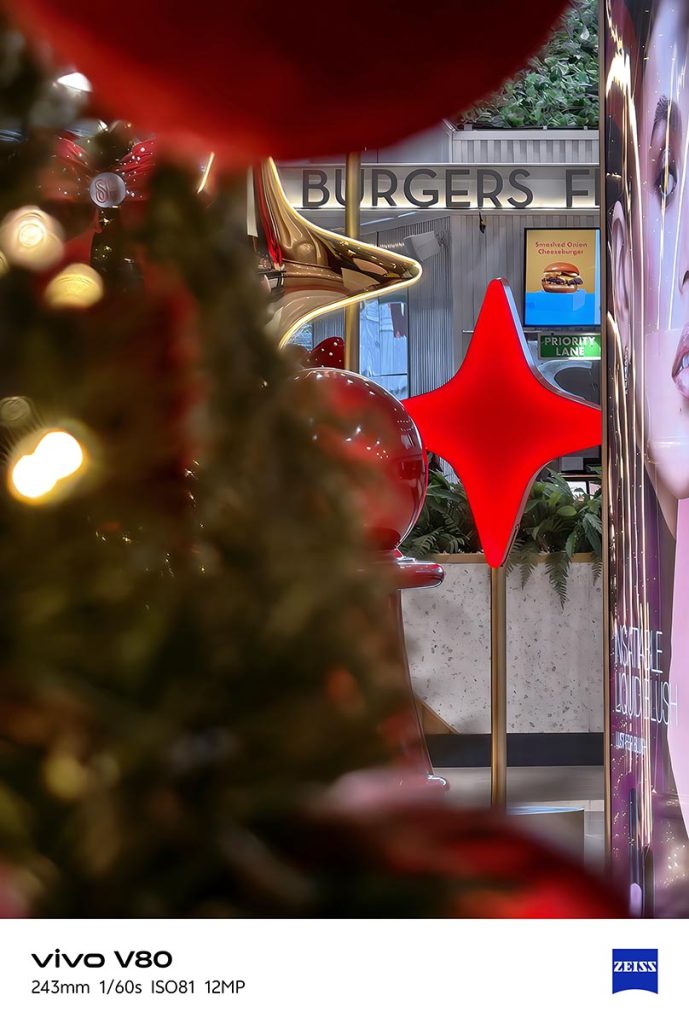
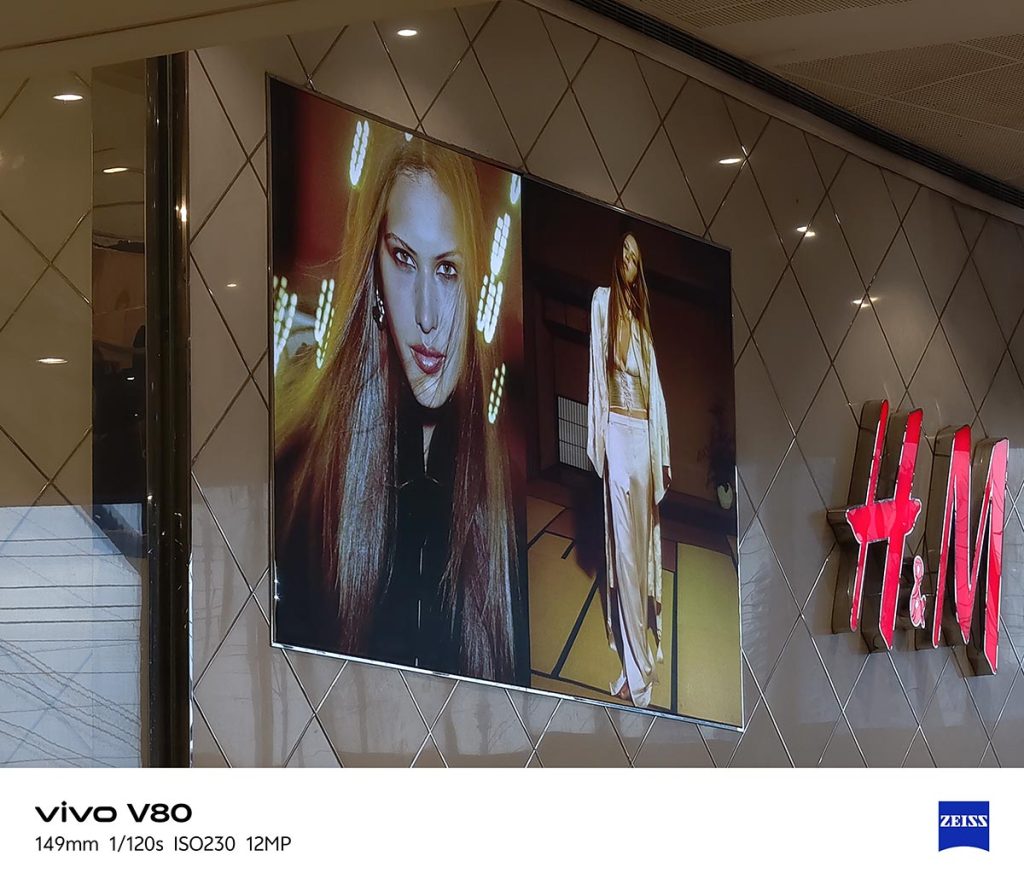
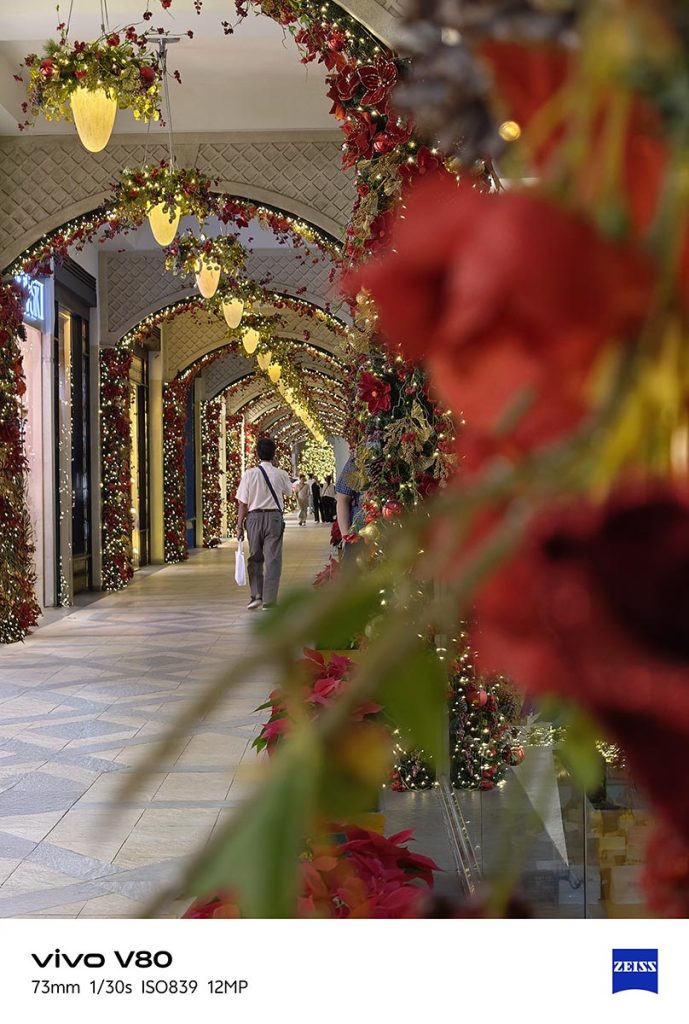
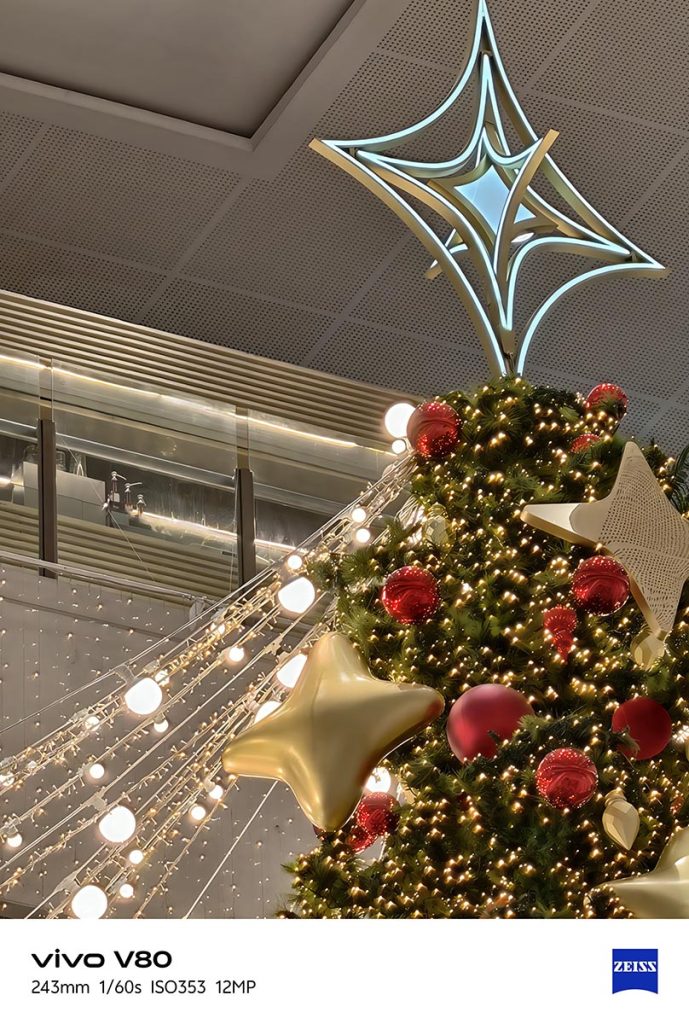
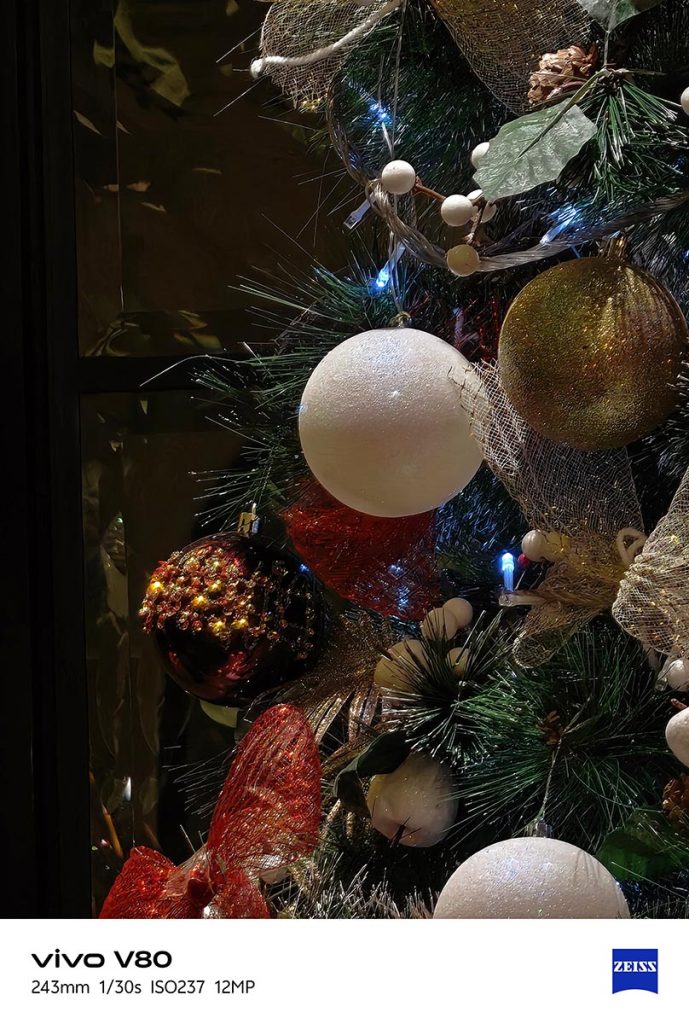
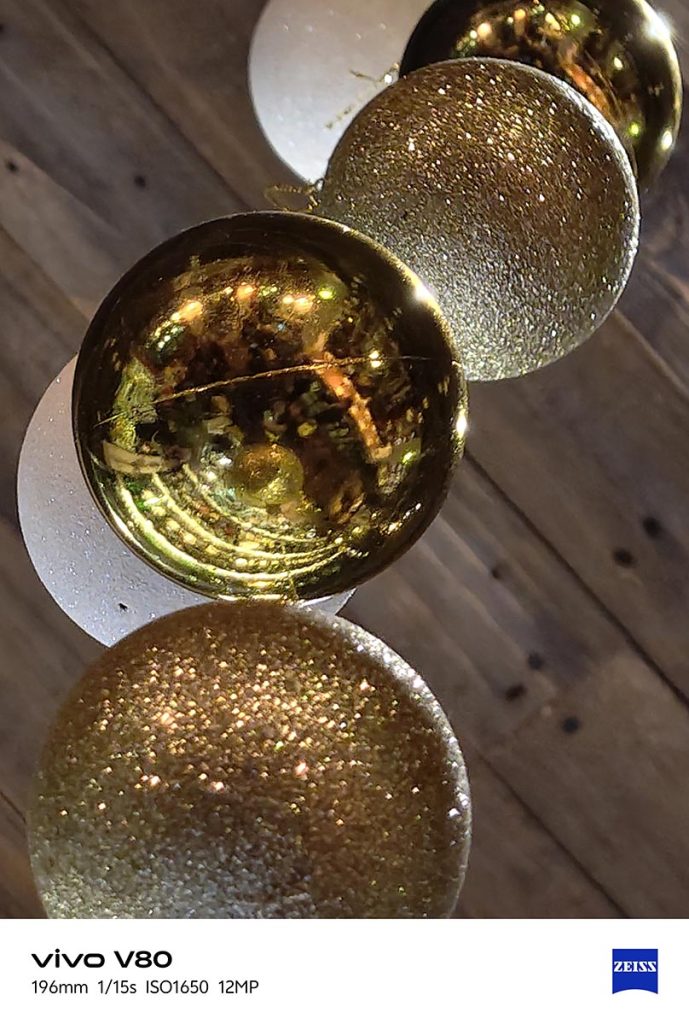

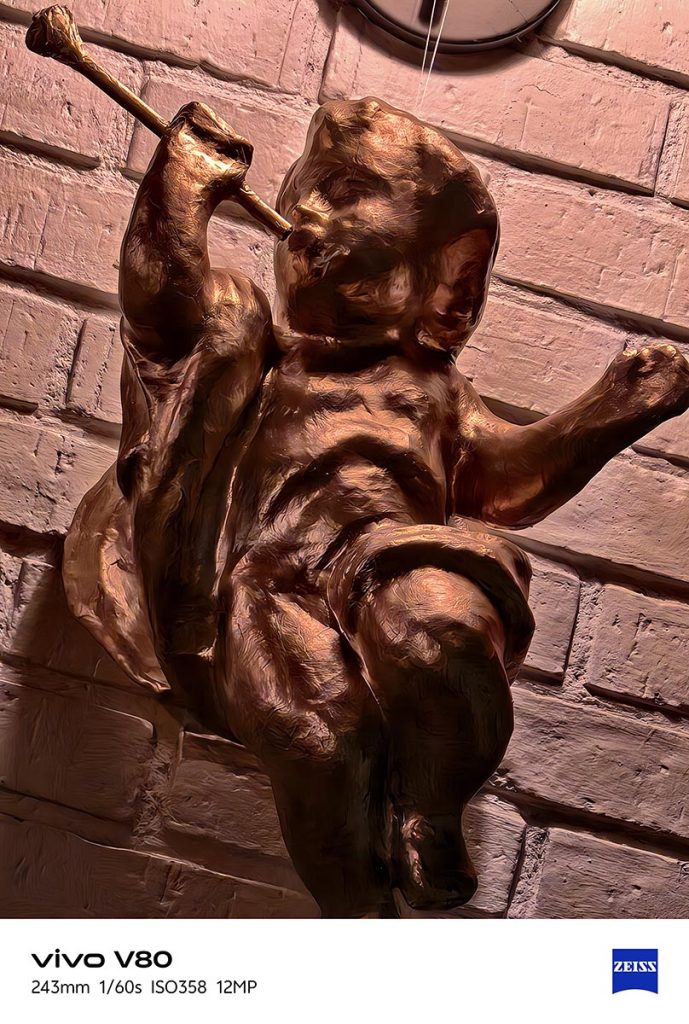
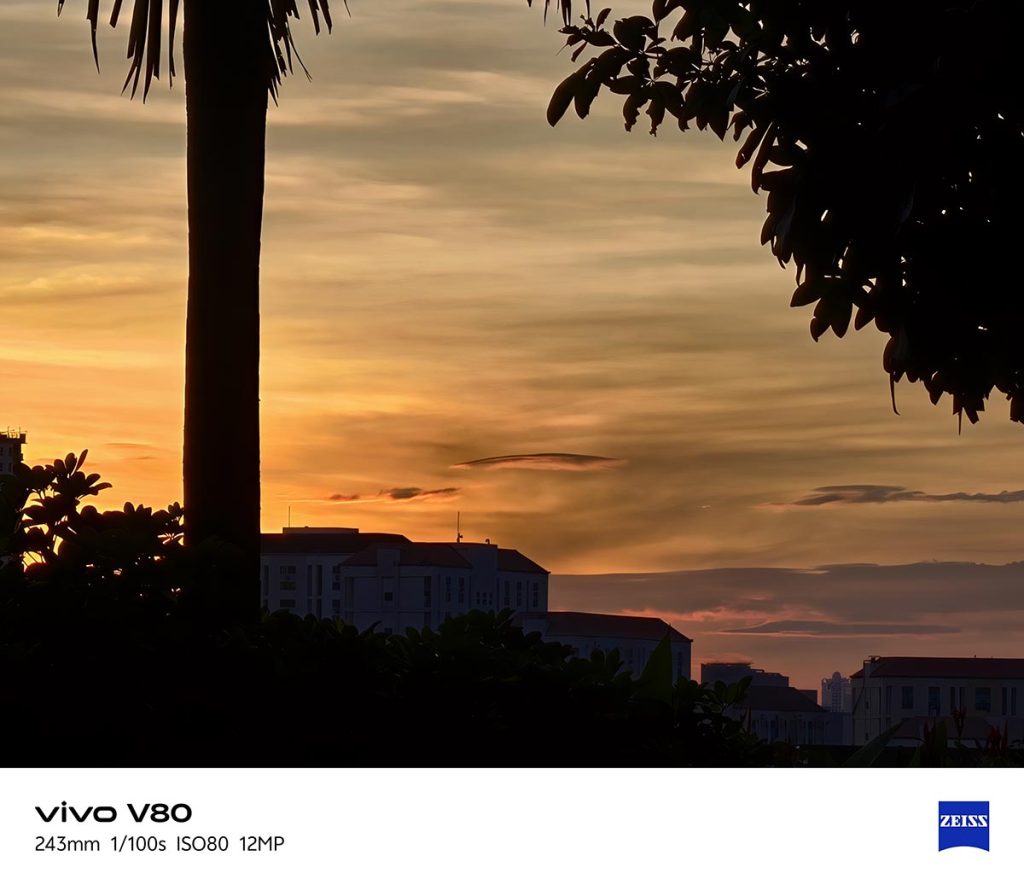
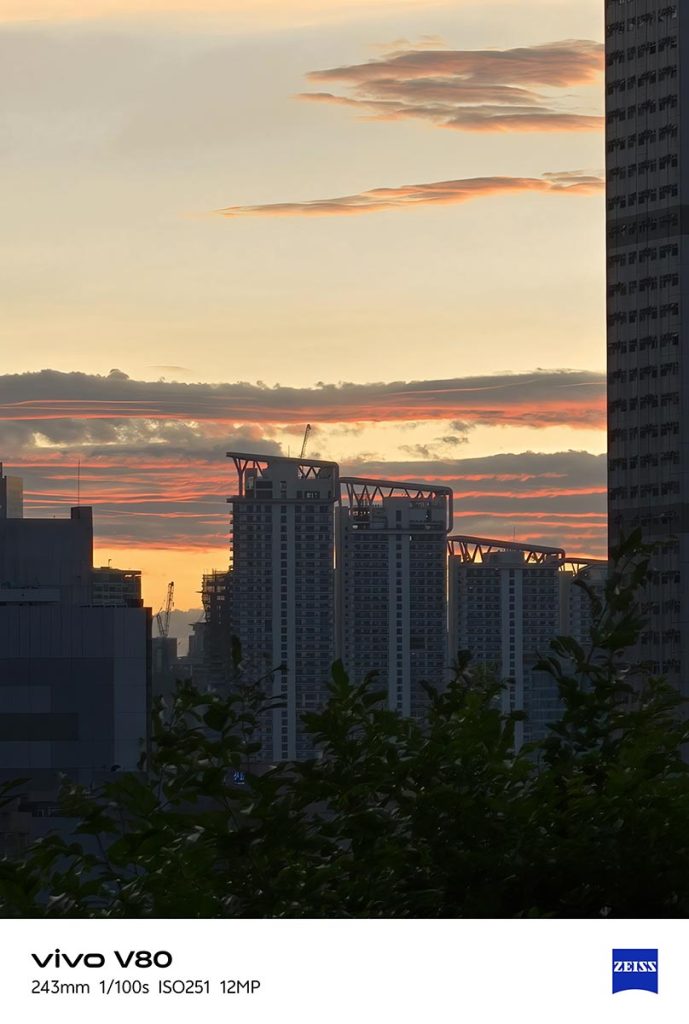
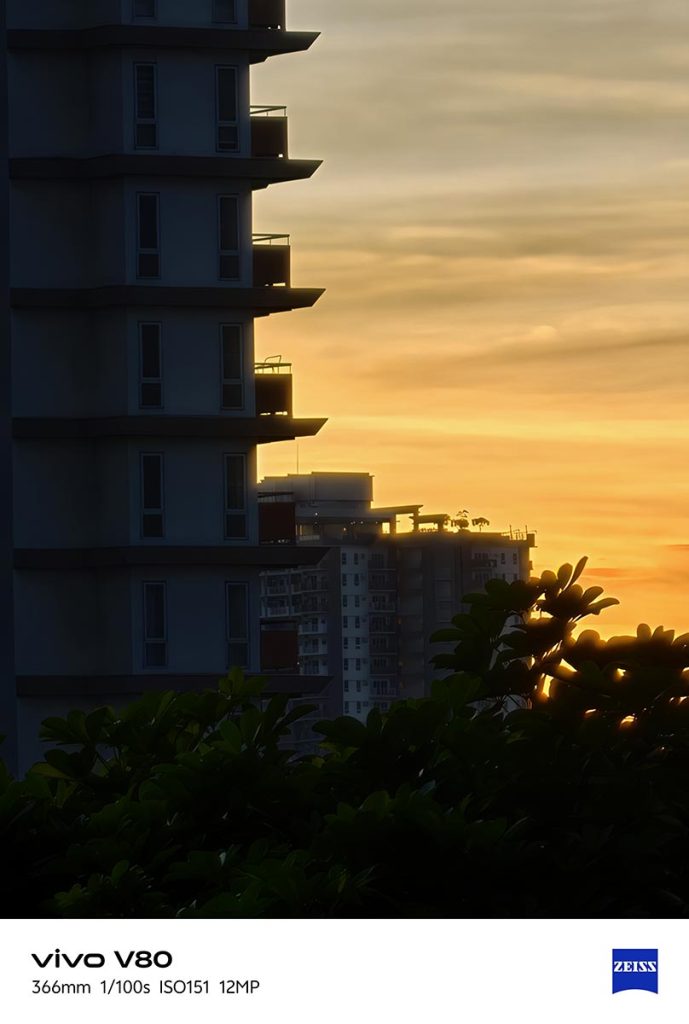
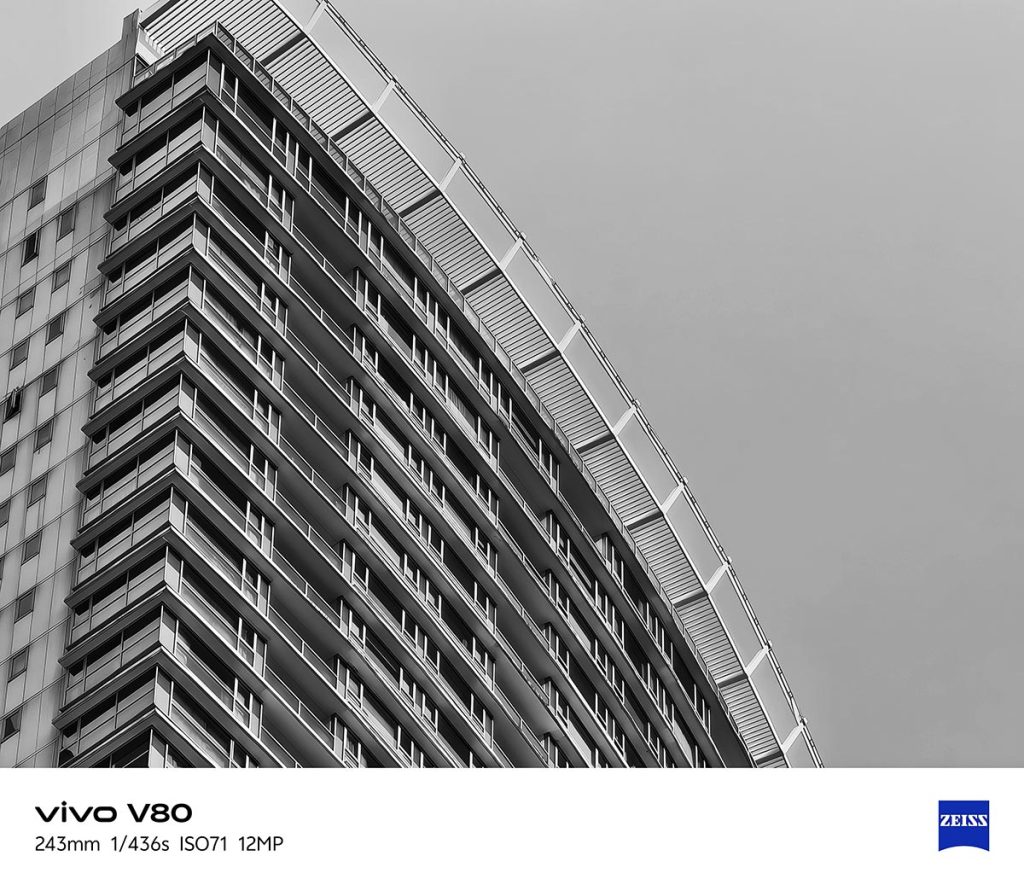
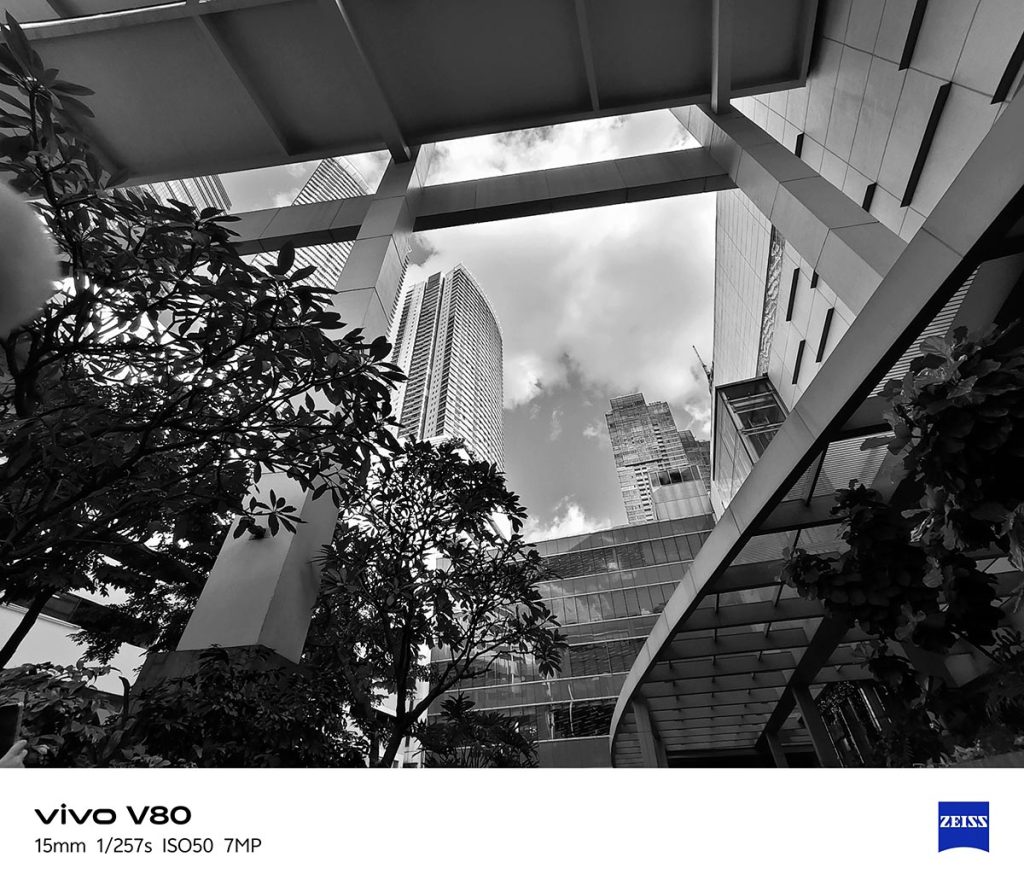
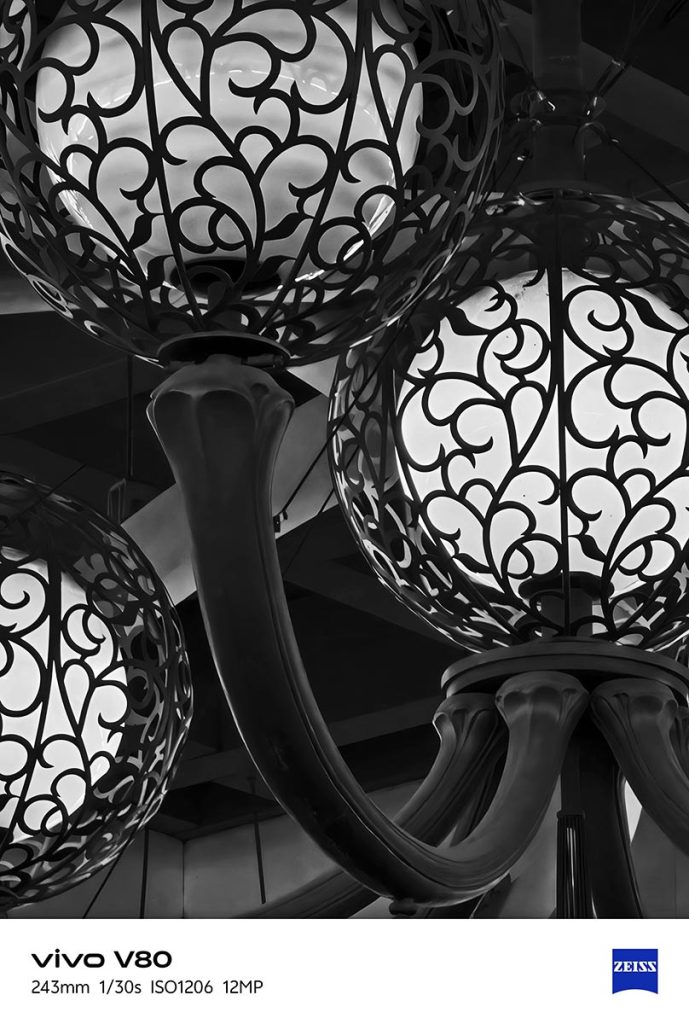
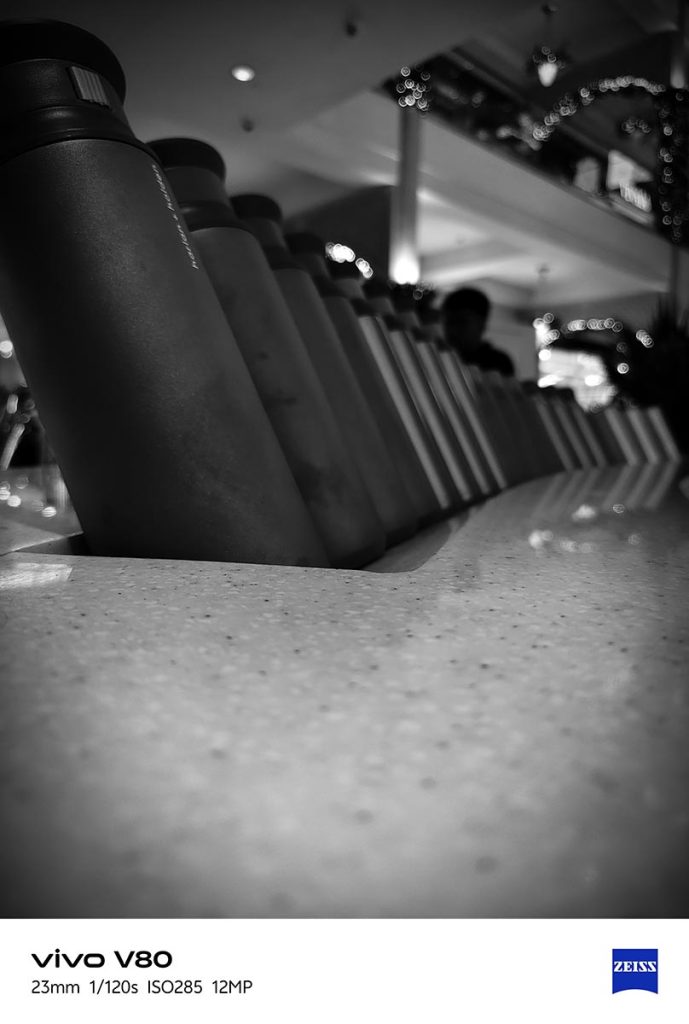
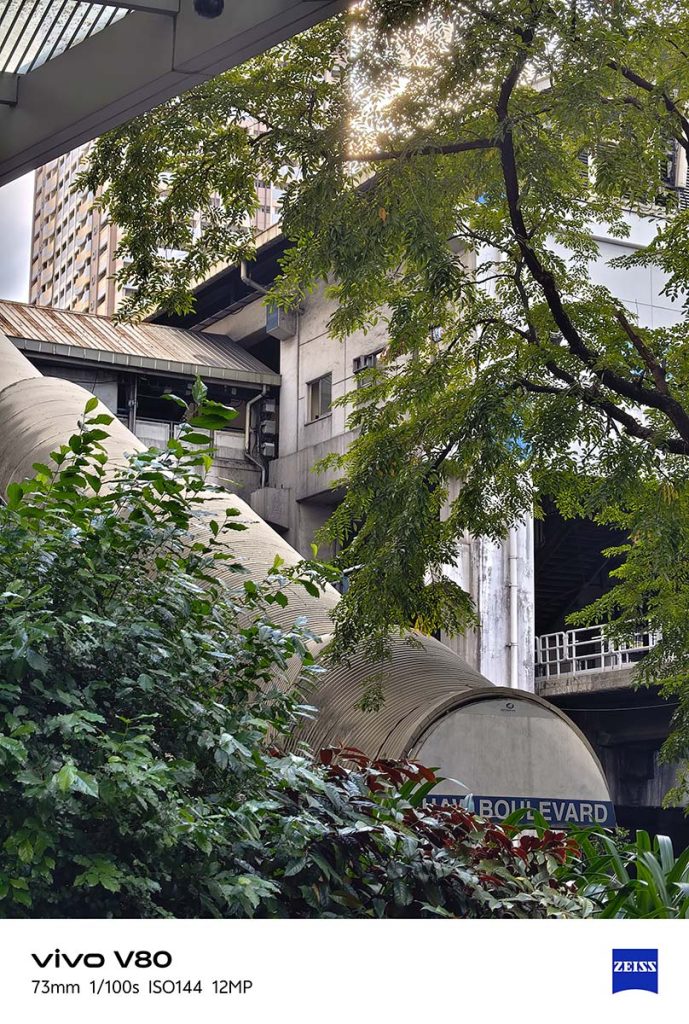
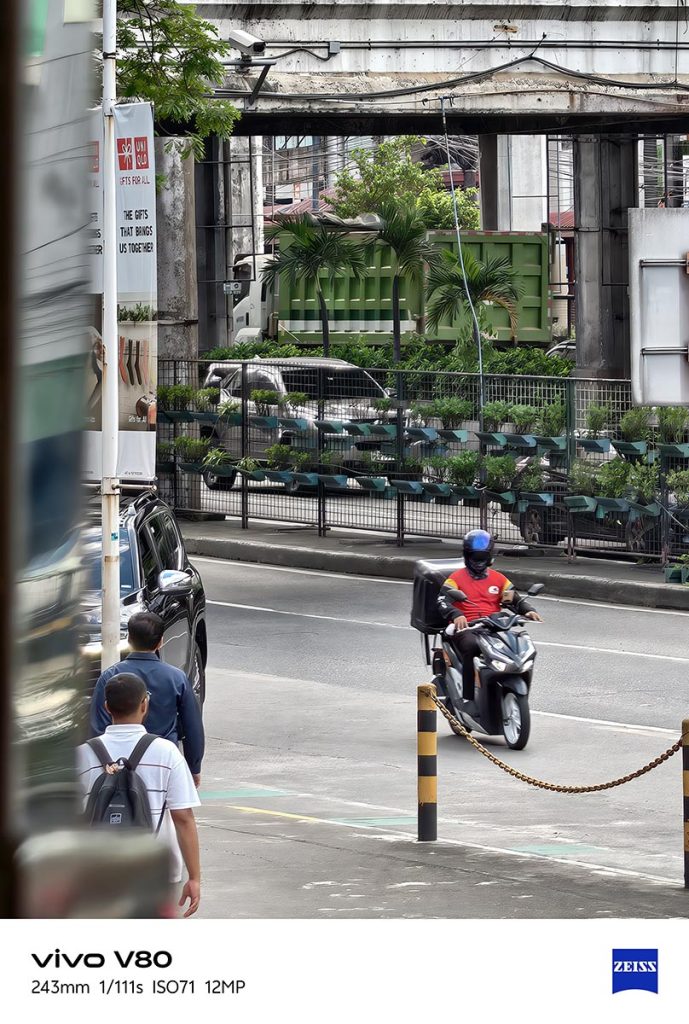
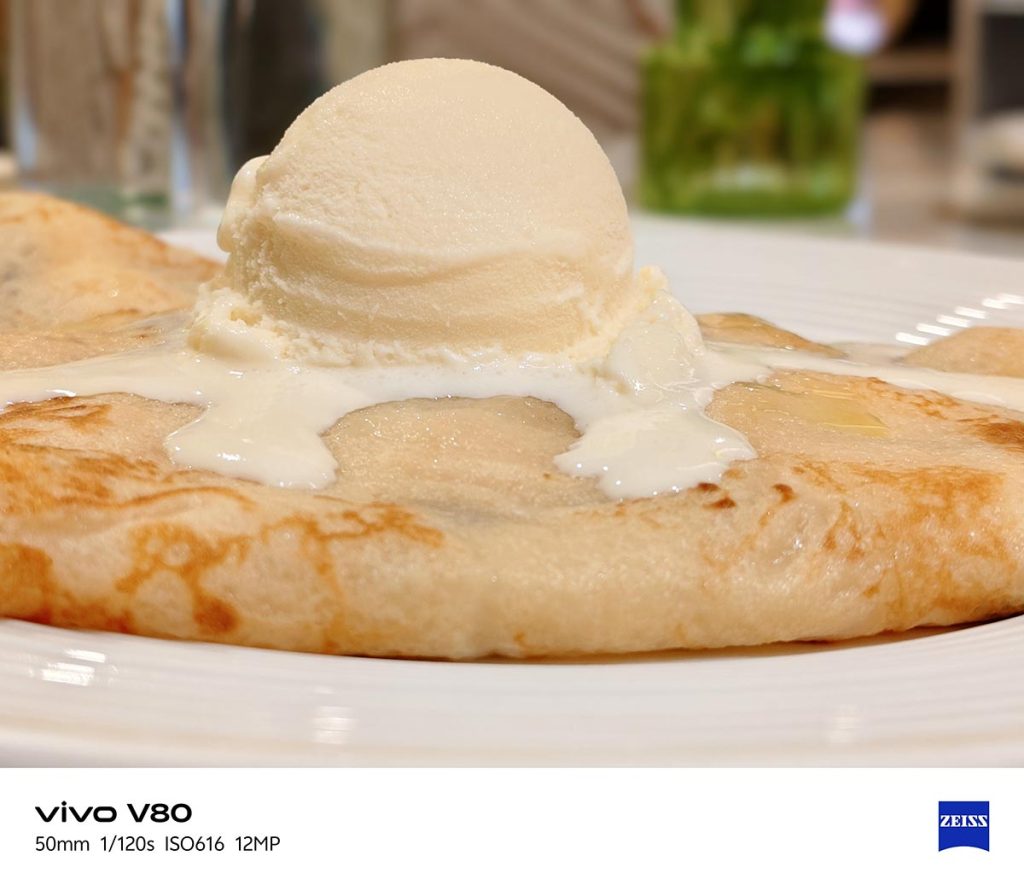

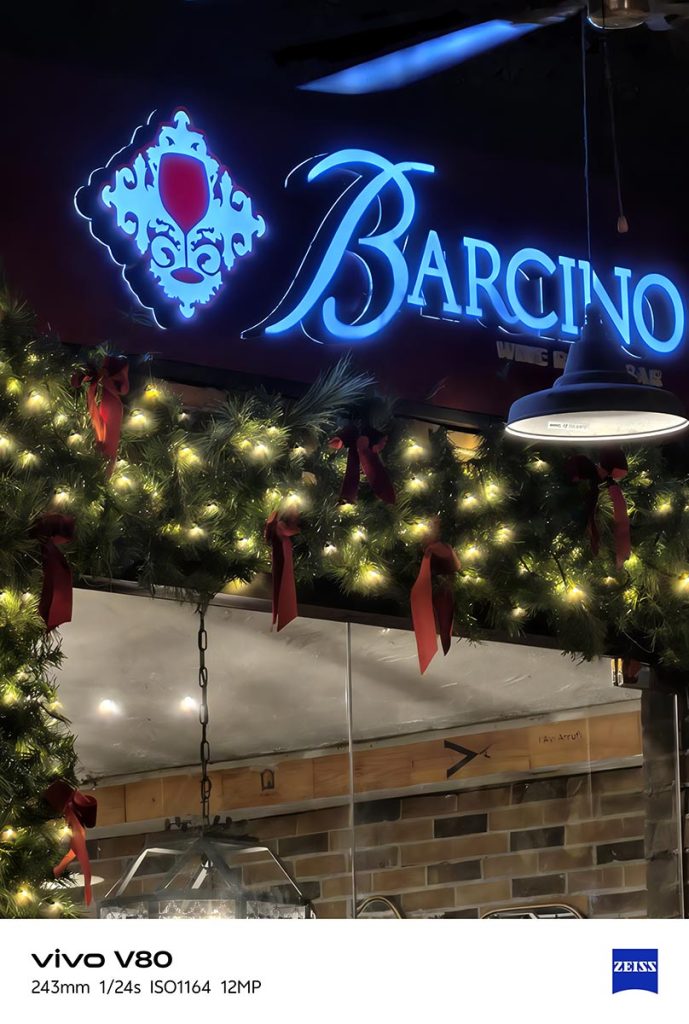
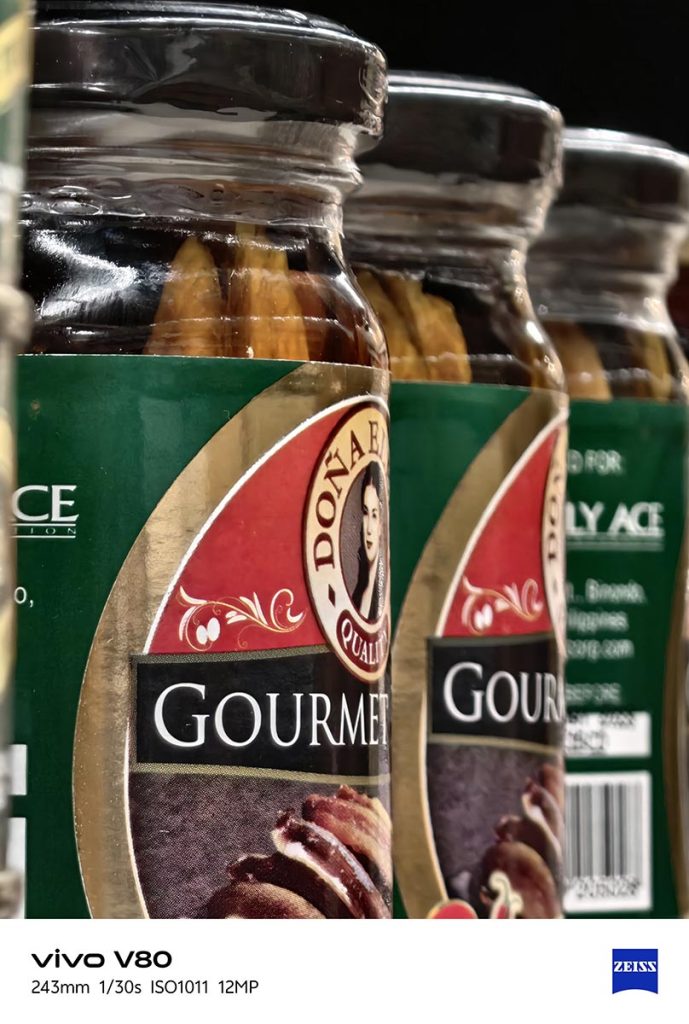
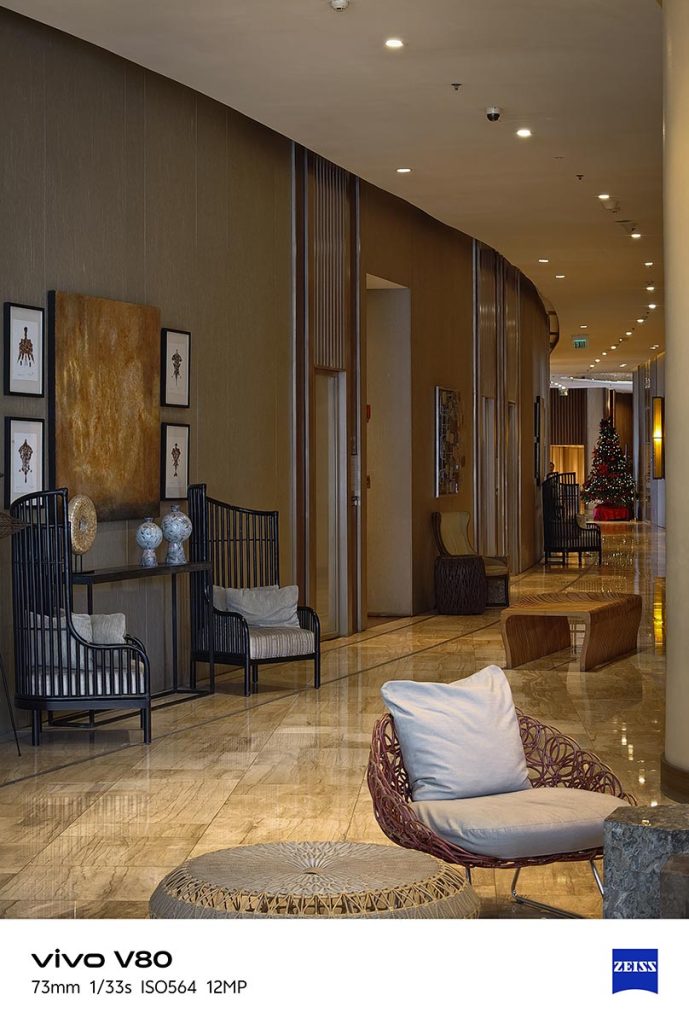
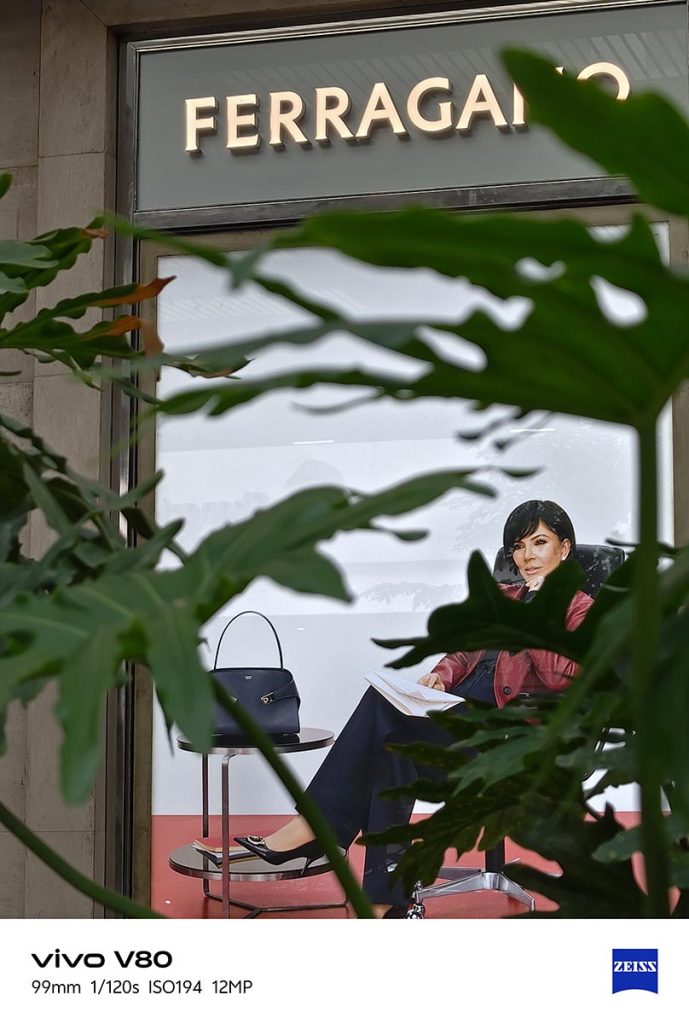





Shot on the rear camera
In everyday shooting, the 50-megapixel telephoto camera steals the show. Switching to Portrait mode unlocks ZEISS 85mm (3.7x) Center-Stage Portrait with creamy Sonnar bokeh and ZEISS 100mm (4.3x) Center-Stage Portrait with dreamy Planar bokeh. Whether we were framing half-length portraits at a crowded dinner table or testing tight closeups, those longer focal lengths compress cluttered backgrounds beautifully and keep subjects sharp with punchy, social-ready colors.
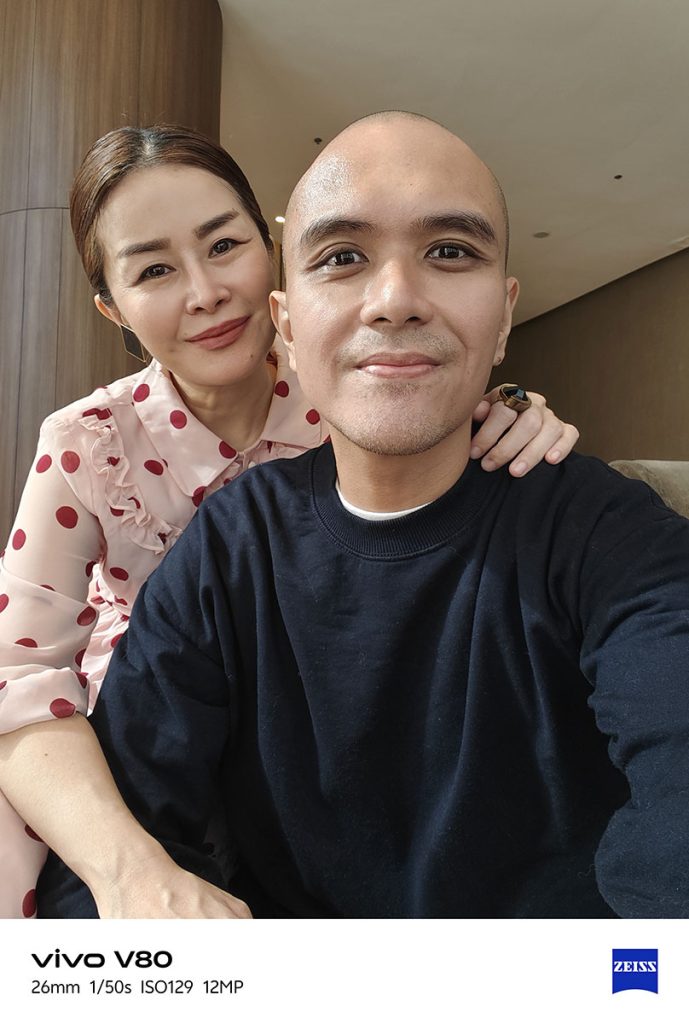
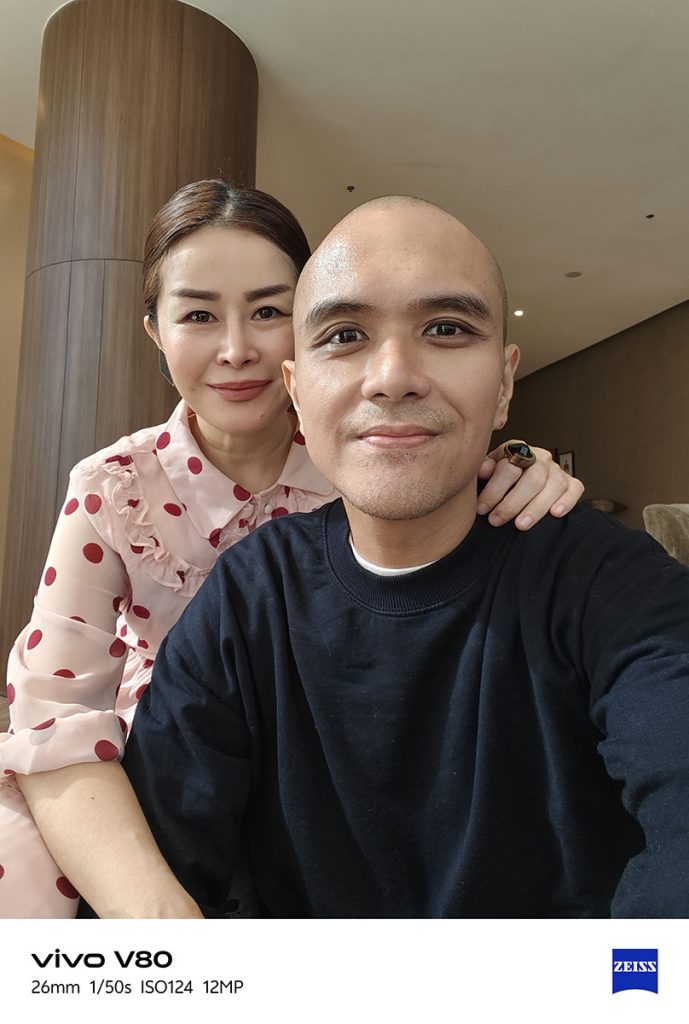
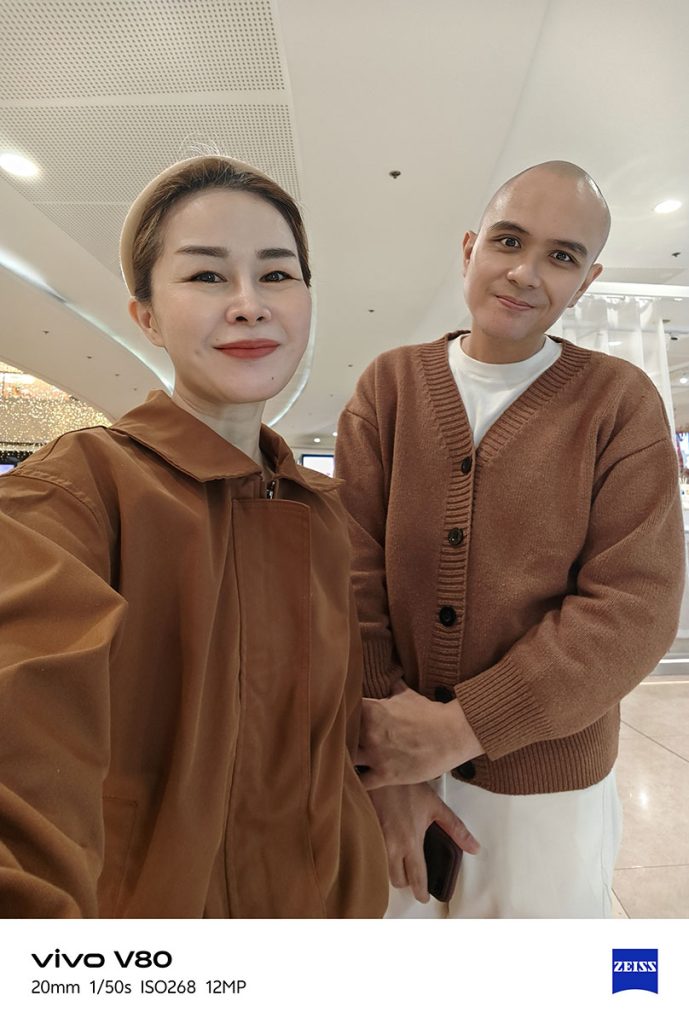

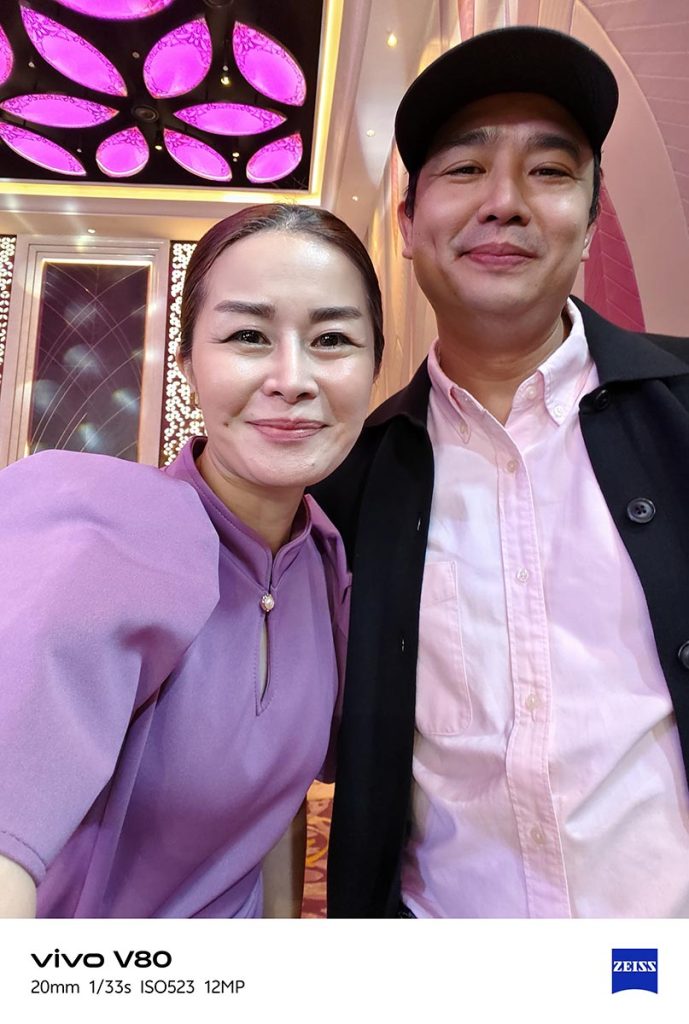
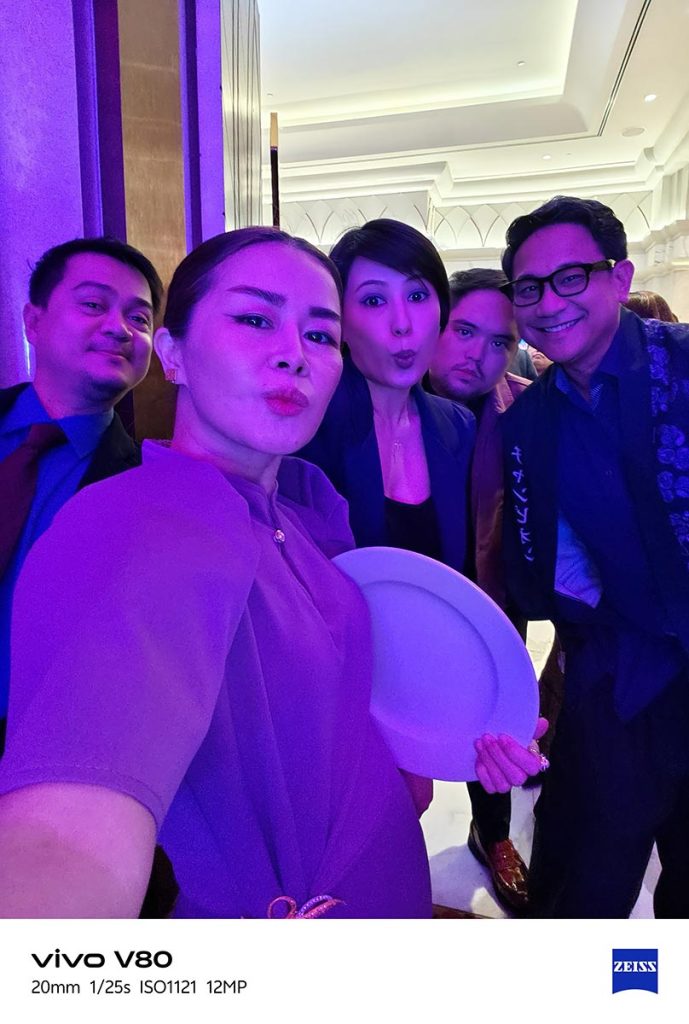
Selfies and groufies
Nighttime hangouts get a fun twist thanks to CCD Flash Portrait. By boosting flash brightness by 150% and applying vintage color and contrast tuning, the mode brightens faces cleanly while dropping busy backgrounds into moody shadow. It captures that nostalgic 2000s point-and-shoot vibe without forcing you to hunt down an overpriced secondhand digicam.
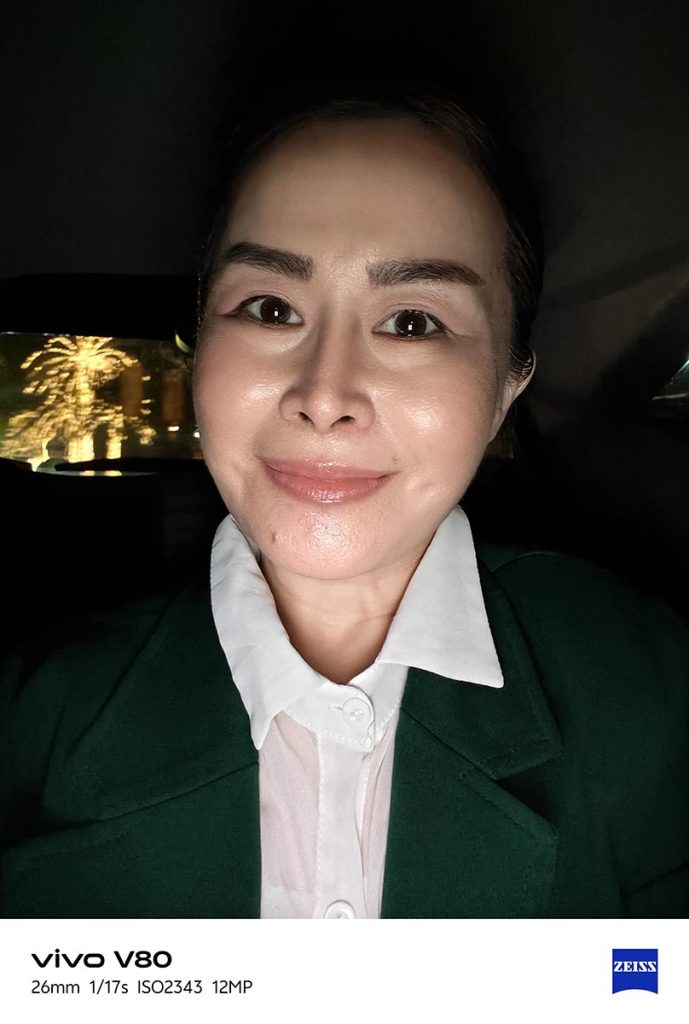

CCD and Cosmic Twinkle styles in Portrait mode
Then there is vivo’s AI playground. AI Creative Camera offers more than 30 styles across travel portraits, stage photography, scenery, and anime. You can rescue flat indoor shots with studio-style Protagonist Lighting options like Top, Side, and Back Lighting, or opt for Natural Lighting effects such as Sunlight, Glow, and Dream. Over in the gallery, AI Retouch bundles AI Erase, AI Image Expander, AI Magic Move, and AI UHD, which sharpens blurry frames toward 200-megapixel-level clarity. It also includes AI Best Face — a lifesaver that pulls better expressions from Live Photos when someone blinks in a group shot. Creative Sticker Collage also had us burning way more time than expected, letting us lift moving cutouts of people or pets straight out of one Live Photo and drop them into another.
Video creators get real love here, too. Both the front and rear cameras shoot 4K video at 60 fps, paired with three built-in cinematic color profiles — Modern Movie for clean natural tones, Vibrant for neon nightscapes, and Pastel for soft cafe vlogs.
Still, the camera experience isn’t spotless. The 8-megapixel ultra-wide lens feels noticeably softer and less detailed than the stellar 50-megapixel main and telephoto duo, and pushing digital zoom past 10x quickly exposes algorithmic smoothing. Low-light stills shot without flash can also show a bit of grain in dark shadows, and we occasionally noticed a brief split-second pause when waking the camera app. Another thing worth noting: AI Creative Camera requires an active internet connection and caps usage at 30 shots per day. None of these are dealbreakers, though a quick software patch to tighten camera launch speed would go a long way.
Anyhow, because vivo tucks several of its best tricks behind submenus, here is a quick cheat sheet for unlocking the V80’s signature looks right out of the box:
- Nail crowd-free ZEISS portraits: Open Camera > Portrait Mode and tap 85mm for three-quarter portraits or 100mm for tighter half-length shots. Both excel when you have cafe bulbs, streetlamps, or holiday lights behind your subject.
- Take instant retro night portraits: Go to Camera > Portrait Mode > Style and pick CCD Flash Portrait. The flash switches on automatically for crisp, high-contrast night shots.
- Dial in custom film tones before you shoot: Tap Swatch in the Color Palette menu and drag the center dot across the grid — slide right for warmer, cozy Japanese-style tones, left for cooler moods, up for punchier magenta-red saturation, or down for moody greenish film tints.
- Make moving sticker collages: Open any Live Photo, tap and cut out a person or pet, and drag them into your sticker library. Open a second Live Photo, tap Edit > Add sticker, and resize or rotate your cutout to play with perspective.
OriginOS 7 and cross-ecosystem smarts: Playful, practical, and Apple-friendly
Out of the box, the vivo V80 runs OriginOS 7 based on Android 17. Getting Android 17 this early is a highlight, sweetened by vivo’s promise of six years of extended security updates and a 72-Month Smooth Experience certification.
On the surface, OriginOS 7 leans unabashedly fun. Four headline personalization options — Wiggle (motion-responsive lock screens that wobble or ripple when you shake the phone), Pet Pals (interactive animated pets greeting you on unlock), Glint (tilt-reactive shimmer and light beams), and StickIt (system-wide stickers) — let you treat your home screen like a digital scrapbook.
Dig a little deeper, though, and the software turns useful for real work. During weeks of post-trip story planning, Snap Note proved handy for turning handwritten notes, sketches, and meeting scribbles into editable rich-text documents. AI Recorder pulls similar weight, offering speaker recognition, transcript outlines, and six summary templates that cut down post-event cleanup. Meanwhile, Security Shield quietly runs two-layer protection against malicious apps, unsafe links, spam calls, and sketchy public Wi-Fi networks.
One bonus is how smoothly it fits into an Apple-heavy setup. If your daily work setup revolves around a MacBook and an iPhone, the vivo V80 plays much nicer than many Android phones. You can sign into iCloud for web directly inside vivo File Manager to view, upload, and download files without clunky workarounds. AirPods display battery and connection status on Origin Island and work with fixed-mode vivo Spatial Audio, while compatible Apple Watch models can sync notifications and fitness data to Origin Health. Keep expectations grounded, though: Apple’s walled garden still holds firm on certain controls; you won’t get native AirPods noise-cancellation toggling here, and some Apple Watch sync perks vary by model and region.
Performance and battery: Built for marathons, not drag races
Powering the vivo V80 is Qualcomm’s 4nm Snapdragon 7 Gen 4 chipset paired with 8GB of physical RAM and up to 16GB of Extended RAM through Memory Fusion, plus Advanced Storage Compression that trims app data by 50% to free up as much as 25GB on the 256GB variant.
For everyday multitasking — bouncing across social apps, shooting and editing clips, messaging, and light gaming — the chip keeps things brisk. Titles like Mobile Legends: Bang Bang and Call of Duty: Mobile run comfortably at sensible graphics presets, though demanding 3D games will ask you to turn settings down to keep frame rates steady.
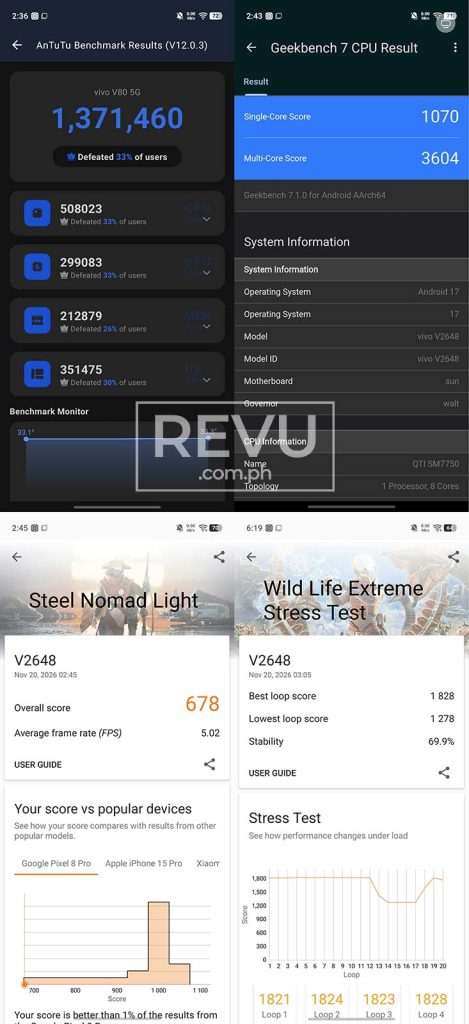
But yeah, while the Snapdragon 7 Gen 4 handles daily life without fuss, it isn’t a raw-power monster for this price tier. If your main goal is maxing out heavy graphics benchmarks per peso, rival phones in the same bracket pack faster silicon.
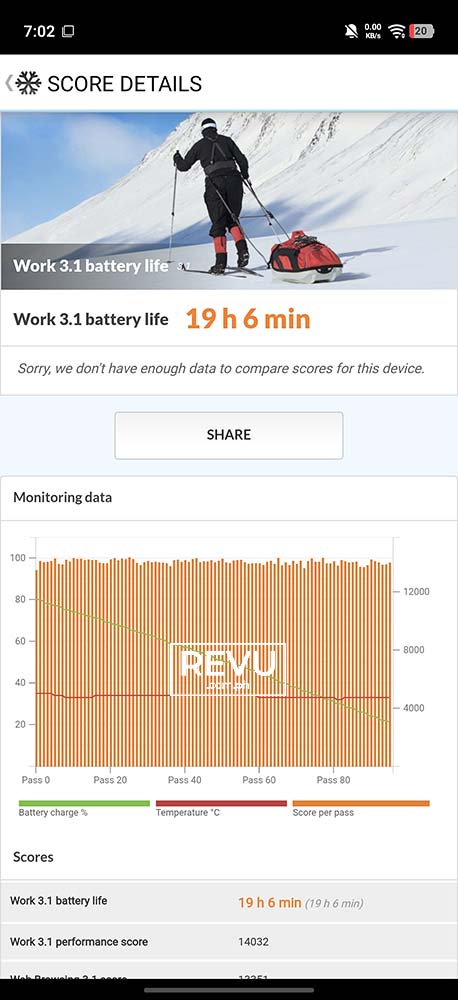
Battery life, on the other hand, is a major strong suit. Housing a 7,200mAh BlueVolt battery built on fourth-generation silicon-carbon anode tech, the largest ever placed in a standard V Series phone, our unit lasted 19.6 hours in our PCMark battery test. In real life, that translates to effortless two-day stamina on regular workdays, or a full heavy day of 4K video shoots, navigation, and late-night gaming with plenty left in the tank.
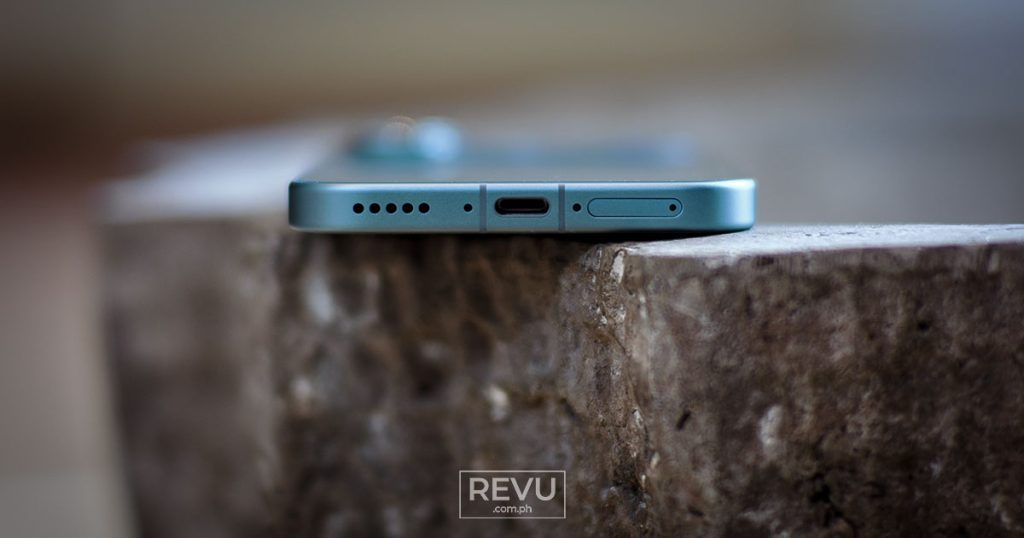
When you finally plug in, 90-watt FlashCharge is rated to take the battery to 50% in 30 minutes. Gamers also get Bypass Charging, which feeds power directly to the smartphone’s internals when the battery is above 20% to keep heat in check during plugged-in sessions. Our only hardware gripes here are modest ones: data transfers are still capped at USB 2.0 speeds — noticeable when offloading hefty 4K/60fps footage to a laptop — and there is no wireless charging on board.
Our verdict
In the Philippines, the vivo V80 is priced at ₱42,999 (roughly $674) for the 8GB/128GB model and ₱47,999 ($752) for the 8GB/256GB configuration. It is now available nationwide at physical vivo stores, the vivo e-store, the vivo Store app, and the copany’s official Shopee store, where it recently claimed the No. 1 best-selling spot in the ₱40,000 to ₱50,000 ($627 to $783) bracket during Shopee’s 11.11 sale.
At ₱42,999 ($674), starting at 128GB of storage feels tight in late 2026, especially on a device actively encouraging you to shoot 4K/60fps videos and Live Photos, and pairing that tag with a midrange Snapdragon 7 Gen 4 gives spec-focused buyers pause. Even with Advanced Storage Compression helping stretch space, heavy shooters should strongly consider jumping to the ₱47,999 ($752) 256GB model.
Still, smartphones aren’t bought on benchmark sheets alone. The vivo V80 knows exactly who it is for: creators, portrait lovers, and style-conscious users who want a sleek, ruggedly built daily driver that nails flattering ZEISS telephoto shots, brings Android 17 and playful customization out of the gate, bridges nicely into an Apple-heavy desk setup, and delivers nearly 20 hours of tested battery endurance. It may not win a drag race, and we wish the base storage were more generous, yet as an all-around lifestyle camera phone, the vivo V80 is easy to fall for.
vivo V80 specs
- 6.59-inch 1.5K OLED display, 2,750 x 1,260 resolution (459 ppi), up to 144Hz refresh rate, 1,800 nits HBM, 5,000 nits local peak brightness, HDR10+, SGS Low Blue Light Certification
- 4nm Qualcomm Snapdragon 7 Gen 4 5G processor
- Adreno GPU
- 8GB RAM (plus up to 16GB Extended RAM)
- 128GB or 256GB storage
- Triple rear cameras: 50-megapixel Sony LYTIA 700V main with OIS (CIPA 4.5), 50-megapixel Sony IMX882 ZEISS Super Telephoto with OIS (3x optical zoom, up to 100x digital zoom), 8-megapixel ZEISS ultra-wide
- 50-megapixel f/2.0 ZEISS Group Selfie front camera with autofocus
- 3D Ultrasonic Fingerprint Scanning 2.0 (under-display)
- Stereo speakers
- 7,200mAh BlueVolt battery (7,015mAh rated) with 90W FlashCharge and Bypass Charging
- IP68 and IP69 dust and water resistance, SGS Overall Unit Drop Resistance Certification
- 5G, Wi-Fi (2.4GHz/5GHz), Bluetooth 5.4, NFC, eSIM, USB 2.0
- OriginOS 7 based on Android 17 (six years of extended security updates)
- Dimensions and weight: 157.52 x 74.33 x 7.69mm, 205g (Wander Green); 157.52 x 74.33 x 7.89mm, 206g (Starwish Purple)
- Colors: Starwish Purple, Wander Green
Learn About This Author